dailynewsnblog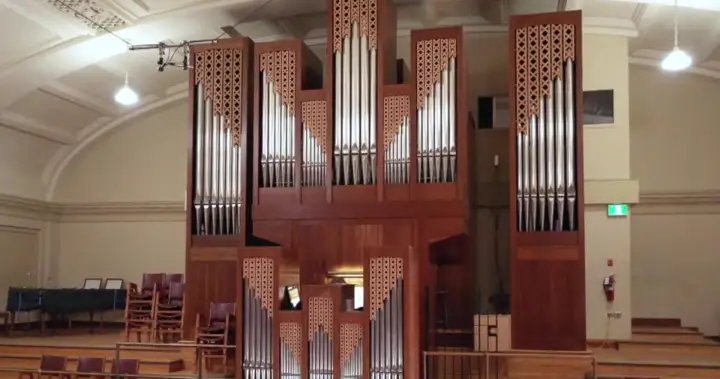
Music from a pipe organ has filled a convocation hall at the University of Alberta for a century, but that may soon come to an end as the institution begins renovations that include removing the memorial instrument.

Marnie Giesbrecht, professor emerita and former organist at the Edmonton university, is part of a group of former faculty members and students trying to save the Casavant organ dedicated to those who lost their lives in both world wars.
She said she received notice earlier this month that doors to the Faculty of Arts’ Convocation Hall would be locked April 30 for renovations to begin.
“It’s quite concerning, this very, very short timeline,” she said, adding that there was little consultation recently on the project.
“It’ll be the day the music dies when they lock that door and say they are taking (the organ) out.”
The current organ was built and installed in 1978, but the history of the instrument goes back 100 years.
A Casavant pipe organ seen at the Convocation Hall at the University of Alberta in this undated photo. It was built in 1978 to replace one built in 1925 to honour students and faculty members who lost their lives in the First World War.
Marnie Giesbrecht/ The Canadian Press
The first organ was built in 1925 to honour the 80 students and faculty members who lost their lives in the First World War. In 1947, it was refurbished and rededicated to include university members who died in the Second World War.
The pipe organ is also listed on Veterans Affairs Canada’s national inventory of Canadian war memorials.

Get daily National news
Get daily Canada news delivered to your inbox so you’ll never miss the day’s top stories.
Although it was replaced almost 50 years ago after it fell into disrepair, Giesbrecht said the 1925 Casavant decorative organ cases are still in the hall.
“When you go into Convocation Hall and you’re facing the stage, sitting forward, that’s what you see,” she said.
“Most people think that’s where the music is coming from, but the music is actually coming from behind you, and it’s the organ that’s on the back gallery.”
The 1978 Casavant, Giesbrecht added, is also special because it was made by the renowned German organ manufacturer Gerhard Brunzema, who worked for the Quebec company for seven years.
“There’s a very unique stamp that Casavant has on all the organs he built,” she said. “This is probably the biggest one that they built in Canada that was directed by him.”

The University of Alberta said in a statement that the hall renovations are to improve accessibility and increase capacity.
“As part of this important renovation, the university has made the difficult decision to remove the Casavant organ, which presents a barrier to accessibility for individuals with physical disabilities and mobility needs,” the statement says.
“The university is approaching the future of the Casavant organ with the highest level of respect. We are committed to treating its transition with the technical care and dignity it deserves, including identifying options to safely relocate the organ.”
It said the formal memorial designation remains tied to the 1925 instrument.
Giesbrecht said the main level of the building is fully accessible, adding that it isn’t clear whether design teams indicated accessibility needs couldn’t be met with the organ still in place.
The university didn’t directly answer questions about whether it’s necessary to remove the organ but said its design team includes a specialty accessibility consultant.
“Accessibility and code reviews are integrated throughout the design process to support accessible entrances, improved circulation and barrier-free seating,” it said in a statement.
This isn’t the first time Giesbrecht has fought to keep the organ at Convocation Hall, which opened in 1915.
In 2019, the university announced renovation plans that also included removing the instrument. Giesbrecht garnered 20,000 signatures to keep it there, with the university shelving the plan soon after.
It’s unlikely the instrument could ever be played again once it’s removed from the hall, Giesbrecht said.
“Organs are custom-built for the space that they go into — it fits in a building like a glove physically, but also acoustically in every way,” she said.
“It’s a memorial organ for that purpose. It would not only be something to look at but would be something to hear … to be listened to, sung with, mourn, celebrate and everything else in community together.”
On Friday, Giesbrecht and other organists are set to hold a farewell concert for the organ.
As those who love the instrument say a few parting words, Giesbrecht hopes its music will ring on.

© 2026 The Canadian Press