dailynewsnblog
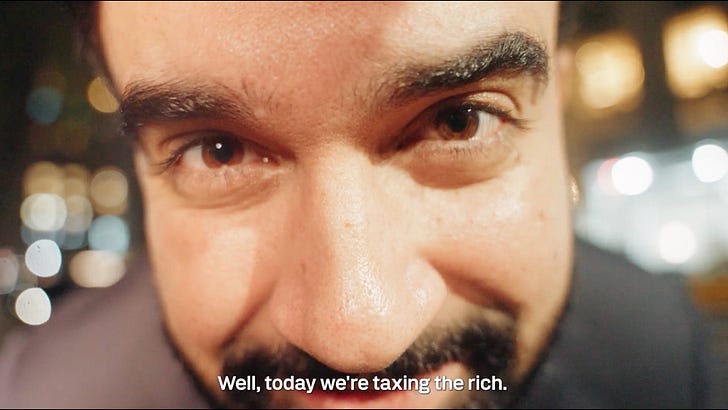
There is a fascinating phenomenon where people who live paycheque-to-paycheque, surviving on the trickled-down table scraps of unrestrained capitalism, get wildly upset when the obscenely wealthy are asked to pay their fair share — and it is not by accident.
It is happening again this week, with New York City Mayor Zohran Mamdani’s announcement that luxury properties worth over $5 million in the city, which are not used as their primary residence, will be taxed. Reaction from right-leaning people who will never set foot in any such unit, much less own one as a secondary property, is as comical as it is terrifying.
We have seen it over the years in Canada, too. When Justin Trudeau, near the end of his tenure as Prime Minister, planned to raise taxes on capital gains over $250,000, much of the public screamed over the idea of taxes being raised. How many of those objecting will ever make $250,000 in capital gains in a given tax year is not clear, but those upset about it greatly exceeded those impacted by it. The opposition was driven by right-wing think tanks like the Fraser Institute and the Canadian Taxpayers Federation.
Those impacted by it would have been paying taxes on an additional 16.66% of the profit on their sale, at the top marginal tax rate of 33%. In other words, it would be a 5.5% tax on windfall sales of capital assets, and at that only on the amount above $250,000 in a given tax year. Someone making $500,000 in capital gains in a single fiscal year would have paid up to an additional $13,750 in federal income tax — just 2.75% of that profit. Someone selling their primary residence would generally not be impacted at all, no matter the profit.
Ask the average voter, though, and this proposed policy would have chased off professionals and investors, bankrupted the people, and crashed the Canadian economy as part of an unwarranted wild tax grab by a greedy federal government. It was fed by overstated dire media warnings about how it would impact vast numbers of Canadians. Avoiding the issue altogether, the new Prime Minister promptly cancelled the policy within days of taking in office.
Often, I am told by individuals in conversation that they will support anyone who will lower their taxes, but most have little idea of their own tax burden, what they get for it, or how it is shared across society. Reminding them that the great accomplishments of the 20th century happened when upper tax brackets were over 70% puzzles them, if they believe it at all.
It is the inevitable result of reframing each of us not as a citizen, but as nothing more than a “taxpayer.” The modern use of the term “taxpayer,” as with the pro-life movement and our cultural imperative to tip people who are not properly paid to serve customers, has its origins in American post-civil war segregationist racism, as explained by Camille Walsh in a 2021 Mother Jones article:
The taxpayer myth has deep roots, and throughout history it has been intertwined with the idea that all forms of resources from the government belong to white people, to do with as they please.
It makes sense, of course. Those who advocate against paying taxes often frame it around the idea that the poor, code for somehow undeserving minorities, will take disproportionate advantage of the resources of the commons. This is not incidental, it is fundamental to the discussion. Few people object to being the beneficiary of government programs, but many object to those beneficiaries including people they deem as inferior — who they describe as “taxeaters.”
As President Lyndon B. Johnson observed during the civil rights movement:
If you can convince the lowest white man he’s better than the best colored man, he won’t notice you’re picking his pocket. Hell, give him somebody to look down on, and he’ll empty his pockets for you.
It is a critical observation. The right wing, those who opposed civil rights, abortion rights, living wages, and promote the idea that we are all just taxpayers being drained for the benefit of the racially inferior, have built their movement around this concept. They object to DEI policies because these completely undermine the core philosophy that they are fundamentally the better and more important human beings. It is also why they have no objection to the obscene amounts our governments spend on corporate welfare, given who overwhelming run corporations.
White supremacist conservatives have the strongest fundraising machines and a dedicated support that could be described as tribal rather than philosophical among those described by LBJ, and for the reasons described. Their supporters are more than happy to take government hand-outs for themselves provided that others do not get the same treatment.
Those funding these movements and the disinformation environment that feeds them do not necessarily feel the same way — but they do see the structural advantage of a divided population where the poor fight the poorer on racial grounds instead of understanding the actual source of the financial pressures they are enduring.
This class of divided and poorly informed citizens have become so dominant in our political discourse that the so-called “left” in both Canada and the United States are often afraid to substantively challenge them on the fundamental idea of tax fairness or the root causes of the inequities we see. Meanwhile the oligarchs behind the division laugh at their useful-idiot support all the way to the bank.
Mamdani is on the right track. It is time to start dealing head-on with the ever-decreasing contributions our hoarders make to the collective while hiding their money in tax shelters, offering performative philanthropy, and fomenting opportunistic social and racial division to divert attention from their plunder.
The New York mayor’s proposed “pied-à-terre” tax is part of a 375-page document called the “New York City Preliminary Racial Equity Plan.” It is no wonder the modern right and their supporters are so up in arms; it goes against everything they stand for.