dailynewsnblog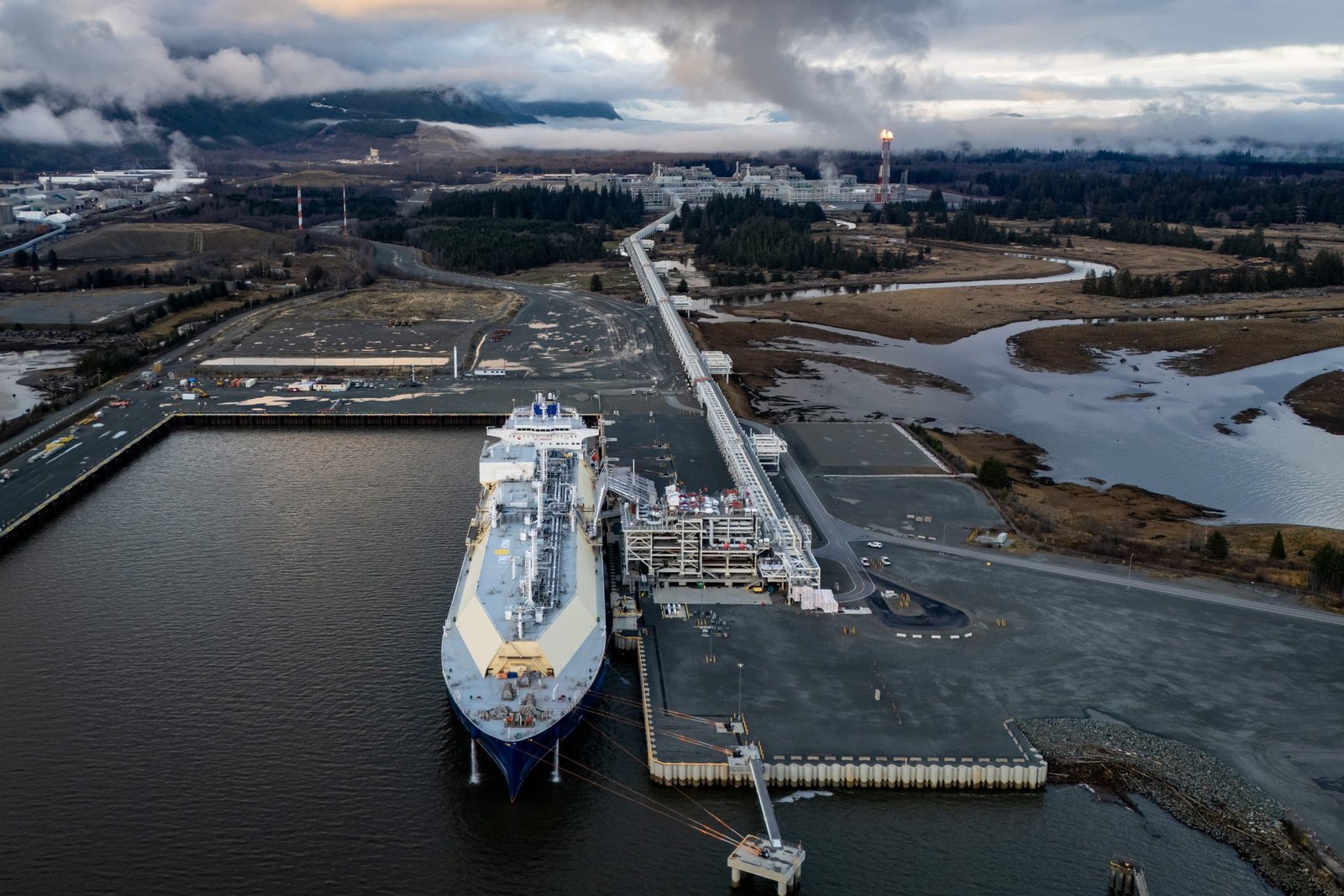
The comments come as Ottawa and Alberta struggle to find a path forward on carbon pricing.
The Carney government is keen to see LNG Canada greenlight its second phase in a $33B expansion that would double the output of Canada’s first large-scale LNG export facility.
The project was among the first to be referred to the Major Projects Office (MPO) last fall, in an apparent push to nudge the company toward a final investment decision.
Industry expects LNG Canada will pull the trigger by late 2026 or early 2027, although the company has delayed making final investment decisions in the past because of fluctuations in natural gas prices.
LNG Canada CEO Chris Cooper appeared before a House committee Tuesday as part of a study on energy exports.
Asked by MP Shannon Stubbs if there was anything holding the company back from making a final investment decision for Phase 2, Cooper said going through the final steps of approval takes time.
“While we might point to processes in Canada, investors also have processes,” he said, adding that the joint venture participants – Shell, PETRONAS, PetroChina, Mitsubishi Corporation and KOGAS – all need to do work internally.
He commented on the competitive global landscape for LNG investments, with countries like the U.S., Qatar and Australia offering regulatory incentives.
READ MORE: Global race to deregulate: Canada joins other countries in major projects push
When it comes to Canada, Cooper spoke positively about capital cost allowances, but said Ottawa has some of the most stringent regulations in the world.
“That’s actually seen as a differentiable positive to investors overseas as they look to decarbonize,” he said.
“The flip side is that it can really slow things down, and there goes your competitiveness, by the time you’ve aligned, the investments have gone elsewhere.”
Cooper suggested the government could review its regulations and policies to attract investors.
“You don’t see the market giving a premium for low-carbon energy at this point in time,” he said. “Now, whether that comes in the future, who knows? It’s about future resilience as well.”
LNG Canada designed its projects to operate with 60 per cent less carbon intensity than the average global competitor, in part thanks to the use of renewable power from the B.C. grid.
Despite the low-carbon design, an investigation by The Narwhal suggests that early technical failures at the facility led to excessive flaring in the first year of operation, putting LNG Canada among the highest sources of flaring emissions globally in 2025.
Low-carbon energy hinges on carbon pricing and carbon capture
Cooper’s remarks come amid a broader sector-wide push against federal methane and carbon pricing regulations.
The Canadian Association of Petroleum Producers (CAPP), for example, says a high industrial carbon price could erode Canada’s competitiveness since few global peers impose similar costs.
This tension is currently playing out in stalled negotiations between Ottawa and Alberta.
A Memorandum of Understanding signed last fall targeted an April 1 deadline to agree on how to escalate the TIER system’s minimum credit price to $130 per tonne—the threshold required to make major carbon capture projects, like those proposed by the Pathways Alliance, economically viable.
The deadline passed without a deal. In an open letter to the prime minister, clean energy think tank Pembina Institute urges Mark Carney to use his parliamentary majority to deliver on the MOU and other climate policies.
“We are increasingly concerned that your voluntary deadline of April 1 came and went without an agreement, and that officials in both governments report an impasse has been reached on several critical issues,” reads the letter.
“In 2026, economic and environmental policies are one and the same.”