dailynewsnblog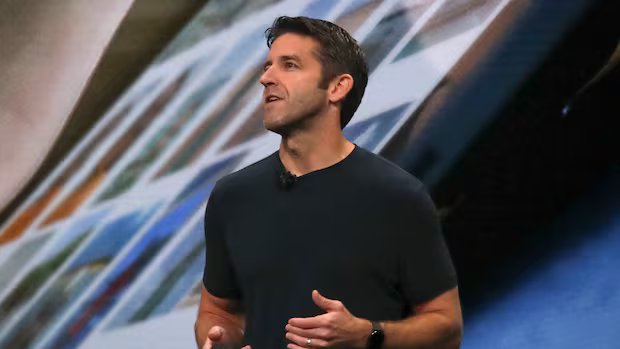
To anyone who pays close attention to Apple, Monday’s CEO switch-up wasn’t a surprise.
The company’s outgoing chief Tim Cook is approaching retirement age, at 65. He’s helmed Apple for 15 years since co-founder Steve Jobs stepped away due to ill health, and he’s taken the company from a market cap of $350 billion US to about $4 trillion US. And media had been reporting that a handover might be in the works for months.
Meanwhile, incoming head John Ternus — who is currently vice-president of hardware engineering and will step up as CEO on Sept. 1 — has had a bigger role in recent years, often taking the stage at new product launches. Most notably, it was Ternus, not Cook, who unveiled the new MacBook Neo at a live event in New York City last month.
“The amount of time executives get in front of an audience for these product events corresponds to where they are in the hierarchy [at Apple],” said John Gruber, who writes the Daring Fireball blog about all-things Apple. “And, you know, Ternus has appeared more and more over the last five years.”
Ternus, despite not being a household name, has spent the past 25 years at Apple overseeing some key changes for the company. But questions remain about how he’ll govern, especially as Apple navigates big challenges related to AI.

Who is John Ternus?
A veteran of Apple, Ternus has spent most of his career with the tech giant.
He spent a brief period with a company called Virtual Research Systems after graduating from the University of Pennsylvania with a mechanical engineering degree.
Since joining Apple’s product design team in 2001, Ternus rose to become vice-president of hardware engineering in 2013. He’s overseen the hardware that goes into each iPhone, iPad and Mac — and has been part of introducing new products like AirPods, and the recently debuted sturdy-yet-affordable MacBook Neo.
“John Ternus has the mind of an engineer, the soul of an innovator and the heart to lead with integrity and with honor,” Cook said of his successor in the company’s announcement, adding he is “without question” the right person to take over.
Gruber says Ternus’s biggest mark on the company is probably shepherding in Apple silicon — the company’s in-house computer chips.
While Apple has used its own chips in its phones and iPads since 2010, Cook announced in 2020 that the company would transition to its own silicon chips in all products, rather than relying on Intel for them. That allows it to make chips that function exactly as it wants for each product, and enables additional features, like better noise cancellation in the second-generation AirPods Pro.
“The whole Apple Silicon movement … John Ternus was directly involved with,” given his role in hardware, Gruber said.
Chris Deaver, founder of leadership consultancy firm BraveCore and former HR business partner with Apple who has worked with Ternus, says the incoming CEO is a good leader who is well respected internally.
“[I] was really impressed by how collaborative a leader he is and how he’s able to bring together teams … and build really strong relationships so that a lot of the technical stuff that happens, they can work through any friction and have kind healthy debates about it,” Deaver said.

Despite that reputation in the tech world, McMaster University business professor Marvin Ryder says the fact that he’s not as well known publicly gives Ternus something of a “blank sheet of paper” in how he’s going to lead the company.
“The good news for Mr. Ternus is he can now write or draw whatever picture he wants the world to see,” Ryder said, adding he expects him to be more like his predecessor Cook or a Jeff Bezos kind of leader — focused on internal matters rather than being an external “cheerleader” for the business.
AI challenges lie ahead
Despite arriving early with its Siri voice assistant, Apple has since fallen behind in the AI race — and that’s a big hurdle tech experts agree Ternus will have to clear.
“The last two years have not been good ones for Apple on the AI front,” Gruber said.
While Apple launched Apple Intelligence in 2024, the functions weren’t initially available on hundreds of millions of iPhones and the tech hasn’t been widely adopted.
It also missed its own target for releasing an AI-powered version of Siri in 2025, and instead says the upgrade is coming some time this year — something unusual for Apple, Gruber says, which usually delivers on its promises.
Plus, privacy has long been a core principle for the company. And given AI runs on massive amounts of data, Deaver says Apple has a unique challenge in balancing the security of that information. For example, it partnered with Google to use Gemini in the new version of Siri, and experts say Google’s potential access to user data to improve its algorithms is a concern.

In the past few months, Apple has lost several key executives and there’s talk that long-time CEO Tim Cook could be getting ready to step down. For The National, CBC’s Ashley Fraser breaks down what’s behind the departures and why some say the company’s AI program could be to blame.
Monday’s press release from Apple didn’t touch on AI, or how Ternus plans to approach it.
But Deaver said it’s typical for the company not to be an early mover.
“They’re never interested in being the first. They’re always interested in being the best,” he said, noting he expects the company is likely approaching AI capabilities similarly.
Still, with Ternus’s background being in hardware rather than software, some have questioned whether he is the right person to helm Apple in the AI era. However, Gruber says those critiques might be short-sighted.
“In the same way that they didn’t have to recruit somebody with cellphone experience from outside the company … when mobile was happening, and they didn’t have to become an internet company in the late [1990s], I think it’s true that Apple can stick to what it does best,” Gruber said.
And that means building great computers that are user-friendly for “non-computer experts,” according to Gruber. He says Apple’s move to make Ternus its CEO telegraphs that the company will remain focused on hardware as it moves forward. Cementing itself as the hardware maker that runs AI software from other companies could in itself be its AI strategy.
“No matter how big a part of everybody’s daily life AI becomes, you’re going to need devices to interact with it through. And who better than Apple to make those devices?”