dailynewsnblog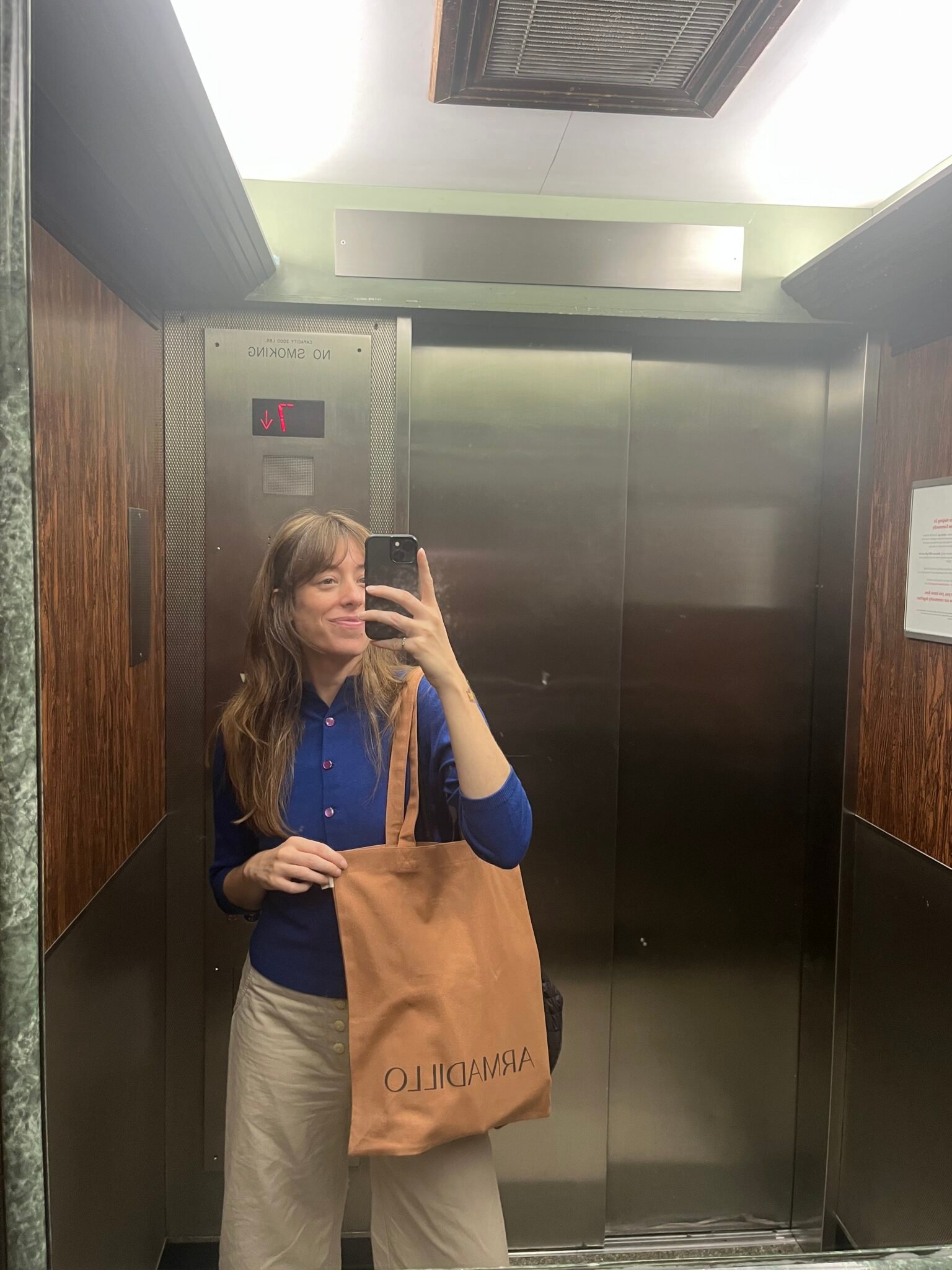
Armadillo isn’t the kind of rug brand you stumble into; it’s one you arrive at when you’re ready to invest in something intentional. This Australian, women-led company has carved out a distinct space: Elevated, natural rugs that feel as thoughtful as they are beautiful.
“Armadillo isn’t the kind of rug brand you stumble into; it’s one you arrive at when you’re ready to invest in something intentional.”
The brand aims to exceed industry benchmarks for quality, performance, and safety — and is featured in noteworthy places like the Goop Villa at the Colony in Palm Beach. If it’s good enough for Goop, it’s good enough for me. After visiting the brand’s New York showroom and living with one of their rugs for four months, I began to understand why designers and homeowners alike flock to Armadillo. It’s about experience, craftsmanship, and approaching building a home as a lifelong investment. 🌱
About Armadillo
Armadillo was founded in 2009 by Jodie Fried and Sally Pottharst, whose respective backgrounds in set design and textiles bring a complementary balance to the brand. That dual perspective shows up in the rugs: They’re visually refined and deeply material-driven, with an emphasis on texture, tone, and how a piece lives in a space.
The company is Australian in origin, but its production is rooted in South Asia. All of its rugs are handwoven by artisans in India and Nepal using traditional techniques, a process that prioritizes both craftsmanship and longevity.
“All of Armadillo’s rugs are handwoven by artisans in India and Nepal using traditional techniques.”
Armadillo is also a certified B Corporation and partners with organizations like Girls Inc., investing in education for artisans’ daughters through scholarships and long-term support. These initiatives aren’t just peripheral; they’re central to how the brand defines value.
You might encounter Armadillo rugs at select retailers, online, or in their own showrooms across the U.S., including LA, Dallas, SF — and the NYC location that I was lucky enough to visit.
Visiting the showroom
Armadillo’s New York showroom is in the Flatiron District, tucked away on the 16th floor of a classic Art Deco building. The showroom feels both serene and distinctly New York. There’s something cinematic about stepping off the elevator into a room full of softly textured rugs, with sunlight filtering across woven surfaces.
Inside, three trade associates were busily, quietly at work. One was experimenting with a custom colorway, laying out samples and shifting tones in real time. It didn’t feel like a retail space in the traditional sense, but more like a studio where decisions are made slowly and collaboratively.
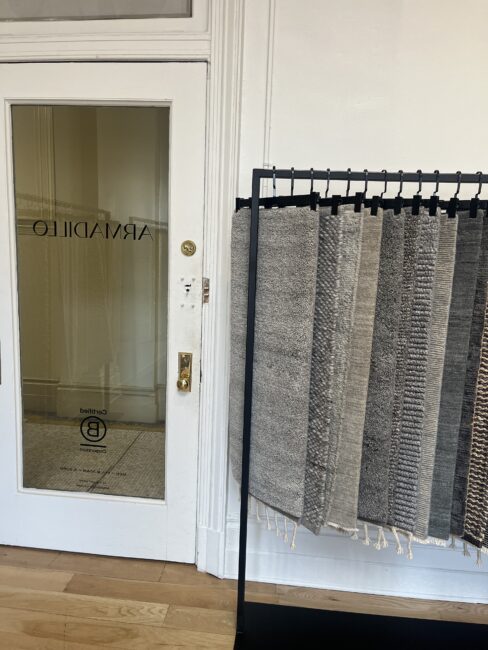
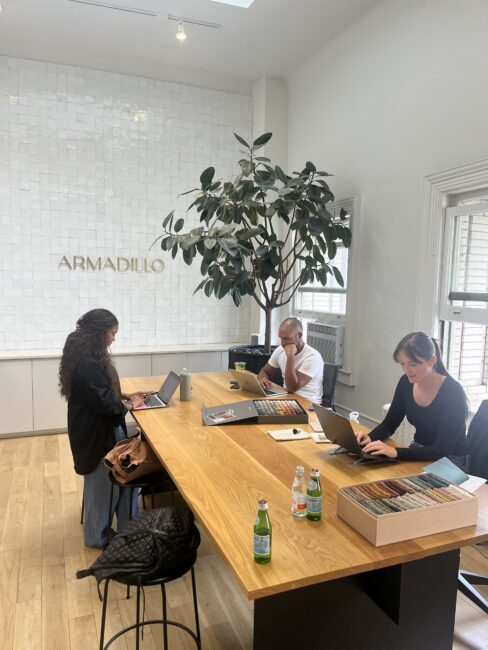
I quickly found that seeing Armadillo rugs in person shifts your understanding of what natural fiber rugs can be. Most of the collection centers on wool and jute, along with blends of the two. There are also options that incorporate silk and linen, adding subtle variation in sheen and texture. Even the wool rugs — especially in lighter tones — have a gentle luster that catches the light in a way that feels almost silky.
Jute, in particular, stands out. It’s often thought of as a rough, outdoor material, but Armadillo reworks it into something far more nuanced. Higher-pile jute rugs feel surprisingly soft underfoot, while lower-profile versions feature slightly open weaves.
It’s a reminder that material matters just as much as design, and that craftsmanship can completely transform how a fiber behaves.
How I selected an Armadillo rug for my space
One of the most valuable parts of visiting the showroom was the guidance from the team — particularly Brittany, who walked through the nuances of choosing a rug based on real-life use.
If you have kids, she recommends styles like the Odessa, a lighter rug with brown undertones that can better disguise everyday wear. For pet owners, there are a few considerations: Avoid long tassels (they’re irresistible to playful animals), be cautious with linen (cats especially like to scratch it), and note that some pets are drawn to jute since it mimics an outdoor material.
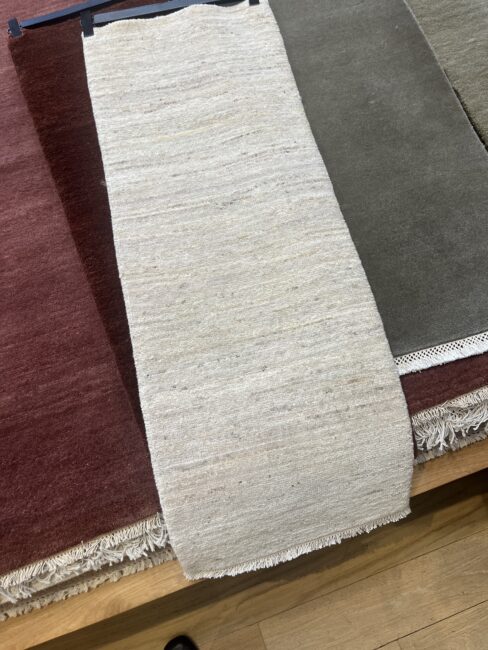
Care is another area where the brand is refreshingly honest. As Brittany put it: Anyone who tells you their rugs don’t shed is lying. The key is how you manage it. In general, Armadillo recommends vacuuming with suction only — no rotating brush heads that can pull at fibers or tassels. After about three to five vacuums, shedding typically subsides. (For the record, I didn’t experience any substantial shedding with mine, which has historically not been the case with cheaper wool rugs.)
I was gravitating towards the look and feel of their wool rugs, so Brittany filled me in. For spills, wool rugs are forgiving. Liquids tend to sit on the surface rather than immediately soaking in, so blotting quickly is often enough. One important tip: Avoid dyed or chemical-heavy soaps (like standard dish detergents), which can discolor natural fibers. If you do use water, flip the rug at the affected spot to let it dry completely and prevent moisture from getting trapped underneath.
While Armadillo is known for its neutrals, there’s more range than you might expect once you start exploring. During my visit, I gravitated toward warmer tones. A soft green option felt calming and organic, while a brighter burgundy brought a more immersive, color-forward feel. I was surprised by my attraction to this “color flooding,” it was an option that I wouldn’t have considered just seeing the options online.
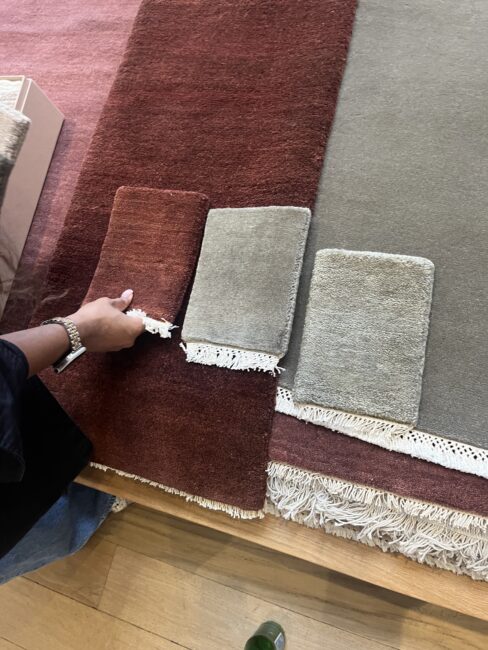
What Brittany helped educate me on was how these tones interact with the rest of a space. A burgundy rug, for instance, can open up flexibility: Plants read as a neutral green against it, while cream-colored drapes soften the overall palette. It becomes less about matching and more about building a layered environment.
Each rug also has slight variations in tone and weave, which means no two are exactly alike. That uniqueness adds to the appeal, especially if you’re looking for something that feels personal rather than mass-produced. There’s also flexibility built into the sales process. Fringe can be removed, and sizing isn’t completely rigid, allowing for slight adjustments depending on your needs.
Even though I felt relatively confident about the burgundy option, Brittany encouraged me to bring home samples and live them for a bit to firm up my decision. She specifically recommended observing samples in different lighting throughout the day — a small but impactful step that changes how you perceive color and texture.
Living with my Armadillo rug
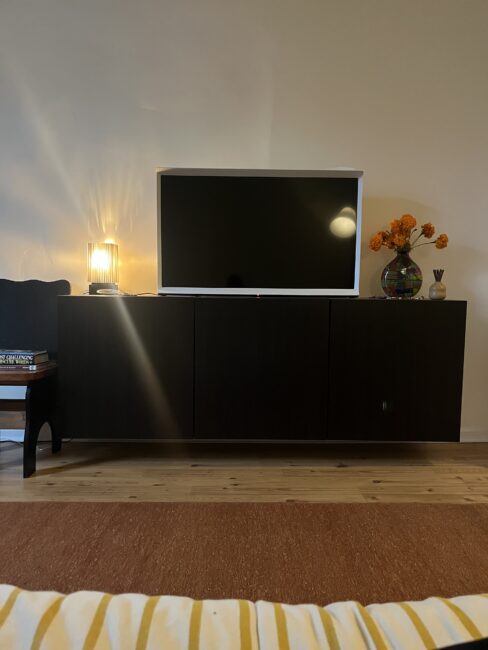
After living with the samples for a while, and going back and forth on fringe and sizing, I decided to move forward with a lower-ply orange wool rug (it’s their Cable model in the color Bisque) to complement my Sabai off-white and yellow striped couch. Rather than contrast, I leaned into expanding the existing color palette. Delightfully, the rug arrived just a day before Thanksgiving, which would give me a nice, long weekend to spend with my new addition.
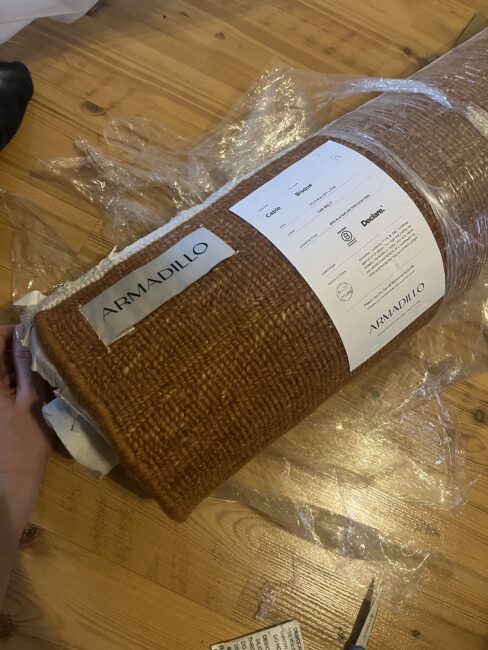
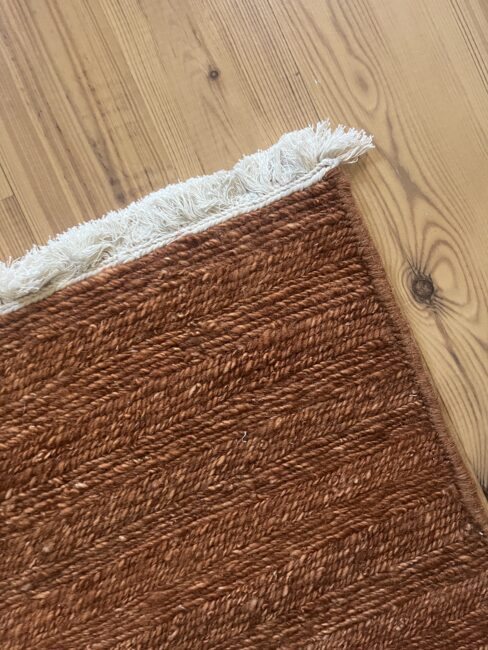
After spending time with my rug at home, the initial impressions held up. It’s undeniably beautiful — subtle in a way that doesn’t get old. The quality is immediately apparent, from the density of the weave to the richness of the color. It feels like something designed to last, not just materially but aesthetically, too. And I’ve had to do very little to maintain it. It’s a precious element of my home, but it isn’t precious in itself. It stands up to daily wear without needing any attention.
Most importantly, it had changed the feel of a room. Not dramatically, but it softens edges, adds warmth, and creates a foundation that everything else can build on. It’s soft enough to sit and stretch on, and durable that when I (rarely!) wear shoes in the home, I don’t have to worry about mussing it up.
Final thoughts
The Armadillo team is deeply knowledgeable and patient. During sales periods, they’ll spend upwards of 90 minutes on the phone helping clients select rugs for an entire home. There’s no rush, no pressure — just a sense that this is a meaningful purchase worth getting right.
If you’re near one of their showrooms — in Los Angeles (their headquarters), San Francisco, or New York — you can visit in person. Some locations cater more to trade, but others are open to retail clients as well. And if you’re not nearby, virtual consultations are just as thorough. A team member (often based in San Francisco) will walk through your space using photos and measurements, helping you visualize options in real time.
It’s a level of service that feels increasingly rare, and it reinforces the idea that buying a rug like this is less about convenience and more about intention. Armadillo rugs aren’t an impulse purchase. They’re something you consider, test, and grow into.
Ashley D’Arcy is the Senior Editor at The Good Trade. She holds an MA in Philosophy from The New School for Social Research and has contributed to esteemed outlets such as The Nation, 032c, and Yale School of Management’s Insights where she’s leveraged her expertise in making complex ideas accessible to a broad audience. In addition to her editorial work, she is training as a psychoanalytic mental health professional and provides care to patients in New York City. Ashley also explores sustainable fashion, clean beauty, and wellness trends, combining thoughtful cultural critiques with a commitment to mindful living.