dailynewsnblog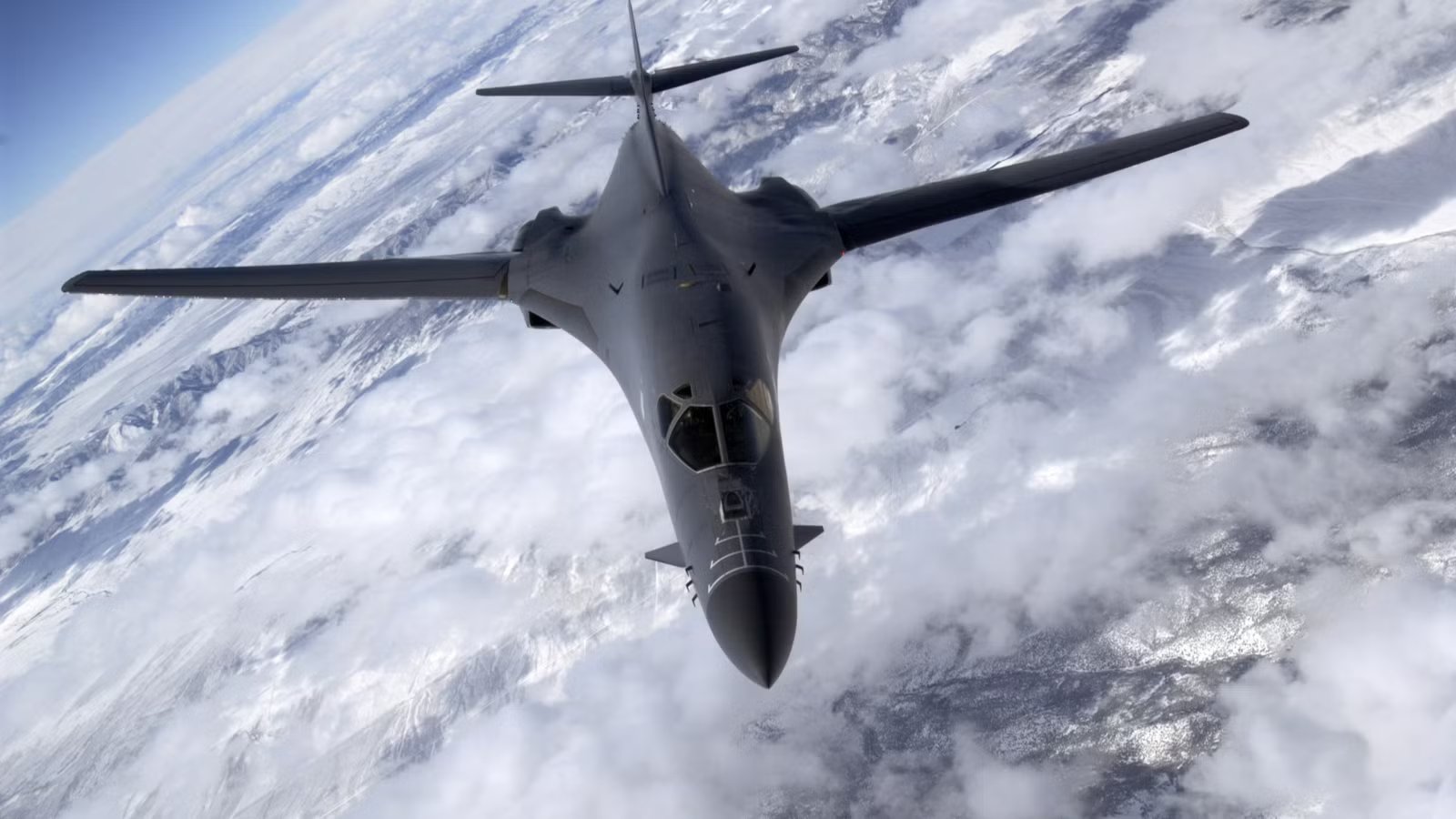
In 1996,  Boeing made one of the boldest moves in its long corporate history. The company, then the world’s leading commercial jetliner manufacturer, reached beyond its civilian roots to absorb the aerospace and defense units of Rockwell International Corporation. Valued at $3.13 billion, this acquisition transformed Boeing into a multidomain manufacturer spanning commercial aviation, defense, and space. The purchase not only diversified Boeing’s portfolio, but also radically changed the company’s structure.
Rockwell’s assets brought in missile systems, satellite technology, and advanced avionics. And among all the newly gained programs, none symbolized Boeing’s newfound defense strength more vividly than the iconic Rockwell B-1 Lancer, Rockwell’s supersonic strategic bomber. Three decades later, that aircraft, together with the technologies Boeing acquired alongside it, still represents some of the company’s most enduring strategic value in the military sector.
The Deal That Redefined Boeing’s Future

The agreement, announced on August 1, 1996, was structured as a tax-free Morris Trust transaction, with Boeing issuing $860 million in stock to Rockwell shareholders and assuming about $2.27 billion in Rockwell debt and retiree obligations. The total value of $3.13 billion marked Boeing’s formal entry into the defense-industry consolidation sweeping the US in the mid-1990s. Then Boeing’s Chief Executive Phil Condit described the move as a “good strategic fit.”
He emphasized that Rockwell’s missile, space, and electronics operations would be placed within Boeing’s Defense and Space Group, separate from its booming commercial division, according to the Wall Street Journal. Rockwell, for its part, was shedding its aerospace activities, which had made it synonymous with the Apollo era, but once the space race was over, the company decided to focus more on automation, semiconductors, and automotive systems.
About 20,000 employees transferred to Boeing North American Inc, which was the new name for the acquired division. The timing was ideal: Boeing’s jetliner business was surging, providing it with the cash flow to diversify. Analysts hailed the merger as a bold expansion that positioned Boeing alongside Lockheed Martin in the defense and space sectors, according to The Los Angeles Times.
What Boeing Gained

The true depth of the acquisition lay in its technological diversity. Basically, with one acquisition, Boeing inherited Rockwell’s deep expertise across defense, space, and advanced systems, effectively everything except modern fighter aircraft. Among the most significant programs absorbed into Boeing’s structure was the Rockwell B-1 Lancer bomber, along with all related production and sustainment operations. Boeing also gained Rocketdyne.
This was Rockwell’s legendary propulsion unit responsible for the rocket engines powering America’s Saturn, Atlas, and Delta launch vehicles, as well as key components used in NASA’s Space Shuttle program, which Rockwell had managed jointly with Lockheed Martin. Beyond aircraft and launch systems, Boeing’s new portfolio includes missile seeker and sensor technologies used by both the Air Force and Navy, critical elements of America’s precision-strike and defense architecture.
The acquisition also brought in GPS development contracts, laser and directed-energy weapon research, and advanced naval combat electronics, each representing a different pillar of Rockwell’s innovation that now carried the Boeing name. As The Wall Street Journal observed at the time, these operations “make missiles and sensors, space shuttles, plane parts, assorted weapons and space systems.” In other words, Boeing had absorbed defense and aerospace capabilities that perfectly complemented its strength in airframe manufacturing.
However, there was only one major exclusion in the acquisition: Rockwell Collins, which Rockwell retained for its highly profitable avionics and IT systems business. That division later became Collins Aerospace, now part of RTX Corporation, and continues to play a dominant role in both civil and military cockpit technology.
By the time the ink dried on the deal, Boeing had gained a defense and space enterprise generating roughly $8–9 billion annually, or about a quarter of its total business. More importantly, the acquisition redefined Boeing’s identity by transforming it from a primarily commercial aircraft builder into a fully integrated aerospace and defense giant with a hand in nearly every domain of flight, from low Earth orbit to deep space.
The B-1 Lancer: Boeing’s Unexpected Crown Jewel

If the Rockwell portfolio was Boeing’s gateway into defense, the B-1 B Lancer, also known as the ‘Bone,’ was its cherry on top of a pile of numerous projects. Developed by Rockwell’s North American Aviation division, the B-1B was conceived as a supersonic, variable-geometry heavy bomber designed for low-altitude penetration under radar. With its blended-wing fuselage, swing-wing design, and four GE F101 engines, it could reach Mach 1.2 and carry up to 75,000 pounds of ordnance, as described by Boeing.
When Boeing assumed control in 1996, it inherited the production rights, engineering documentation, and lifecycle sustainment pipeline for the Air Force’s B-1 fleet. That sustainment work continues today. The B-1 has undergone repeated modernization, from integrating precision-guided munitions to overhauling its cockpit avionics. Each modernization cycle flows through Boeing, generating recurring revenue and keeping the company tied to US strategic deterrence operations. This aircraft is expected to remain operational until the 2040s.
|
Specs (Per USAF) |
B-1 B Lancer |
|---|---|
|
Crew |
4 |
|
Max Speed |
Mach 1.2 |
|
Range |
≈ 5,100 NM |
|
Payload |
Up to 75,000 lbs (34 tonnes) |
|
Entered Service |
1986 |
|
Prime Contractor (after 1996) |
Boeing Defense & Space |
The B-1 program provided Boeing with an entire industrial system, encompassing the bomber itself, as well as suppliers, tooling, and field-support networks, which remains active decades later. Analysts observed that this acquisition instantly placed Boeing “in the big leagues with Lockheed Martin and McDonnell Douglas” in defense manufacturing back in 1996, according to the Los Angeles Times.
Rocketdyne & The Space Legacy

While the B-1 solidified Boeing’s defense credibility, Rocketdyne secured its place in space propulsion. Originally part of North American Aviation, Rocketdyne built engines for Saturn V, the Space Shuttle Main Engines, and Delta launch vehicles. By acquiring it, Boeing gained decades of high-energy propulsion expertise, a technology that became foundational to Boeing’s later space programs.
Rocketdyne’s engineering prowess was evident in legendary projects, including space station modules and propulsion systems, Delta IV launch-vehicle development, and Shuttle main engine support. Boeing also inherited advanced seeker and sensor technologies vital to GPS and satellite-guided munitions, which later improved the avionics integration seen in both Boeing’s commercial and military jets.
|
Program |
Boeing Role (after Rockwell acquisition) |
|---|---|
|
Space Shuttle Operations |
Partner in fleet management and upgrades |
|
Delta IV Launch Vehicle |
Prime contractor leveraging Rocketdyne heritage |
|
GPS Constellation Support |
Supplier of satellite navigation subsystems |
|
ISS Propulsion Modules |
Design and assembly support |
According to the Federal Trade Commission, Boeing’s absorption of Rockwell’s space and defense businesses “significantly expanded its role in US launch systems, satellites, and national security infrastructure.” The combination made Boeing one of the few corporations with hands-on capability across commercial aviation, missile systems, and orbital propulsion. It was a unique strategic trinity at the time.
However, Boeing sold the Rocketdyne subsidiary to the Pratt & Whitney Corporation in 2005. Currently, Rocketdyne is known as Aerojet Rocketdyne and is part of L3Harris, specializing exclusively in rocket propulsion.

10 Specialized Boeing Military Planes To Know
Ten Boeing military aircraft excel at airborne missions worldwide, employing unique designs, specialized radars, lasers, and command systems.
Why The B-1 Lancer Remains Boeing’s Military Greatest Asset

Over 50 years after its first flight, the B-1B Lancer remains in service, and Boeing continues to support its maintenance. Few platforms offer that longevity, profitability, and prestige. The only platform that has been operational longer is another Boeing aircraft, the B-52 Stratofortress, a strategic bomber introduced in 1955 that will remain in service until late 2040 or early 2050, alongside the B-1B. Currently, both aircraft are undergoing an extensive modernization program.
The Lancer symbolizes the qualities that have kept Boeing vital in defense: engineering complexity, upgrade potential, and strategic importance. Even as the Air Force transitions toward the B-21 Raider, Boeing’s experience with the B-1 ensures a continuing role in long-range and fast strike expertise.
Furthermore, the B-1 program established Boeing’s credibility as a prime defense integrator, paving the way for involvement in later programs.
These have included the F/A-18 (following the acquisition of McDonnell Douglas), the P-8 Poseidon (based on a popular commercial 737 design), and various space-defense contracts. From an engineering standpoint, Rockwell made possible the fusion of Boeing’s commercial airframe expertise with novel, military-grade mission systems. This feedback loop strengthens both sides of the business.
Even in the face of new challenges, such as shifting defense budgets to evolving technology, Boeing’s diversification ensures stability. Its defense and space divisions now act as counterweights to the cyclical nature of airline demand. The financial cushion provided by long-term military programs has repeatedly helped Boeing weather downturns in the commercial aviation sector, from 9/11 to the COVID-19 pandemic.
The Legacy Of A Transformative Acquisition

The 1996 Rockwell deal was a strategic reinvention. Through it, Boeing gained mastery of propulsion, satellite systems, missile guidance technology, and, most notably, the B-1 Lancer. By blending Rockwell’s defense and space contracts with its commercial prowess, Boeing built resilience into its very structure. The company balanced cyclical passenger-jet revenue with stable government work, created cross-pollination between its divisions, and secured decades of steady income from military programs that were previously unattainable.
That synergy is still evident today, as the technical expertise acquired with the Rockwell projects directly informs Boeing’s work on large-airframe military and surveillance aircraft. Meanwhile, the propulsion lineage that started with Rocketdyne continues in Boeing’s contributions to NASA and the US Space Force. In hindsight, the B-1 Lancer is more than just a bomber. Rather, it symbolizes the engineering discipline and organizational continuity that the Rockwell acquisition brought into Boeing’s culture.