dailynewsnblog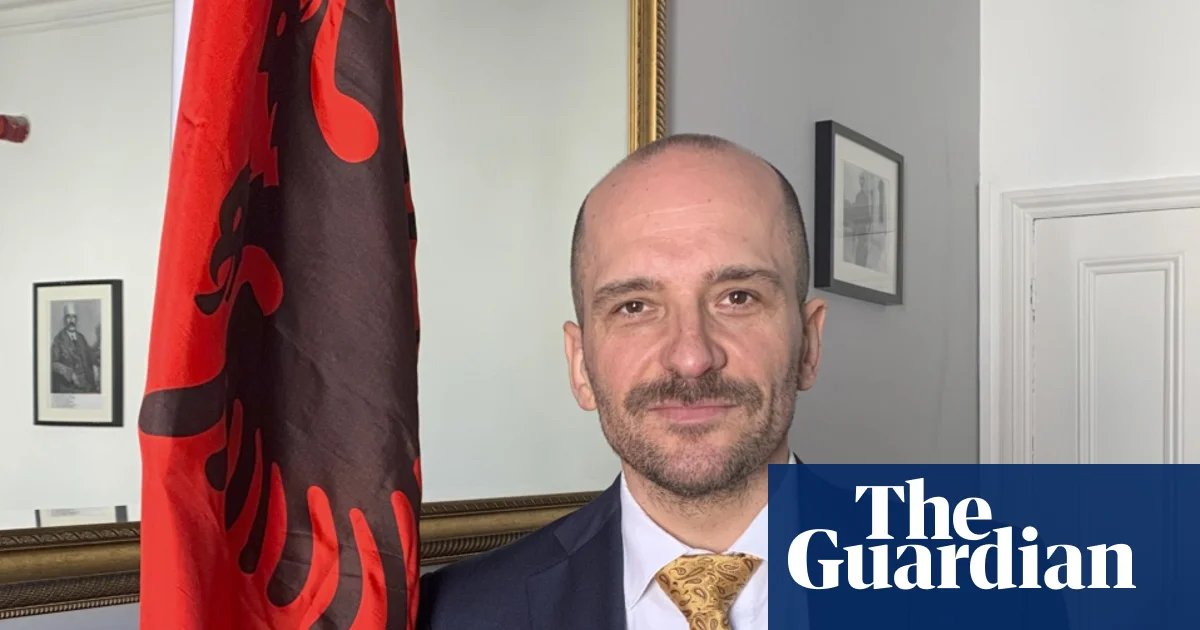
Albanians in Britain are paying the price in schools and workplaces of being scapegoated by rightwing media and politicians, the Albanian ambassador has said.
Uran Ferizi also criticised Shabana Mahmood, the home secretary, for comments in parliament where she singled out Albanians when discussing problems with immigration.
“The obsession with demonising Albanians has reached the parliamentary dispatch box,” the ambassador told the Guardian.
“When a minister names a nationality in parliament, rather than a behaviour or a particular type of crime, they do not describe a problem, they create a target.”
Ferizi, whose first experience of Britain was as teenage stowaway before he went on to read mathematics at Oxford University four years later, used a letter to the Guardian to take issue with what he characterised as the misreporting of statistics in the Telegraph and other media in relation to the scale of Albanian involvement in UK crime.
But he also broadened the criticism, implicitly taking issue with comments by politicians of overseas heritage, including Mahmood, Suella Braverman and others.
“It is particularly dispiriting to see politicians who are themselves second-generation migrants attacking the migrants who have followed them into Britain,” he said.
The ambassador said the impact of negative portrayals of Albanians in the media and by politicians had been felt by the community, including workers, families and schoolchildren.
A pattern had been established in the British press in which selective statistics were stripped of context and amplified, the ambassador wrote in his letter.
“Opportunists, self-styled as experts, peddle theories and invented numbers about Albanians – particularly when elections are looming.”
Ferizi cited analysis in the Daily Telegraph in 2024 which claimed that one in 50 Albanians in the UK was in prison, the worst rate of any nationality. However, he said this had been obtained by a process “that ignores the most elementary procedures for ensuring statistical accuracy”.
“If the number of Albanians in prison is weighted by the actual number of Albanians in the UK, not just by a very small subset of them, and controlled for sex, age and income, you get the result that Albanians are imprisoned at the same rate as native-born Britons. But that doesn’t reinforce the prejudice that Albanians are an exceptionally criminal group, so it isn’t printed.”
The ambassador likened the “scapegoating” of Albanians to the experience of previous groups of immigrants to the UK.
“It was visited upon the Jews, the Irish, the Poles. Each time the narrative revealed the anxieties of the moment rather than the character of the people,” he said.
The ambassador’s reference to Mahmood was in relation to her comments in parliament in November, when she set out controversial plans for the biggest shake-up of asylum laws in 40 years.
Questioned by her fellow Labour MP Stella Creasy about the implications for children, the home secretary said context was needed about “failed asylum-seeking families”.
“There are 700 Albanian families at the moment who have made asylum claims and whose asylum claims have failed,” she said.
Albanian people in the UK were reluctant to talk publicly about their negative experiences, but a number of cases were cited to the Guardian by the embassy.
They included a successful Albanian woman in the tech sector who was reluctant to share a LinkedIn post about an Albanian event after comments were made at work functions about Albanians being “criminals and dangerous”.
She and others also said they had experienced discrimination when it came to promotions.
Another woman told of her husband attending a work function with other professionals, where he was asked what his background was.
She said: “When he said that he was Albanian, the woman who asked him was shocked and said‘I thought all Albanians were criminals.’ He felt horrible but tried to brush it off.”
Ariseld Muca, who heads a company in London’s property maintenance sector, posted on Instagram about his experience, in which clients would constantly bring up news reports about “Albanian criminals”.
“How can I close the deal when my clients are asking where I am from and all they are hearing on the news is that Albanian criminals are taking over London?” he said.
A Home Office spokesperson said: “We highly value the Albanian community in the UK and our longstanding partnership with the Albanian government to crack down on illegal migration and criminality.
“Anyone, regardless of nationality, who is in the UK illegally should be in no doubt that they will be removed at the earliest opportunity.”
The Telegraph has been approached for comment.