dailynewsnblog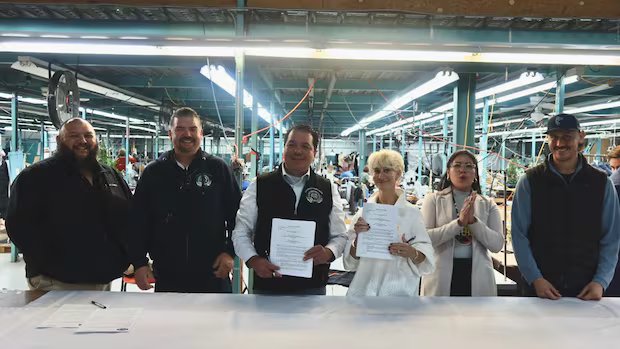

Listen to this article
Estimated 5 minutes
The audio version of this article is generated by AI-based technology. Mispronunciations can occur. We are working with our partners to continually review and improve the results.
A century-old garment manufacturer based in Winnipeg is entering a new chapter in its history after its purchase by a Manitoba First Nation.
Brokenhead Ojibway Nation announced Friday it has purchased Freed & Freed International Ltd. The First Nation, about 70 kilometres northeast of Winnipeg, says it sees economic and procurement opportunities within the industry, along with a chance to provide jobs, training and life skills for First Nations people.
“For me it’s literally getting the opportunities to our people … and starting to look at how First Nations-led businesses start to accommodate some of those procurement opportunities that are out there, and that’s our main target,” Brokenhead Ojibway Nation Chief Gordon BlueSky said Monday.
“We’re looking at the federal, provincial and municipal procurement opportunities.”
Both parties said they are keeping the financial details of the deal private.

Workers at Freed & Freed’s manufacturing facility on Mountain Avenue in Winnipeg were busy Monday assembling jackets that are being made as part of uniforms for members of the Canadian Armed Forces.
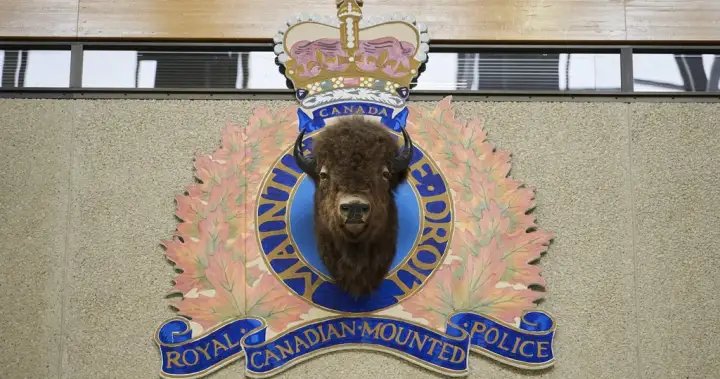
A rack upstairs showcased some of the manufacturer’s previous work, including red coats for the RCMP and others made for employees of Canada Post.
Freed & Freed also made red duffle jackets in Winnipeg that Canada’s athletes wore in 2014 for the opening ceremony at the Winter Olympic Games in Sochi, Russia.
Canadians may also recognize their work as part of the Hudson Bay Company’s Stripes outerwear line.
BlueSky said he sees big potential in those kinds of manufacturing opportunities.
“It’s exactly the stuff that we’re going to be targeting,” he said.
That “will not only allow for our company to be a Canadian-made and Canadian-operated company, but also a First Nation-led company,” he said.

There are programs in the industry that currently see “very little First Nation involvement,” said BlueSky.
“This is something I think we can take to the next level in terms of not only having our involvement, but also having governments actually check the box on First Nations procurement opportunities,” he said.
“Right now, we don’t see that happening.”
BlueSky said a previous acquisition effort had fallen through, but he believes “the word got out” that the First Nation was looking at getting into the garment industry.
Conversations with Freed & Freed had been ongoing for about a year, with talks intensifying over the last six months, he said.
New legacy for Freed & Freed
Marissa Freed’s family has owned the company for four generations, and she was running it prior to its purchase by Brokenhead Ojibway Nation. She will stay on as its president.
The acquisition of the company — established by her great-grandfather in 1921 — by the First Nation is an opportunity for growth, she said.
“I think there is an increasing interest in ensuring that product stays within Canada, and I think the capacity for Canadian products is dwindling down since COVID,” she said in a Monday interview from Atlanta.
“We have the know-how, we have decades of experience, we have the connections, and I think this gives that much more of an opportunity to capture what’s out there and grow those relationships that we already have.”

Even though the business has been in her family for over a century, Freed said the sale is the right decision, and she has no sadness about it. She hopes she’ll now be part of a new legacy for Freed & Freed.
“Knowing that my kids are eight and nine [years old], and so far off from being in the same position I was in, set us up to essentially look elsewhere and explore what opportunities could come our way,” she said.
BlueSky, meanwhile, said one of the things that brings him pride is the idea of one day having an athlete or worker wearing a uniform that says “made in Treaty 1.”
He also said a big part of buying Freed & Freed is creating opportunities for his community that didn’t exist a century ago, when the company started sewing itself into the fabric of the city’s history.
“I think our people 100 years ago … would be very proud of what we’re doing here today,” he said.
“I have nothing but the best intentions on acquiring a company like this and growing it to where … ideally in 100 years from now, our children and grandchildren will understand the focus that we had.”