dailynewsnblog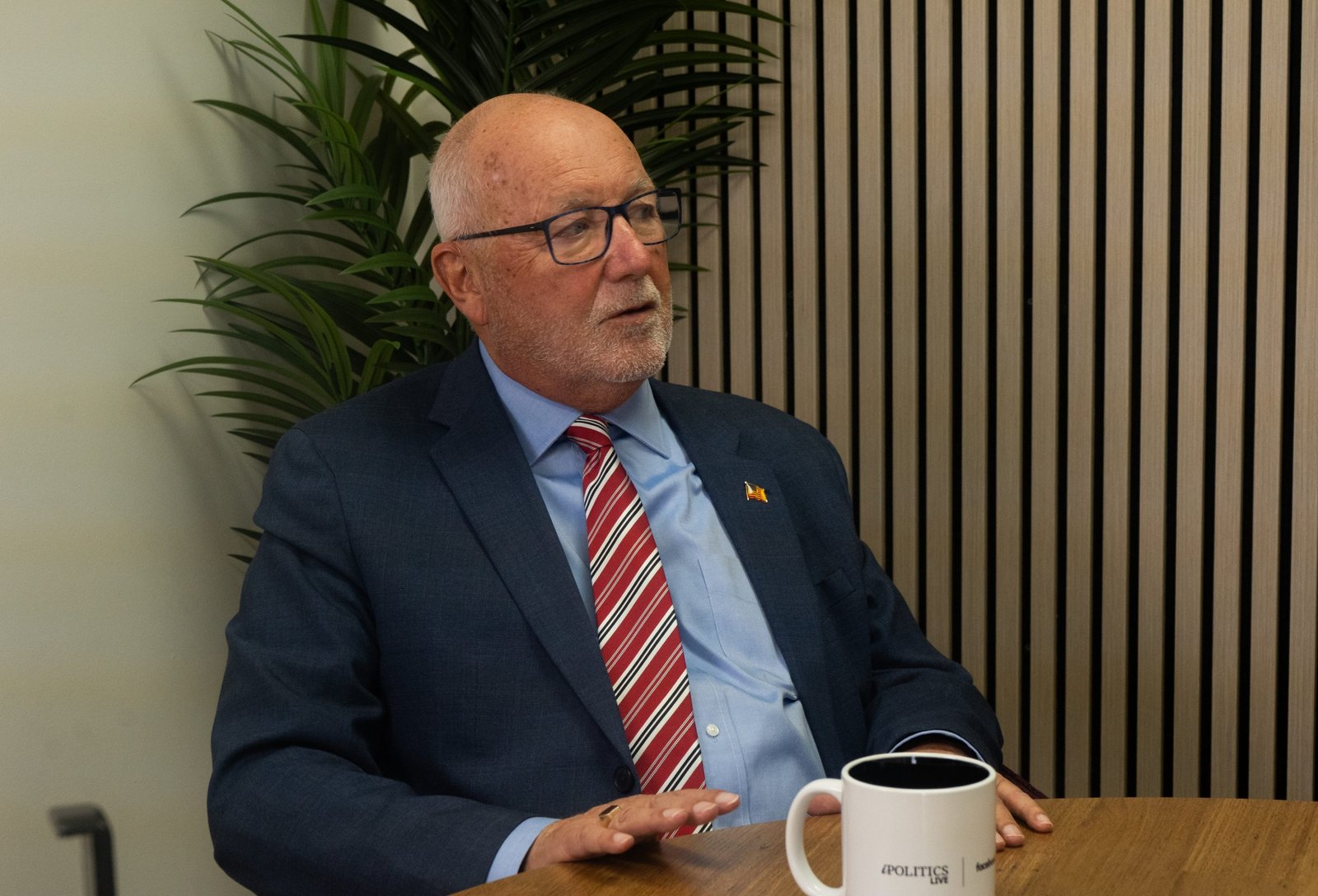
Prime Minister Mark Carney’s warning that Canada’s ties to the United States have become a “weakness” drew mixed reactions from provincial leaders, with P.E.I. Premier Rob Lantz calling the language a “poor choice of words.”
While Prime Minister Mark Carney says Canada’s strong economic ties to the U.S. are a “weakness,” the U.S. ambassador is claiming that a deal is still within reach, even if it may no longer be as ambitious.
In a 10-minute video released on Sunday, Carney said Canada must “correct” its longstanding dependence on the U.S. as tariffs bite into key sectors like auto and steel industries.
U.S. Ambassador to Canada Pete Hoekstra offered a starkly different view in an interview with iPolitics on Friday. He said Ottawa and Washington were on the verge of making a multi-sector agreement last fall, one that could have resolved tensions in steel, autos and energy, before it was scrapped.
“I’m confident we’re going to get to a deal, it’s just taken longer and it’s been more painful than what I thought it would be,” Hoekstra said in the roughly 45-minute interview, released in its entirety on Tuesday as a special episode of iPolitics‘ No Talking Points podcast.
“It may not be an optimal deal,” he said.
Before a deal was closed, U.S. President Donald Trump abruptly ended negotiations last fall, citing frustrations with an Ontario government ad running in the U.S. that used Ronald Regan’s words to denounce tarriffs.
Hoekstra suggested that while negotiations between Canada and the U.S. are ongoing, the outcome may fall short of earlier expectations, as momentum in key areas are slipping.
“We were that close to a deal [in] October, November of last year,” Hoekstra said. “And it all got blown up.”
Without an obvious indication of who was responsible for the collapse, he noted that the deal would have resolved disputes in steel, aluminum and autos–while advancing cooperation in energy and uranium, or trade areas that he described as already “on the board.”
Around that same time, Carney introduced the Buy Canadian policy, along with targeted relief measures, after extending a temporary six-month remission on select U.S. imports.
Hoekstra pushed back on the idea that Canada-U.S. ties are fundamentally weakening, pointing to the scale of ongoing trade.
“You’re doing two and a half billion dollars worth of business each and everyday,” he said.
He added that businesses on both sides remain “thrilled” to work together.
“We’re willing to look at big deals, which is the preference right now of the President,” Hoekstra said. However, he pointed out that the upcoming CUSMA review is really up to the folks who are negotiating at the table.
The prime minister’s remarks also drew mixed reaction from provincial leaders.
At a Canadian Chamber of Commerce Conference event on Monday, Ontario Premier Doug Ford said there’s a need to diversify trade and become more self-reliant.
“We’re building the largest nuclear plant in the world, we don’t need Donald Trump for that, we don’t need Donald Trump to expedite permits to get our critical minerals out of the ground in Ontario,” Ford said.
PEI Premier Rob Lantz, on the other hand, said he didn’t agree with the “choice of words,” though he’s happy with the Prime Minister’s approach.
Lantz said Hoekstra has reached out to him many times in his role as chair of the Council of Federation.
“He’s expressed optimism to me about the CUSMA review,” Lantz said. “He doesn’t think that supply management is going to be up for any substantial change.”
New Brunswick Premier Susan Holt said Hoekstra had made no such indication to her.
When asked what working with Hoekstra is like, Northwest Territories premier R.J. Simpson said there’s always a way to work with someone even if you don’t se “eye-to-eye on things.”
“He’s a direct line to the White House,” Simpson said. “I understand the world that he’s working, and the worldview that he brings, and we have to understand that that’s what the worldview he brings.”
Security game still strong
Despite trade tensions, Hoekstra emphasized that national security between Canada and the U.S. remains strong. The ambassador noted the two countries have always been on the same page when it comes to migration and border security.
“America is basically allowing people into America that aren’t a threat to the United State, and most likely, are not a threat to Canada,” Hoekstra said.
Earlier this year, Ottawa passed Bill C-12, an omnibus bill that covered border security and immigration. On security, the law imposed a stricter regulation on asylum seekers coming in from other borders but also focused on tracking transnational crime like fentanyl trafficking – an issue the U.S. President Donald Trump claimed came from the northern border.
When asked how he felt about the progress, Hoekstra said the U.S. is “pleased.”
“We think that, from our standpoint, that there may be some additional things that can be done,” he said.
A spokesperson for the public safety minister added that while there is an existing day-to-day cooperation between agencies along the Canada-U.S. border, C-12’s development is completely guided by domestic consultations.
“Canada’s approach to border and immigration legislation is driven first and foremost by our own national priorities,” they said.
National Defence Minister David McGuinty also remarked that Canada continues to work “hand in glove” with the U.S. on defence, security and intelligence, especially through NORAD.
“I’ve managed to get to all four NORAD bases – we work very, very closely on that front,” McGuinty said in response to a question from iPolitics on Monday.
While he acknowledged economic tensions remain, McGuinty said Carney’s simply “brought a plan” to bear for the country’s future, including Canada’s first defence industrial strategy.