dailynewsnblog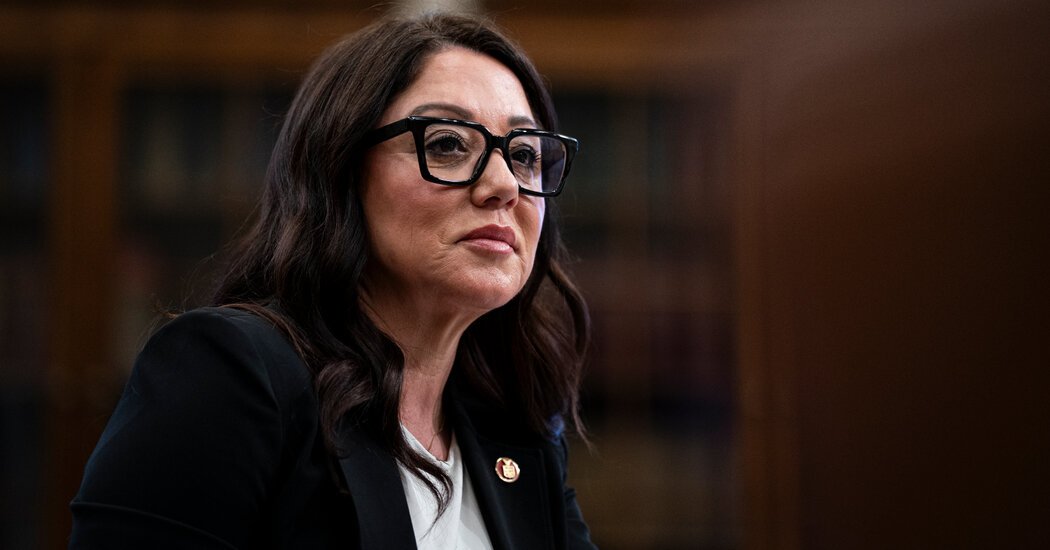
Lori Chavez-DeRemer, President Trump’s embattled labor secretary, stepped down on Monday as multiple scandals and investigations closed in on her.
“Labor Secretary Lori Chavez-DeRemer will be leaving the Administration to take a position in the private sector,” Steven Cheung, a White House spokesman, posted on social media. He said Keith Sonderling, the deputy secretary of labor, would serve as acting secretary.
Pressure on Ms. Chavez-DeRemer had mounted in recent weeks, as investigators and congressional leaders homed in on questions about her conduct in office, and that of her aides and members of her family.
The Labor Department’s inspector general’s office is nearing the end of a monthslong investigation into a whistle-blower’s allegations of professional misconduct by Ms. Chavez-DeRemer and her closest aides. The claims include that she was having an affair with a member of her security team and used department resources for personal trips. Ms. Chavez-DeRemer was expected to be interviewed in the matter in the coming days.
Investigators spoke with several dozen witnesses and uncovered evidence that Ms. Chavez-DeRemer and her staff abused federal spending limits on personal trips, several people familiar with the investigation said, including on fancy hotels, S.U.V. rentals and meals. Four people have left or been forced out of their jobs in connection with the investigation.
Investigators had also reviewed text messages sent to young staff members by Ms. Chavez-DeRemer, her former deputy chief of staff, her husband and her father. The messages, reported last week by The New York Times, suggested that the secretary was drinking during the workday and raised questions about professionalism with her staff.
Nick Oberheiden, a lawyer representing Ms. Chavez-DeRemer in the internal investigation, said on Monday said she “did not resign because she violated the law; no such finding exists.”
In a post on X, Ms. Chavez-DeRemer said that she was honored to have served under the president.
The likelihood that the inspector general’s investigation would reveal embarrassing details was compounded by a parallel inquiry on Capitol Hill: Senator Charles E. Grassley of Iowa, the Republican chair of the Judiciary Committee, demanded internal records and statements from the department in connection with the allegations.
And Ms. Chavez-DeRemer’s husband, Dr. Shawn DeRemer, has been barred from the department’s headquarters, after female staff members accused him of making unwanted sexual advances, including filing a police report.
Although police and prosecutors have said they would not bring criminal charges against him, the situation continued to reverberate in the secretary’s office. In recent weeks, three claims of a hostile work environment were filed against Ms. Chavez-DeRemer with the department’s civil rights office.
Mr. Sonderling, a labor lawyer with a decade of government experience, has been effectively leading the Labor Department during Ms. Chavez-DeRemer’s tenure, multiple employees told The Times.
Ms. Chavez-DeRemer, 58, a one-term former Republican congresswoman from Oregon, was nominated to the secretary position with backing from the Teamsters union, whose president, Sean O’Brien, supported Mr. Trump’s 2024 run.
Mr. Cheung, the White House spokesman, said on Monday that Ms. Chavez-DeRemer had “done a phenomenal job in her role by protecting American workers, enacting fair labor practices and helping Americans gain additional skills to improve their lives.”
But her leadership left many Labor Department employees frustrated and demoralized, including career staff and political appointees. In interviews with The Times, dozens described a toxic workplace characterized by an absentee secretary and hostile aides.
The inspector general’s investigation was touched off by an internal complaint, first reported in January by The New York Post, that Ms. Chavez-DeRemer was having an affair with subordinate and that she and her top aides regularly concocted official trips to destinations where Ms. Chavez-DeRemer could socialize and see family.
The evidence gathered in the inspector general’s investigation, along with the related police report and civil rights complaints, painted a picture of an executive office in which younger female staff members often fielded inappropriate requests and messages from Ms. Chavez-DeRemer, her family and her close aides. Young women in the executive office were also instructed to “pay attention” to the secretary’s husband and father, people familiar with the matter said.
In one 2025 text message exchange reviewed by The Times, a female staff member apologized Dr. DeRemer for not being in touch, and promised to check in.
“You better,” Dr. DeRemer, an anesthesiologist, responded. “I was feeling forgotten. I figured you were still in church repenting after your exposure to the demon state of Oregon.”
In another exchange, Ms. Chavez-DeRemer asked a staff member to bring her a bottle of “josh Sauvi B,” a reference to white wine, to her hotel room from the hotel bar while they were on a work trip.
Many in the department — and in Washington more broadly — sensed that her days as secretary were numbered, with the specter of potentially embarrassing details emerging in an investigative report.
Ms. Chavez-DeRemer’s resignation was reported earlier on Monday by Notus.
On Monday, senators arriving on Capitol Hill for the first vote of the week responded to the news of her departure.
“The secretary demonstrated a lot of wisdom in resigning, and I think she read the room,” said Senator John Kennedy, Republican of Louisiana.
Senator Thom Tillis, Republican of North Carolina, said senators, who will vote to confirm her replacement, needed to do a better job vetting Trump administration nominees. “I think what we have to do is anywhere where benefit of the doubt was given in the past, you’ve got to doubt,” he said.
Ms. Chavez-DeRemer led the department during a period in which the labor market weakened but proved surprisingly resilient.
Job growth has slowed to a crawl in recent months, wage growth has slowed and the unemployment rate has ticked up gradually. Younger workers, in particular, have struggled to gain a foothold in the labor market, and Americans have become increasingly concerned about the threat that artificial intelligence could pose to their career prospects.
Yet layoffs across the economy remain historically low, and many economists say weak hiring has more to do with a lack of supply — in part because of Mr. Trump’s crackdown on immigration — than a lack of demand from employers. Economists describe the labor market with words like “stagnant” and “anemic,” but not necessarily weak.
Ben Casselman and Megan Mineiro contributed reporting