dailynewsnblog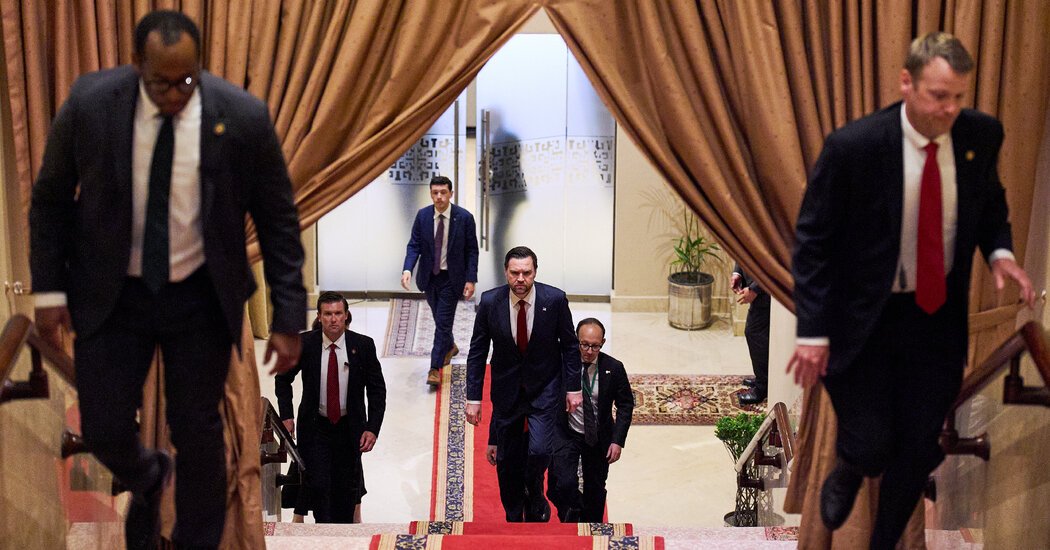
Despite trading threats and issuing mixed messages in recent days, both the United States and Iran indicated on Monday that they planned to take part in another round of peace talks in Pakistan this week.
Vice President JD Vance was expected to leave Washington for Islamabad, Pakistan’s capital, on Tuesday, according to two U.S. officials. Iran did not publicly commit to talks. But two senior Iranian officials said that Mohammad Bagher Ghalibaf, the speaker of the Iranian Parliament, who attended the last round of negotiations, would attend again if Mr. Vance did.
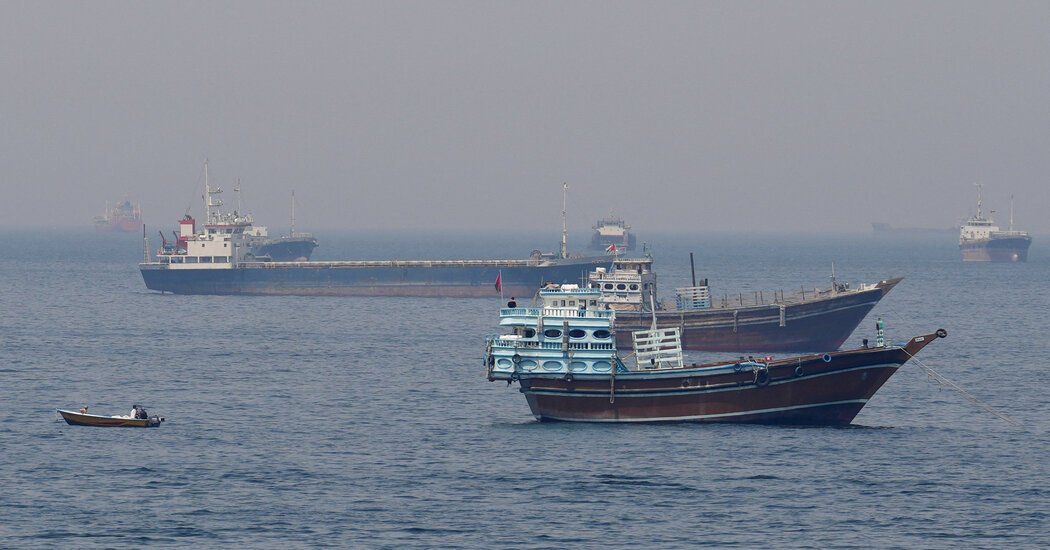
The possibility of further talks came as Iran threatened to retaliate for the seizure by U.S. forces of an Iranian cargo ship near the Strait of Hormuz on Sunday. Iran’s armed forces called it “piracy,” and warned that they would soon retaliate, according to Tasnim, a semiofficial Iranian news agency.
The U.S. Navy has now turned back 27 ships heading for or leaving Iranian ports, according to United States Central Command, as an American blockade enters its second week. Only three ships passed through the Strait of Hormuz on Monday as traffic in the economically crucial waterway slowed to a near halt, according to Kpler, a company that tracks maritime traffic.
President Trump said on social media on Monday that “if Iran’s new leaders (Regime Change!) are smart, Iran can have a great and prosperous future!”
Masoud Pezeshkian, Iran’s president, noted the “deep historical mistrust” between Iran and the United States, but said that war would serve neither country’s interests.
Iranian officials have publicly expressed skepticism about the prospects for a diplomatic breakthrough as a two-week cease-fire with the United States nears expiration on Wednesday.
Iranian officials “do not see any serious sign of U.S. commitment” to a deal, a spokesman for Iran’s Foreign Ministry, Esmail Baghaei, said at a news conference in Tehran on Monday. “It is not possible to speak of advancing diplomacy in its real and conventional sense,” he said.
Yet Iranian officials have been careful not to rule out talks. Just hours after Mr. Baghaei spoke at the news conference, Mr. Pezeshkian made an appeal for “reason” and calm.
“While standing firm against injustice and excessive demands, we must bear in mind that continuing the conflict benefits no one,” he said. “Not us, not the other side, and not the future of the region or the generations to come.”
Two senior Iranian officials then said Mr. Ghalibaf was planning to lead a delegation to Islamabad if Mr. Vance went. Given the long flight from Washington to Pakistan, Mr. Ghalibaf would have time to wait before deciding whether to board a plane.
The mixed messages reflected a wariness among Iranian officials, experts said, about the prospects for a lasting peace agreement with the United States.
Iran’s leadership is contending with two main sources of pressure, said Hamidreza Azizi, an expert on Iranian security issues at the German Institute for International and Security Affairs, a research group based in Berlin.
One comes from Iranian hard-liners emboldened by having so far survived the U.S.-Israeli onslaught that began at the end of February. They have organized demonstrations across Iran at which supporters wave rifles and chant against surrender.
“They have a core support base of the Islamic Republic, which is very hard line and ideological, and is very sensitive to any sign of a concession that they would immediately interpret as capitulation,” Mr. Azizi said.
“The other pressure, of course,” he said, “is Donald Trump — and his apparent willingness to stick to his coercive diplomatic strategy.”
Mr. Azizi pointed to what happened over the weekend after Iran’s foreign minister, Abbas Araghchi, announced that Iran would reopen the Strait of Hormuz.
Mr. Araghchi immediately came under criticism from media affiliated to Iran’s powerful Islamic Revolutionary Guards Corps. Then less than an hour later, Mr. Trump said the U.S. naval blockade against Iran would continue. The next day, Iranian forces reimposed their own blockade.
“I think the Iranians really do want a deal, but Trump is just too crude — he just wants total victory in public,” said Mohammad Ali Shabani, the editor of Amwaj.media, a regional news outlet. “And the Iranians feel like time is on their side.”
Some Iranian officials remain deeply concerned that they could come under attack amid the talks, or that Mr. Trump could return to full-fledged war, said Sasan Karimi, a political scientist at the University of Tehran and a former vice president for strategy in the Iranian government. “Negotiators do not even know whether they could be attacked or not when they are in the air,” he said.
But there are also broader concerns.
“They don’t want to fall into a trap, and they don’t want to have pressurized negotiations, whether that is by limiting the time or by setting preconditions,” Mr. Karimi said. “The Iranians, in those circumstances, would prefer war.”
Reporting was contributed by Jenny Gross, Eric Schmitt, Max Bearak, Elian Peltier, Edward Wong, Sanam Mahoozi and Michael Levenson.