dailynewsnblog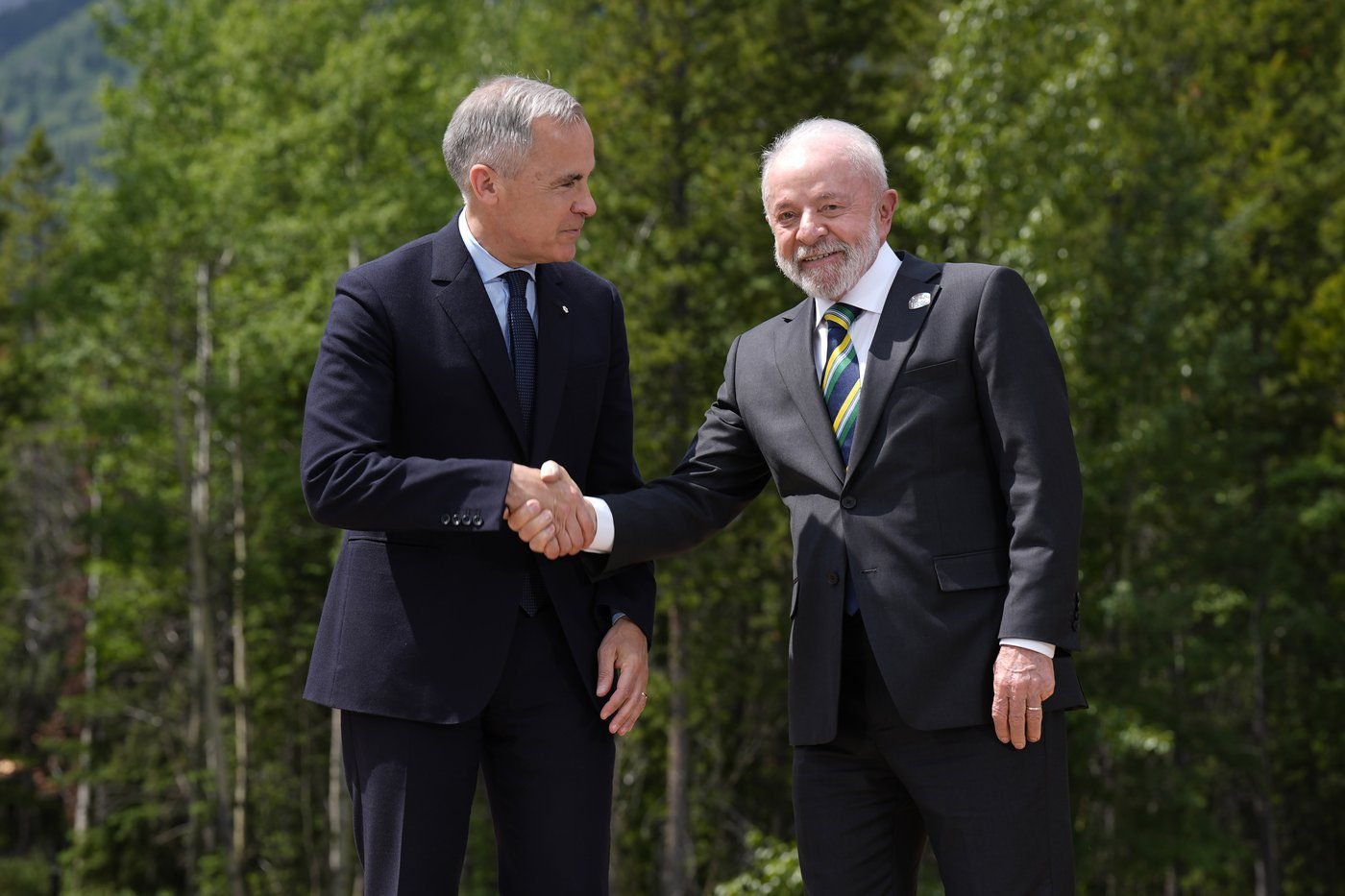
OTTAWA — Eight years after Canada launched free trade negotiations with the Mercosur bloc of nations, a Brazilian official says an agreement is on track to be signed by the end of the year.
Paula Barboza, director for extra-regional negotiations and economic governance at Brazil’s ministry of foreign affairs, told The Canadian Press the talks have been propelled by a “political push” as Canada and other nations work to diversify their trade.
“I think we both have these negotiations as a priority for our governments and we are keen to close them as quick as possible,” she said in an interview.
Canada launched negotiations on a free trade agreement with the South American trading bloc in 2018. The Mercosur bloc includes Argentina, Bolivia, Brazil, Paraguay and Uruguay.
The Government of Canada’s website says Mercosur represents a GDP of over US$3.0 trillion and a population of 282 million.
It says Canada’s merchandise trade with Mercosur reached C$15.8 billion in 2024, with Canada’s exports valued at C$3.1 billion and imports valued at C$12.8 billion.
The website says a free trade agreement with Mercosur could reduce tariffs on Canada’s automotives, information and communications technology, industrial machinery, chemicals and plastics, and forestry exports by up to 35 per cent.
Other industries that could see lower tariffs include medical goods, pharmaceuticals and aluminum.
Canada’s federal government has not responded to multiple requests for comment on the trade negotiations.
While negotiations have been continuing for several years, Barboza said there’s now political interest in moving things along.
Barboza said China has become a dominant trading partner for the Mercosur bloc and that “it’s important to diversify.” Earlier this year, Mercosur and the European Union signed a landmark free-trade agreement.
Canada, meanwhile, is actively looking to diversify its trade in response to tariffs and threats from U.S. President Donald Trump.
“I think the priority on rebalancing trade accounts is increasing,” said Barboza. “Both parties think it’s important to diversify, not only providers but different destinations as well.”
Barboza said negotiations with Canada took place in Brazil in February and another round is planned for Brazil this month. In May, she said, negotiations are set to take place in Canada.
“Then we are going to see where we are,” she said. “If not, we are going to continue in June, July, whenever it’s possible.”
Brazilian President Luiz Inacio Lula da Silva said earlier this year that Prime Minister Mark Carney accepted an invitation to visit Brazil in April.
Barboza said she does not have confirmation yet of when that visit might take place.
Fen Osler Hampson, a professor of international affairs at Carleton University, said Canada is pursuing the free trade agreement as part as Carney’s efforts to diversify trade.
He said it’s also being done to improve access to the largest market in South America and “give Canadian farms a better chance to compete against others like the Chinese and the Europeans who are already active in that market.”
“There’s obviously potential to fairly significantly increase our trade, and particularly exports to the region,” he said, adding that there are obstacles to a deal, such as environmental concerns.
“When your biggest market is no longer as accessible as it used to be, you look for alternatives, and so I think there is a political imperative there.”
Hampson said the beneficiaries would be producers of fertilizers, grains, forestry and processed foods. He added that Canada already has a “pretty healthy trade” in machinery and aircraft parts but there’s opportunity for expansion.
“One sector that could potentially be important, because it’s getting hit pretty hard by tariffs, is the auto parts sector,” he said. “So a free trade agreement would allow us to diversify beyond the U.S. market.”
On the services side, Hampson said Canada also has lots of small and medium-sized enterprises that provide engineering, consulting and mining services and would benefit from access to this market.
“The flip side of that is whenever you have a free trade agreement, some sectors here at home are likely to face greater competition and that’s true in beef, poultry, some processed foods as well and manufacturing,” Hampson said.
Keith Currie, president of the Canadian Federation of Agriculture, said in an email that the organization has “serious concerns” about Canada re-engaging in a free trade agreement with the Mercosur bloc.
“Mercosur countries benefit from significant scale, lower production costs, and differing regulatory and environmental approaches compared to Canada,” he said.
This report by The Canadian Press was first published April 20, 2026.
Catherine Morrison, The Canadian Press