dailynewsnblog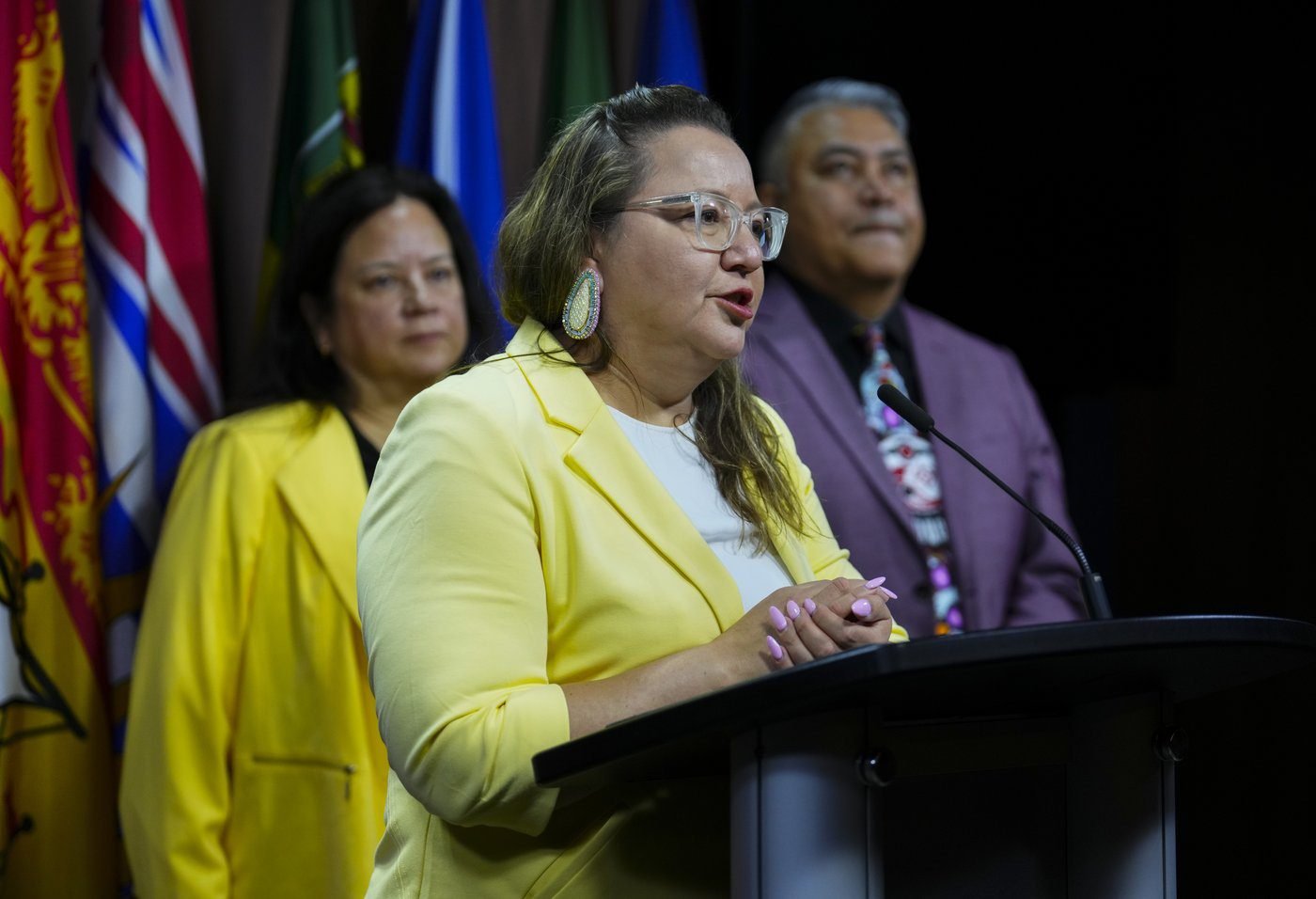
OTTAWA — Gov. Gen. Mary Simon and other Indigenous leaders are heading to the United Nations on Monday to stress the importance of its Declaration on the Rights of Indigenous Peoples.
The forum comes as the use of the declaration in Canada has come under fire and after some governments have attempted to water down its application following court rulings that cited it.
An advisory from Simon’s office says her opening remarks will “underscore our country’s enduring commitment to reconciliation and the implementation of the United Nations Declaration on the Rights of Indigenous Peoples.”
The notice also says Simon will meet with UN Secretary-General António Guterres on Monday to “discuss shared values.”
Assembly of First Nations National Chief Cindy Woodhouse Nepinak is also expected to attend. She told The Canadian Press ahead of her trip that she stands in “absolute solidarity” with First Nations as they oppose moves by the provincial government in British Columbia to weaken its version of the declaration.
She added that Ottawa and the province cannot claim to uphold the rule of law while they seek to water down Indigenous rights.
“The inherent pre-existing rights of First Nations are part of, and are protected by, international human rights law. They cannot be suspended, amended or paused,” she said in a statement to The Canadian Press.
“The UN Declaration on the Rights of Indigenous Peoples affirms First Nations rights as human rights. Neither Canada nor British Columbia can extinguish, amend or suspend First Nations’ human rights and remain a respected member of the international community.”
British Columbia’s “DRIPA” law is based on the United Nations Declaration on the Rights of Indigenous Peoples, which requires free, prior and informed consent from Indigenous Peoples on matters affecting their rights, lands, territories and resources.
The federal government also has adopted the UN principle and is working toward its implementation, though its position is that it does not constitute a veto on development.
British Columbia Premier David Eby has said the province needs to work with First Nations to amend or suspend the legislation after two court decisions that cited the law recently sided with First Nations on mining and property rights.
On Sunday, Eby backed down again on pausing key parts of the legislation, scrapping plans to table a suspension bill this legislative session. His office said he would hold a press conference Monday to outline next steps.
His government tried to amend the legislation this year, but the plan received widespread backlash from First Nations leaders. His government then moved to suspend parts of DRIPA to shield itself from court challenges, a move which was also rejected by First Nations and some of his own MLAs.
The premier previously staked his government, which holds only a single-seat majority, on passing the suspension by making it a confidence vote. But the government said last week it would not hold a confidence vote on the legislation — diverting a possible election call — after Indigenous member Joan Phillip told her own government she would not vote for the changes.
A draft document provided by a First Nations source says the government hopes to work with First Nations to come up with a joint approach to DRIPA, under a framework for negotiations.
“First Nations across British Columbia reject any attempt to dilute, amend, repeal or suspend DRIPA. Free, prior, and informed consent are not barriers to development but rather the conditions that enable it to proceed in a sustainable way over generations,” British Columbia Assembly of First Nations Regional Chief Terry Teegee has said.
“Our rights are not negotiable; they are essential for reconciliation, justice, and a shared future. The path forward is through partnership and respect, not fearmongering and betrayal.”
Woodhouse Nepinak said Eby’s moves have been contrary to DRIPA itself, calling them “a huge step backwards for human rights and for reconciliation in Canada.”
“Many First Nations in British Columbia supported Premier Eby because of his stand on human rights and DRIPA,” Woodhouse Nepinak said.
“It is sad to see him abandon those values and First Nations. We fully support Regional Chief Teegee and First Nations leadership in the region in exploring every option to oppose this regressive move.”
This report by The Canadian Press was first published April 20, 2026.
— With files from Wolfgang Depner in Victoria, B.C.
Alessia Passafiume, The Canadian Press