dailynewsnblog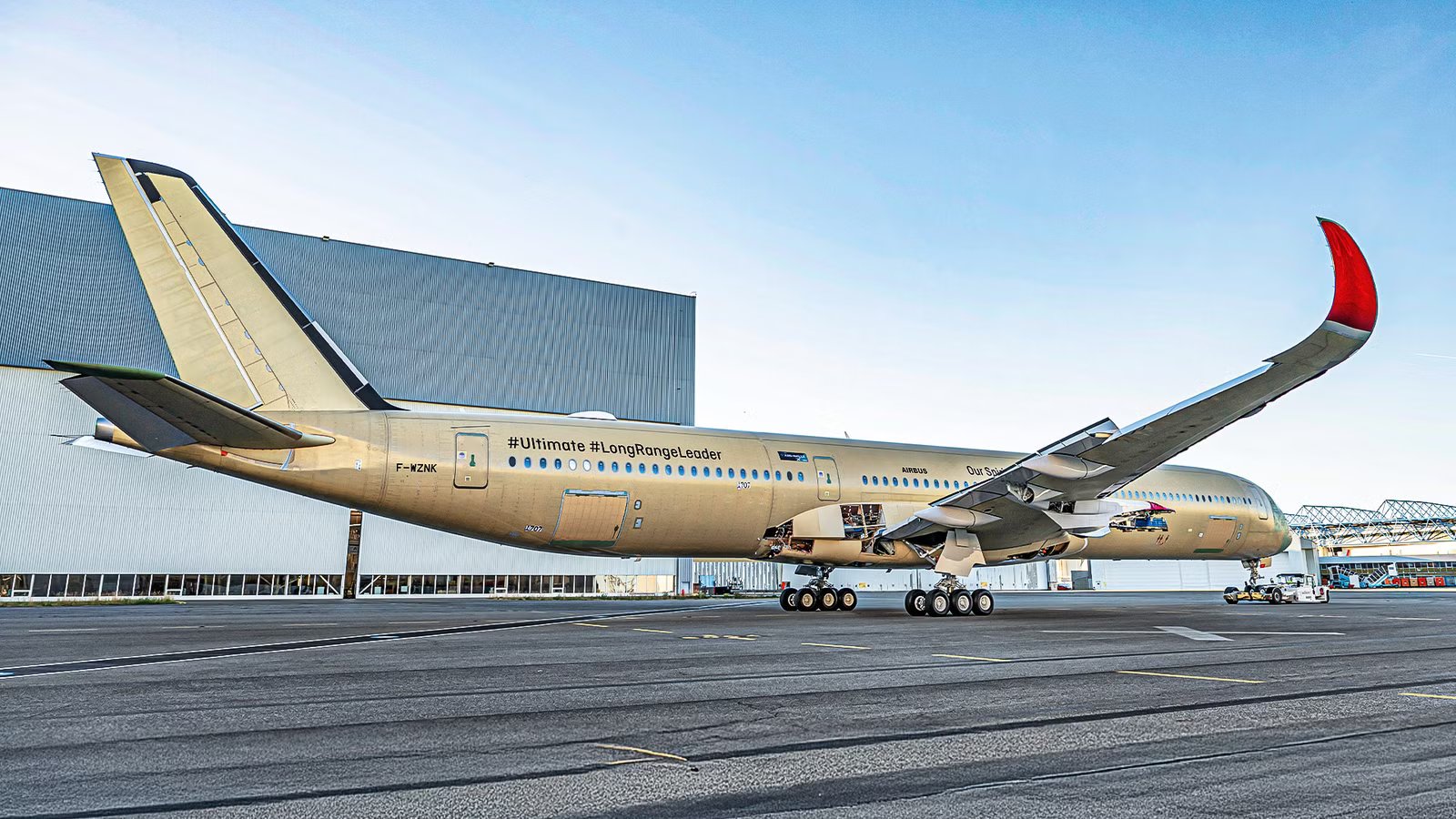
The Airbus A350-1000ULR is the longest-range commercial twin-engine aircraft ever built. The addition of an extra 20,000-liter fuel tank allows the A350-1000ULR to serve routes nearly 10,000 nautical miles (18,500 km) long, with flight times lasting nearly an entire day. With the first -1000ULR variant of the popular A350 family rolling off Airbus’s Toulouse production line less than a week ago, in less than a year, the A350-1000ULR will begin service on two of the world’s longest routes.
Looking closer at the A350-1000ULR reveals an impressive, highly capable aircraft by nearly every measure. With an increased maximum takeoff weight, passenger-centric design philosophy, and the massive Trent XWB-97 engines, the ULR will be the perfect aircraft for Qantas’ Project Sunrise. For travelers based in the U.S. and Europe, travel to Australia will soon become much faster, thanks to the A350-1000ULR’s unique engineering solutions designed specifically to make previously impossible routes possible.
What Is The Airbus A350-1000ULR?

The Airbus A350-1000ULR (or Ultra Long Range) is a specialized variant of the Airbus A350-1000, currently the largest variant in the A350 series. In contrast to the A350-1000, which was designed to optimize both range and passenger capacity, the ULR variant is envisioned specifically for endurance rather than maximum seating. In practice, this means the A350-1000ULR will have a seating capacity of around 240 seats. Given the lower weight of the aircraft, as well as the auxiliary fuel tanks the ULR comes installed with, the A350-1000ULR’s range will stretch to nearly 10,000 nautical miles (18,500 km).
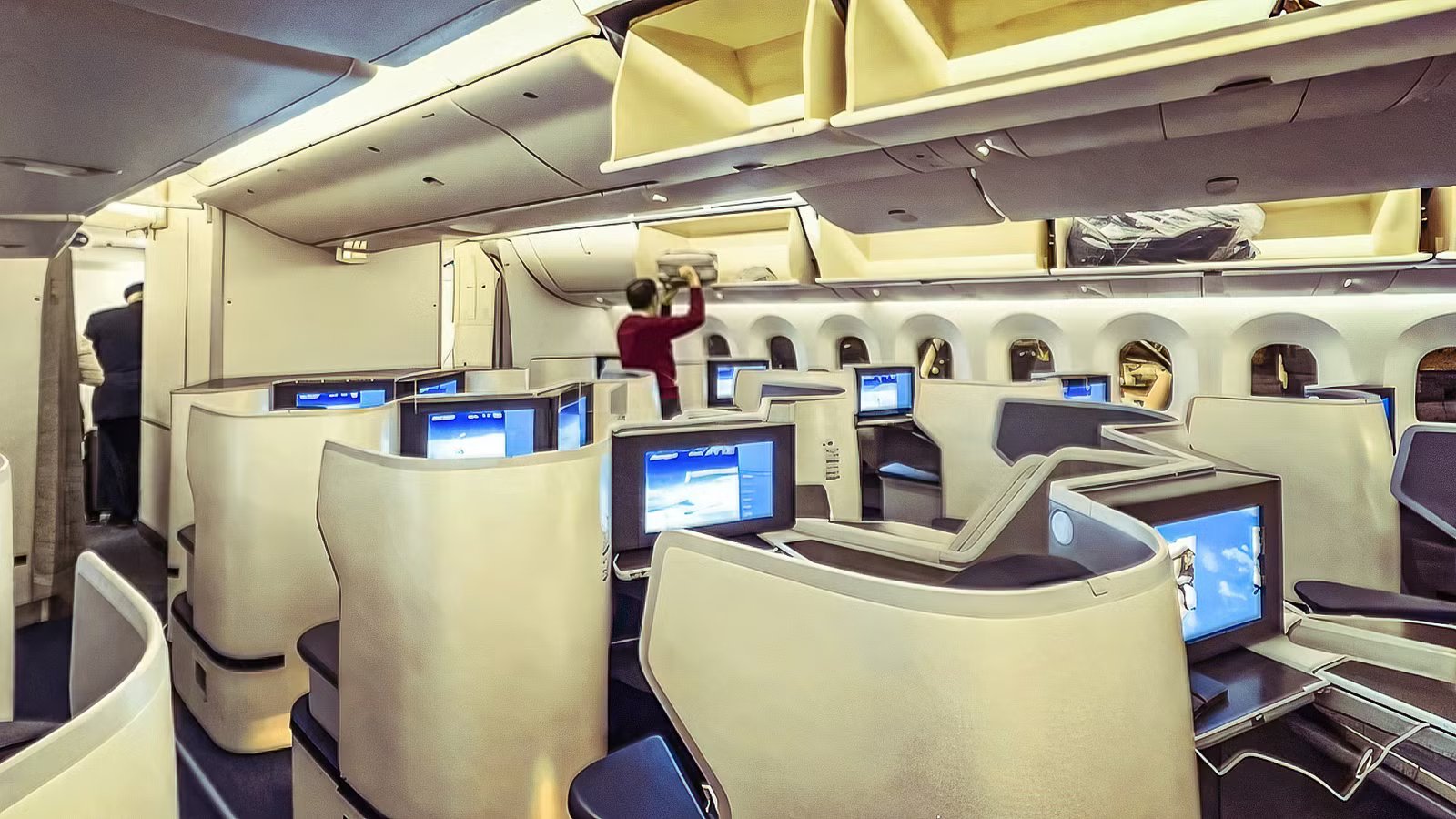
For Qantas, the A350-1000ULR will be configured with just 238 seats, significantly fewer than the 350+ found on standard A350-1000 layouts. This includes six first class suites with a separate armchair and bed, 52 business class suites, 40 premium economy seats, and 140 economy seats with a generous 33 inches of pitch. This low-density configuration reduces overall weight while improving passenger comfort, both critical factors for flights lasting nearly a full day. Notably, Qantas’s A350-1000ULR will include both first class and economy, in contrast to  Singapore Airlines’ A350-900ULR, which currently operates the world’s longest flight from New York to Singapore and features only business class and premium economy.
22-Hour Flights Made Possible By The 20,000-Liter Rear Center Fuel Tank

The defining engineering feature of the A350-1000ULR is the aircraft’s 20,000-liter rear center auxiliary fuel tank. Equal to approximately 5,283 gallons, this additional fuel tank dramatically increases the A350-1000ULR’s fuel capacity to allow ultra-long-haul flights. When combined with the A350’s standard wing and center-wing fuel tanks, the ULR’s fuel capacity rises to over 170,000 liters, up from the A350-1000’s typical capacity of 156,000 liters. However, unlike other auxiliary fuel tanks, the ULR’s rear center tank is not removable. Rather, it is a permanent structural addition to the aircraft integrated into the rear fuselage of the aircraft.
In order to accommodate the additional weight that the extra fuel imposes, Airbus engineers had to make a series of changes to the A350-1000. While specific data on the A350-1000ULR’s maximum takeoff weight (MTOW) has not been published, currently the largest A350-1000 boasts a maximum takeoff weight of 710,000 lbs (322 tonnes). For comparison, the standard Airbus A350-900 has a MTOW of 591,000 lbs (268 tonnes) while the A350-900ULR increases that to 620,000 lbs (280 tonnes). This means the A350-1000ULR could have a MTOW of almost 750,000 pounds (340 tonnes), about the same as the world’s first double-decker airliner, the Boeing 747-100.
What makes the rear center fuel tank so significant is not just the structural modifications required for the standard A350-1000; it’s the tremendous range it unlocks. According to Airbus, the A350-1000 has a maximum range of 9,000 nautical miles (16,670 km), enough to serve routes like Singapore to New York or Dubai to Los Angeles. The ULR variant takes this to the next level, with a range of 9,700 nautical miles (18,000 km), enough to serve both of Qantas’ Project Sunrise routes from London and New York to Sydney. In fact, the A350-1000ULR will provide about 600 nautical miles of additional range beyond the base amount needed to reach Sydney from London, providing enough reserve fuel in case of diversion.

Progress: Qantas’ 1st Airbus A350-1000ULR Rolls Out With New Rolls-Royce Engines
The first Qantas A350-1000ULR, a game-changer for ultra-long-haul flights, has been spotted with its new Rolls-Royce engines in Toulouse.
Engineering Modifications And The Road To Service For The A350-1000ULR

While the A350-1000ULR’s massive auxiliary fuel tank is the key differentiator between it and the A350-1000, the ULR variant includes several other modifications. First, the aircraft’s landing gear was reinforced to handle the additional load at takeoff, ensuring it is capable of supporting the aircraft’s increased takeoff weight. Additionally, Airbus optimized the wing aerodynamics of the A350, adding taller blended winglets to ensure the ultra-long-range version can climb effectively with a heavier gross weight. Flight management and fuel balancing systems were also upgraded to handle the more complex fuel distribution required across the additional tank, ensuring proper center of gravity management over 22-plus hours in the air.
Powering the A350-1000ULR are two Rolls-Royce Trent XWB-97 engines, the most powerful engines ever fitted to an Airbus aircraft. These engines, a higher-power version of the Trent XWB-84 and XWB-94, offer a 25% reduction in fuel burn and CO2 emissions compared to previous-generation aircraft. Additionally, the XWB-97 engine is rated for 97,000 pounds (430 kN) of force on takeoff, with a net maximum continuous thrust rating of 83,100 pounds (370 kN).
On April 12, 2026, Qantas’ first A350-1000ULR rolled off Airbus’ final assembly line in Toulouse, France. While still unpainted and carrying the test registration F-WZNK, it is ready to undergo rigorous flight testing to ensure it is ready to serve the world’s longest nonstop flights. For the next few months, the first A350-1000ULR will remain in France until it is expected to be handed over to Qantas in November for ferrying to Sydney before flights commence in the spring of 2027.
The Similarities Between The A350-1000ULR And The A321XLR

The rear center fuel tank concept used on Qantas’ A350-1000ULR is quite similar to that of Airbus’s long-range narrowbody, the Airbus A321XLR. Both aircraft achieve their extended range through permanently integrated rear center tanks rather than removable auxiliary units, and both require special certification processes due to the structural demands of the additional fuel. However, naturally, the scale and context of the two tanks differ in important ways that reflect the similar but different missions both aircraft are designed to serve.
The integrated design of the rear center tank on both the A350-1000ULR and the A321XLR utilizes empty space within the aircraft’s belly. By avoiding the need for larger wings or external tanks, Airbus is able to minimize drag and preserve fuel efficiency. Additionally, since these fuel tanks are integrated into the aircraft’s fuselage, it simplifies maintenance compared to removable auxiliary tanks, which can introduce additional complexity and weight penalties.
Size-wise, the A350-1000’s rear center tank allows for an additional 5,283 gallons (20,000 liters) of fuel onboard. In comparison, the A321XLR’s rear center tank can hold up to 3,460 gallons (13,100 liters) of fuel, and, when combined with an extra auxiliary fuel tank, the aircraft’s fuel capacity above standard is increased by 4,280 gallons (16,200 liters). These tanks allow the A321XLR to serve flights lasting almost nine hours and the A350-1000ULR to fly for almost an entire day, demonstrating Airbus’s broader strategy of extending range through internal modifications.

Only 238 Seats: What Qantas Sacrificed To Make 22-Hour Nonstop Flights Possible
Project Sunrise flights are coming soon.
A350-1000ULR To Be Introduced On Qantas’ Ambitious Project Sunrise

For around a decade, Qantas Project Sunrise, the Australian airline’s groundbreaking plan to launch nonstop flights from Australia to London and New York, has been one of the most ambitious projects in commercial aviation. With the name derived from the two sunrises that passengers onboard will experience while flying distances over 9,000 nautical miles, Qantas will reduce travel times to Australia by up to three hours compared to the fastest one-stop itinerary today. While Boeing and Airbus both submitted proposals for long-range variants of the 787 and A350, in 2022, Qantas reached an agreement with Airbus to acquire 12 A350-1000ULRs, providing a sizable fleet for its Project Sunrise operations.
Given these flights will extend to over 22 hours in some cases, Qantas has emphasized wellbeing and the passenger experience onboard their A350-1000ULRs. While Qantas will include a decently sized economy cabin onboard, passengers traveling in coach will enjoy 33 inches of seat pitch, putting Qantas among the likes of All Nippon Airways and Japan Airlines for most legroom in economy. Those in premium economy will enjoy a spacious seat with large privacy headrests and leg rests for maximum comfort, while passengers in Qantas’s new business class will have their own suite with a closing door to call home for the 20+ hour journey.
Most exciting is Qantas’ stunning new first-class suite for the airline’s ultra-premium travelers. The first class suite features a separate armchair and bed, personal wardrobe, closing door, massive inflight entertainment screen, clean finishes, and, of course, high-end dining options. For passengers in all cabin classes, Qantas plans to install a dedicated Wellbeing Zone, a shared space located onboard where passengers can stretch, move around, and access a selection of drinks and snacks. The airline’s first A350-1000ULR is expected to be delivered in October 2026, with flights scheduled to launch by springtime next year.