dailynewsnblog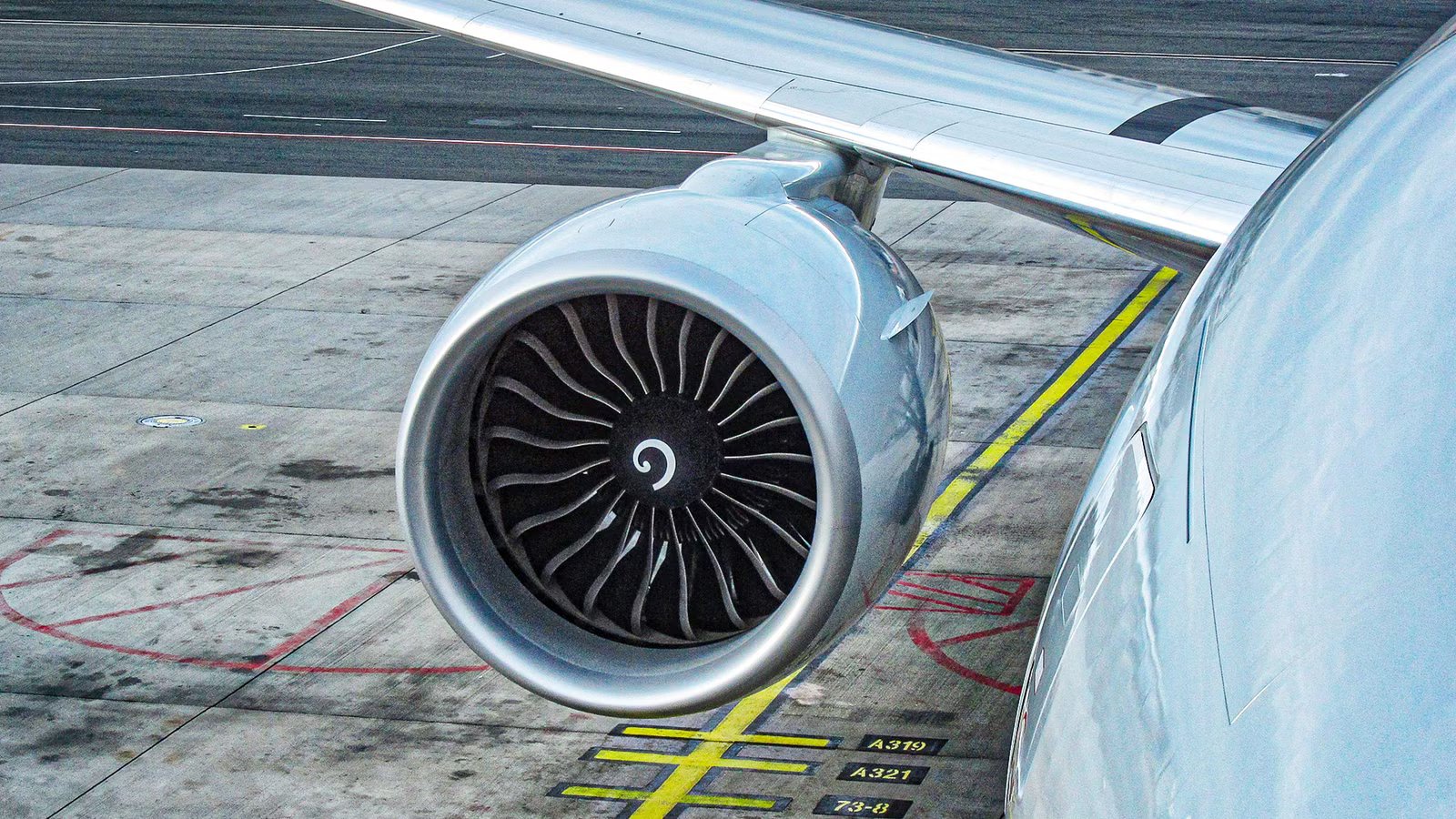
For the vast majority of passengers, an aircraft engine just looks like a beautifully streamlined tube with the exclusive job of producing thrust. In reality, it is one of the most densely engineered machines in regular service anywhere in the entire world. A modern turbofan has to survive extreme temperatures, violent pressure changes, bird strikes, rain, ice, and thousands of repeated flight cycles. This all comes as the aircraft is forced to meet strict limits on fuel burn, noise, emissions, and overall maintenance costs. What makes that possible is a collection of hidden design features that rarely get noticed from the terminal window or even from a seat on the wing.
Many of the most important functions of an engine are conveniently tucked behind nacelle panels, embedded within the materials themselves, or handled automatically by systems that passengers never actually see. They are ultimately the principal reason why modern airliners can stop safely on wet runways, operate efficiently at cruising altitude, and deliver the overall mix of performance and reliability that airlines currently take for granted. In that sense, a jet engine is not just a source of propulsion. Rather, it is a compact, flying ecosystem of airflow management, thermal protection, electronics, and structural design. The five examples reveal just how much of an engine’s most impressive work happens directly out of sight.
Thrust Reversers: The Engines That Help Stop The Aircraft
Up to 40% of bypass flow can be redirected upon landing

One of the least understood parts of any commercial flight (at least from the perspective of a passenger with limited technical exposure) comes directly after touchdown, when the engines suddenly roar again, and many passengers assume the pilots are accelerating. In fact, the opposite is actually happening. Thrust reversers deployed on the nacelle of the engine redirect part of the bypass airflow forward, creating a braking force that complements spoilers and wheel brakes.
Expert industry analysts have noted that on a typical Airbus A320neo landing at around 137 knots (255 km/h), reverse thrust is introduced seconds after touchdown and is capable of diverting up to 40% of the sheath (or bypass flow). That ultimately matters the most at the start of the landing roll, when aerodynamic drag remains quite high, and the brakes are not yet doing all the work to bring the aircraft to a stop. As aircraft speed falls, wheel brakes gradually take over, reducing overall heat buildup and shortening turnaround delays caused by hot brakes.
The important thing for any passenger to understand about reverse thrust is that it is, in no way, a magic parachute. Aircraft are certified to stop without relying on it at all, but it provides a valuable early deceleration margin. There are other quirks to keep in mind, too. On the Airbus A380, only the two inner engines are actually counted for reverse-thrust braking because the outer engines happen to sit so far outboard that using them could ultimately kick debris off the grass verge and directly onto the runway environment.
Bleed Air: The Engine Quietly Runs The Cabin
Bleed air typically leaves the engine at around 392-482 degrees Fahrenheit (200-250 degrees Celsius)

Passengers will rarely think of a jet engine other than as a device for pushing an airplane forward. However, on most airliners, it is also the hidden heart of the cabin environment and will often regulate temperature within the space. Bleed air is traditionally taken directly from the compressor section before combustion, where it is already hot, pressurized, and full of all kinds of usable energy. This prevents the jet from having to waste energy on other kinds of temperature regulation systems.
Extremely hot air is quickly shuffled from the engine into an environmental control system. There it will be cooled, regulated, and mixed so that it can be used for pressurization, temperature control, and other aircraft functions, including anti-ice protection and system reservoir pressurization. Analysts have noted that at cruising altitudes, outside air temperatures can fall exceptionally low, making these temperature control systems not just a convenient use of extra energy from an engine but rather a critical piece of how aircraft operate and keep passengers comfortable over the course of the journey.
Modern aircraft pressurization systems have developed tremendously, and today they keep fresh air moving constantly through the fuselage, with the cabin air fully exchanged roughly every two to three minutes. The overall cleverness of bleed air is that it will turn energy the engine has already created into comfort, safety, and survivability at altitude, all without passengers ever noticing the process.

How Exactly Does Reverse Thrust On A Plane Work?
It plays a vital role in keeping air travel safe and efficient.
Hot-gas temperatures can exceed 2,912 degrees Fahrenheit (1,600 degrees Celsius)

Few facts in aviation sound more impossible than the one we are about to discuss. The parts inside a jet engine routinely work in gas streams hotter than the metal itself could withstand unprotected. However, high-pressure turbine blades sit directly behind the combustor, where temperatures are pushed upward because hotter engines are generally just more efficient. Analytical research and technical commentary indicate that modern gas-path temperatures can comfortably exceed the resistance levels of the metal in the machine.
Nickel-based superalloys have far lower practical temperature capability and would rapidly lose strength without other kinds of material help. It is for this reason that the solution is fundamentally layered. First, the blades are made from advanced single-crystal superalloys that resist creep better than conventional cast metals. Second, cooling air is routed through intricate internal passages and discharged through holes that create a protective film over the blade’s surface.
Third, thermal barrier coatings happen to act as a ceramic insulation, allowing the gas stream to run several hundred degrees hotter than the protected metal located directly underneath. NASA and other agencies describe this as a central challenge in modern turbine design. Materials are being pushed close to intrinsic limits, so coatings and cooling are what keep the whole system alive. It is one of the best examples in engineering of performance being unlocked not by a single breakthrough, but rather by several stacked on top of each other.
FADEC: The Computer That Really Runs The Engine
FADEC can analyze up to 70 engine inputs per second

A modern pilot does not directly work the engine in the more traditional mechanical sense. When thrust levers are moved, the crew is effectively making a request, and the full authority digital engine control system decides how the engine will deliver this output. Analysts describe FADEC as a digital computer and its associated accessories that control all aspects of engine performance, continuously processing various inputs such as air density, throttle position, temperature, and pressure, according to BAE Systems.
This computer system is capable of functioning incredibly efficiently, commanding fuel flow, bleed-valve settings, and vane positions accordingly. The operational advantage of this is enormous, as it offers better fuel efficiency, automatic protection against out-of-limits operation, easier engine handling, and built-in health monitoring. But the hidden feature that matters most is authority. A true FADEC has no manual override, meaning that the computer sits between pilot input and engine response at pretty much all times.
That ultimately sounds rather unsettling until one realizes why it works. The system is built with multiple channels so that redundancy is always present if one computer lane happens to fail. In practice, FADEC is one of the reasons modern engines can be both powerful and predictable. It removes guesswork, protects the machinery from abuse, and turns engine management from a constant pilot workload into a tightly controlled and highly digitized process.

Here’s How Much More Efficient New Engines Are Compared To Older Generations
How engine design has evolved to boost fuel efficiency, and where it’s going from here.
The Boeing 787’s Unique Bleedless Architecture
The 787 can generate around 1.45 megawatts of electrical power

The Boeing 787 stands out uniquely because it broke with one of the basic assumptions of overall jetliner design, that being that engines should supply high-pressure bleed air to the rest of the aircraft. Instead, the Dreamliner uses a more-electric architecture in which systems traditionally driven by bleed air are powered electrically.
Boeing technical documents and 787 materials highlight this shift quite clearly. Compared with the 777’s bleed-air setup for wing anti-ice, cabin pressure, air conditioning, and engine start, the 787 uses electric systems for all four. Its engines feed four massive starter-generators, giving the aircraft a unique amount of engine-generated electrical capacity, and Boeing has also described the overall more-electric architecture as capable of producing a massive amount of onboard electrical power. The design goal was not novelty for the sake of novelty on its own.
Boeing’s unique no-bleed concept was promoted as extracting up to 35% less power from the engines than more conventional systems, all while also reducing maintenance tied directly to bleed ducts and manifolds. Analysts have also noted that electrically driven compressors now provide pressurization and cabin air instead. The result is one of the boldest systems-level changes on any modern airliner. The engine no longer shares its compressed air in the traditional way, and the whole aircraft architecture changes because of it.