dailynewsnblog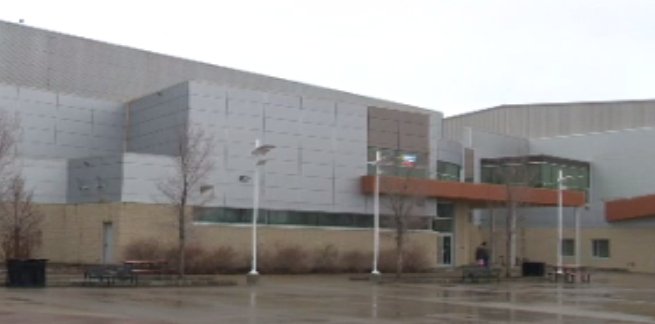
The Federation of Sovereign Indigenous Nations (FSIN) is kicking off its spring general assembly meeting, marking the first time dozens of representatives of the First Nations it represents gather under one roof since Ottawa asked for millions of dollars in repayment.

Last month, Indigenous Services Canada (ISC) issued a letter to FSIN chief Bobby Cameron and CEO Martin Paul detailing lines of ineligible and unsupported expenses totalling $28.7 million between April 2019 and March 2024.
The letter was in response to the findings of a forensic audit conducted by KPMG that reviewed the FSIN’s use of federal funding to assess compliance with terms and conditions and accountability standards.
FSIN was previously given a deadline of April 2 to dispute the audit’s claims. It is unclear whether the organization has submitted the required documentation, though it previously said it would take ISC to court.
The two-day assembly, being held in North Battleford, is open to public observers. However, Global News and several other media organizations were not allowed into the meeting.
When asked, FSIN representatives said the meeting was happening in-camera, similar to previous gatherings, and that media had to remain outside the property of the Northland Power Curling Centre, where the assembly is taking place.
Aaron Thomas, an advocate with the Band Members Alliance and Advocacy Association of Canada (BMAAAC), was also denied entry to the meeting.
“Security came up to me and told me I wasn’t allowed in,” said Thomas. “He told me that, in no uncertain terms, I was not allowed in there because I’d be causing issues with the chiefs and I guess they didn’t want that to happen.”

Get daily National news
Get daily Canada news delivered to your inbox so you’ll never miss the day’s top stories.
Thomas added that it is “frustrating” not to be allowed into the meeting to hear what the chiefs are discussing.
“I believe they know that I’m with BMAAAC, and so that’s kind of the reason why I wasn’t allowed in there.”
BMAAAC was the first to share the ISC’s letter to FSIN online last Friday after a whistleblower provided it to them.
Details on the assembly and discussion items remain sparse, as the FSIN did not publicly share the agenda prior to its commencement.
A copy of the agenda shared on social media contains an item under fiscal relations titled “fiscal audit update,” but it is unknown what discussions took place during that time.
Also on the agenda was a proposed amendment to the FSIN’s Financial Management Act that would add a confidentiality clause for Treasury Board members. This was a controversial amendment for some board members, who took to social media ahead of Wednesday’s assembly to voice their opposition to the recommendation.
“I understand that there may be proposed amendments to FSIN Financial Management act that would require confidentiality agreements/non-disclosure agreements (NDA’s) and restrict what members can share. I do not support NDAs in this context,” Tyler George, headperson for Ochapowace First Nation, posted on Facebook.
“As leaders, we are accountable to our people. We have a duty to report back to our Nations, including on financial matters. That responsibility should not be restricted,” he added.
Delber Wapass, Chief of Thunderchild First Nation, took to LinkedIn last week, saying the amendment is being used to “silence criticism.”
“Confidentiality provisions risk being weaponized to punish transparency rather than protect sensitive information. From the grassroots perspective, these amendments are less about protecting confidentiality and more about suppressing information within the Treasury Board,” his post reads.
Political strategist Jennifer Laewetz agrees with the chiefs speaking out, saying the changes are concerning.
“When they were reading through the amendments, we were hearing words like NDAs and things like that,” she said. “But at a time when we’re hearing about a forensic audit and $28 million that needs to be paid back, it’s a little bit concerning that the Treasury Board that is supposed to represent our First Nations in those spaces are now being what appears to be silenced now more than ever.”
Laewetz says she was also asked to leave the assembly during discussions of the financial management amendment.
Meanwhile, some chiefs were pushing for more agenda items related to financial accountability and disclosure.
Chief Jonathan Pasap of White Bear First Nations and Chief Kelly Wolfe of Muskeg Lake Cree Nation are the mover and seconder, respectively, of three procedural resolutions presented to the legislative assembly aimed at establishing clear financial reporting standards, mandating ethics for internal oversight and implementing structural changes in line with treaty rights.
The FSIN, which represents 74 First Nations in Saskatchewan, previously defended its spending outlined in the audit, saying it was to meet the demands of the COVID-19 pandemic at the time.
A large portion of the monies owed are the millions received from 2020 to 2023 for its COVID-19 response. $23.5 million was found to be misused in last fall’s forensic audit.
Other areas of major spending that were deemed ineligible for federal funding include administration costs, totalling over $1.9 million, and $800,000 for a new office building.
The second and final day of the general assembly takes place in North Battleford, Sask., on Thursday.
© 2026 Global News, a division of Corus Entertainment Inc.