dailynewsnblog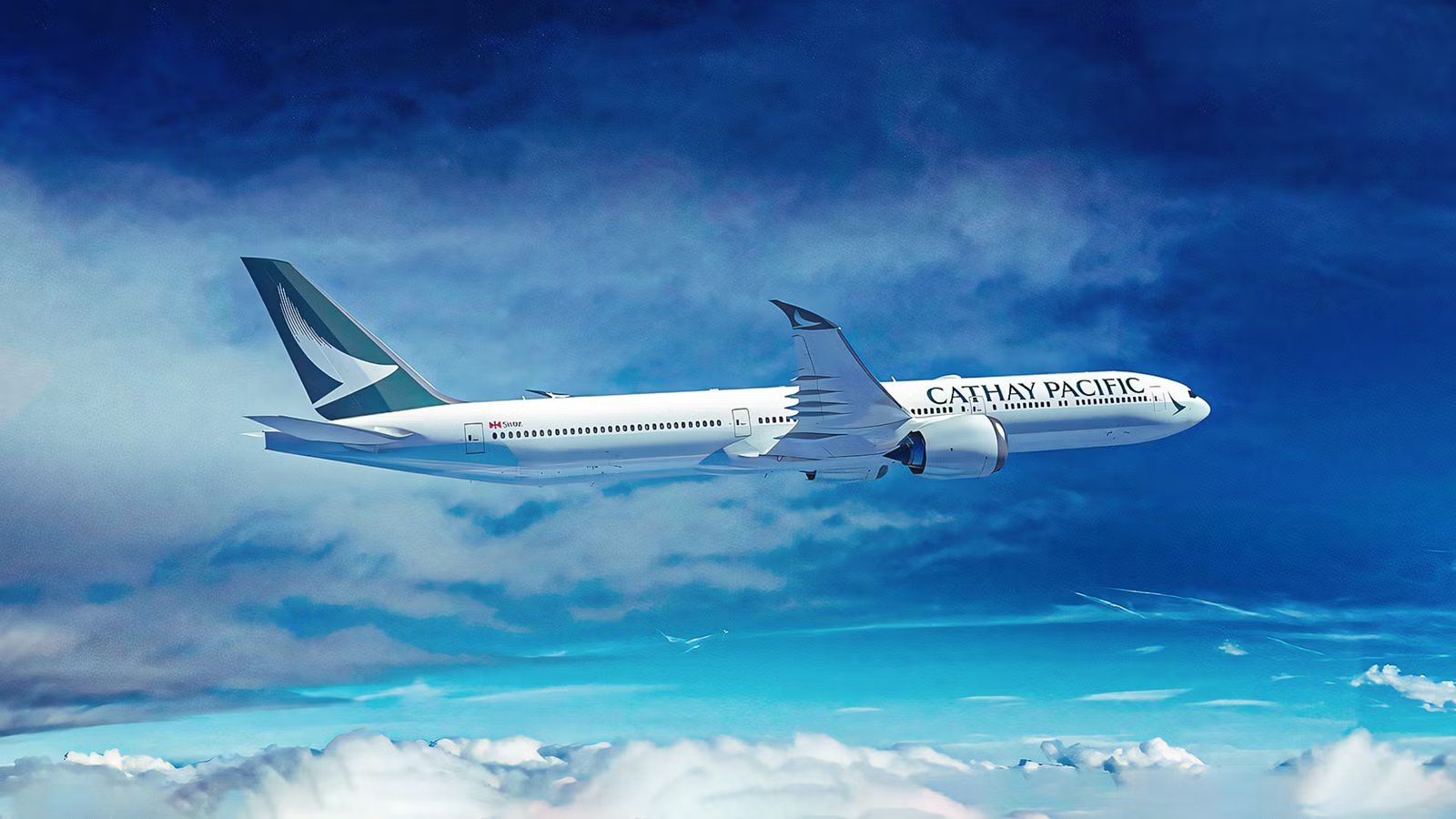
The Boeing 777X has been one of the most anticipated aircraft programs in commercial aviation history. Formally launched at the 2013 Dubai Airshow, the 777-9 was originally meant to enter service in 2020. However, this target was not met. Years of certification challenges and regulatory scrutiny have pushed first deliveries to 2027 at the earliest, making it the longest commercial aircraft certification program ever recorded. Yet the airlines that ordered it have not walked away.
In this article, Simple Flying lists the six airlines with the largest 777X commitments today, examining how each carrier arrived at its position, what the aircraft means for their fleet strategy, and what they have had to do while they wait.
Lufthansa
27 Aircraft (20 777-9 firm + 7 777-8F)

No airline has waited longer for the Boeing 777X than  Lufthansa. The German flag carrier has held the title of launch customer since September 2013, when it signed for 34 Boeing 777-9s. More than a decade later, that moment has still not arrived. As reported by Aviation A2Z, Lufthansa CEO Carsten Spohr confirmed in March 2026 that the airline now expects its first 777-9 to arrive in the first quarter of 2027, with passenger service planned to begin from Frankfurt during the summer travel season that same year. Spohr, who has previously described the repeated postponements as “extremely annoying and costly”, now regards the current timeline as achievable.
The 777-9 is intended to replace Lufthansa’s aging four-engine jets – the Boeing 747-400s and Airbus A340s that have long been the main aircraft of its long-haul network. But until those deliveries arrive, the airline has had to improvise. According to Aviation Direct, Lufthansa has reactivated mothballed aircraft, including Airbus A380s, to fill the capacity gaps left by the 777X’s absence, while keeping older types in service well beyond their planned retirement dates. In late 2025, the airline sold two of its relatively young Boeing 747-8s to the US Air Force for $400 million, signaling fleet renewal.
Including seven 777-8F freighters ordered by Lufthansa Cargo in May 2022, the group’s total commitment to the 777X program reaches 27 aircraft across passenger and cargo variants. The passenger jets will eventually carry Lufthansa’s Allegris business class cabin – a product the airline had originally designed around the 777-9 but was forced to debut on its A350s and 787s instead, as the 777X delays mounted. As Boeing prepares for the first flight of a production-standard 777-9 in April 2026, the German carrier remains first in line. After more than a decade of waiting, it intends to stay there.
Singapore Airlines
31 Aircraft (777-9)

 Singapore Airlines has committed to 31 Boeing 777-9s, making it one of the largest customers for the program globally. The order has grown since the airline’s original 2017 commitment, with Singapore Airlines adjusting its order book in 2021 — reducing its 787-10 order and adding 11 more 777-9s to bring the total to 31, according to Singapore Airlines fleet data. All 31 are for the passenger 777-9 variant, with no freighter orders placed.
The 777-9s are expected to replace the airline’s aging Boeing 777-300ER fleet and eventually its A380 superjumbos too — some of which will be approaching 20 years of age by 2030.
What sets Singapore Airlines apart from most other customers on this list is the strategic calm it has maintained throughout years of slippage. According to Simple Flying, the airline has built genuine flexibility into its fleet plan – leaning on its extensive A350 and 787-10 fleets to cover routes originally earmarked for the 777-9, while keeping its average fleet age at a remarkably low 8 years. A fifth Boeing 777-9 test aircraft, eventually destined for Singapore Airlines, joined the flight test program in August 2025, which signals that the airline remains firmly in the queue. First delivery is now expected no earlier than 2027, which by that point will make the 777X the longest commercial aircraft certification program in aviation history.

The Airline Set To Fly One Of The Boeing 777X’s Longest Routes
This Star Alliance carrier will be one of the world’s largest operators of the Boeing 777X.
Cathay Pacific
35 Aircraft (777-9)

Cathay Pacific has made a significant commitment to the 777X program, more than most airlines outside the Middle East. The Hong Kong carrier first ordered 21 Boeing 777-9s in 2013. In August 2025, it increased its order by 14 aircraft, bringing the total to 35. This makes it the third-largest 777X customer in the world. According to Aviation A2Z, Cathay Pacific confirmed in early 2026 that it still expects the first deliveries to start in 2027. Nine aircraft will arrive that year, with the remaining 26 arriving from 2028 onward.
The 777-9s are particularly important for Cathay Pacific because of what they will carry. As One Mile at a Time reported, the aircraft will introduce Cathay’s highly anticipated Halo Suites first class product, which the airline has been developing for years. The Halo Suites are expected to be one of the most competitive first class offerings when they launch.
According to Aviation Week’s report, Cathay’s CEO has said that the next five years will be focused on new deliveries, with the 777-9 playing a key role in the first half of that period. The airline also has options for up to seven more 777-9s beyond the current firm order. This shows that if the program meets expectations, Cathay Pacific intends to invest even more in it.
Korean Air
48 Aircraft (777-9)

Korean Air’s commitment to the Boeing 777X has developed in stages. The airline first joined the 777X program at the 2024 Farnborough Airshow, placing an order for 20 Boeing 777-9s along with 20 787-10 Dreamliners. This deal was formally signed in March 2025, valued at $24.9 billion. In August 2025, Korean Air made another major order for 103 Boeing jets, which includes 20 more 777-9 passenger aircraft and eight 777-8F freighters. This brings Korean Air’s total 777X commitment to 48 aircraft across both passenger and cargo types. Walter Cho, chairman and CEO of Korean Air, called the combined orders “a pivotal moment” for the airline and emphasized that acquiring next-generation aircraft is central to its fleet modernization strategy.
The reason behind this order is closely linked to Korean Air’s merger with Asiana Airlines, completed in December 2024. As reported by Aviation A2Z, the 777-9 aims to streamline a combined fleet that currently includes a wide range of widebody aircraft, helping the merged carrier focus on fewer, more modern planes. The 777-9 is expected to eventually replace Korean Air’s remaining A380s and Boeing 747-8 Intercontinentals.
Deliveries of the passenger 777-9s are projected to begin around 2028, with the full order phased in through the early 2030s as part of a fleet update meant to support Korean Air until 2039. The airline has confirmed plans to equip the 777-9s with new cabin products, though it has not yet revealed specific details about the interior layout. What Korean Air has made clear is the aircraft’s intended role. According to Simple Flying, Cho stated at the time of the initial Farnborough order that the 777X would become the airline’s flagship aircraft, with the title going to whichever arrives first between the 777X and A350-1000. Given current timelines, that race may still be too close to call.
Qatar Airways
~124 Aircraft (777-9 passenger + 777-8F freighter)

 Qatar Airways holds the distinction of being the launch customer for both the passenger 777-9 and the 777-8F freighter variant. Qatar’s 777X position was already substantial before 2025 – holding 60 firm 777-9 passenger orders and 34 777-8F freighter orders, totaling 94 aircraft, the Doha-based carrier announced in a press release. Then came one of the most high-profile order announcements in recent aviation history. On May 14, 2025, during US President Donald Trump’s visit to Doha, Qatar Airways and Boeing announced the largest widebody order in Boeing’s history: 130 Boeing 787 Dreamliners and 30 Boeing 777-9s, with options for an additional 50 aircraft.
Adding those 30 new firm 777-9 orders to Qatar’s existing 94-aircraft position brings the carrier’s total 777X commitment to approximately 124 aircraft across passenger and freighter variants. The 777-8F freighter component is particularly significant – as reported by Boeing, Qatar placed the launch order for the type in January 2022, committing to 34 aircraft in what Boeing described at the time as “the largest freighter commitment in Boeing history by value.” Those 777-8Fs will eventually replace Qatar’s existing 777 freighter fleet, while the passenger 777-9s are earmarked to replace its aging Boeing 777-300ERs and Airbus A380s.
What makes Qatar’s position on this list genuinely different from every other customer is the scale and the speed at which its commitment has grown. As recently as early 2024, Qatar held around 40 firm 777-9 passenger orders. By mid-2025, that figure had more than doubled. The carrier currently operates more than 150 Boeing aircraft – making it one of Boeing’s most important global customers.

Qatar Airways 777X Will Launch Panasonic’s New 4K OLED IFE System
The in-flight entertainment system is set to bring 4K OLED screens onboard Qatar’s heavily anticipated Boeing 777X fleet.
Emirates
270 Aircraft (777-9 only)

 Emirates sits at the top of this list by a distance that no other airline comes close to matching. At the 2025 Dubai Airshow, the world’s largest international airline placed its third order for Boeing 777X aircraft – 65 additional 777-9 passenger jets – bringing its total commitment to 270 airplanes, according to Boeing’s official announcement. That figure is more than double the order held by the second-largest customer on this list. Emirates is already the world’s largest Boeing 777 operator, and the 777X has always been the logical next chapter in that relationship. As Boeing’s press release confirmed at the time of the Dubai Airshow signing, HH Sheikh Ahmed bin Saeed Al Maktoum, chairman and CEO of Emirates Airline and Group, described the order as a continuation of the airline’s expansion, “carefully factored into Emirates’ growth plan.”
Of Emirates’ 270 777X orders, 235 are for the larger 777-9, currently the largest airliner in production, with the remainder comprising the smaller 777-8 variant. The GE9X engines powering the 777-9 are particularly valuable for Gulf carriers like Emirates, whose Dubai hub presents unique operational challenges: high temperatures and dry desert conditions that degrade aircraft performance. Emirates’ total Boeing order book now stands at 315 widebody aircraft – comprising 270 777Xs, 35 Boeing 787s, and ten Boeing 777 freighters – with a GE9X engine order reaching 540 units, according to Emirates’ own figures.
The wait, however, has been long and costly. Like every other customer on this list, Emirates has had to manage years of delay while keeping older aircraft flying. Emirates expects its first 777-9 to arrive in the second quarter of 2027, with deliveries extending into the late 2030s. The scale of its commitment, however, leaves no doubt about where Emirates sees its future. With 270 aircraft on order, it has not just backed the Boeing 777X – it has staked its next generation on it.