dailynewsnblog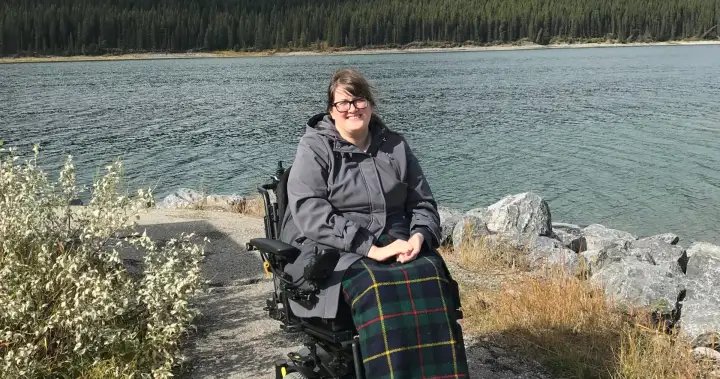
Jessie Ravnsborg chose to end her life when she was just 36.

The Calgary woman didn’t want to die — but an aggressive, incurable illness made it impossible to continue living.
“The one control she had was when she’d had enough,” said her mother, Heather Lucier.
Ravnsborg had a promising future before getting sick. She’d just obtained her master’s degree and was off to Sierra Leone for a volunteering vacation, when she began developing weakness.
“She thought it was her hip flexors,” Lucier said. “Basically, I picked her up at the Calgary airport and drove her straight to Foothills (Hospital) emergency department and nine days later, she was diagnosed with ALS.”
ALS, or amyotrophic lateral sclerosis, is a neurodegenerative disease that destroys the motor neurons in the brain and spinal cord, causing voluntary muscle control to fail — but leaving the mind intact.
Patients become prisoners trapped in a body that is shutting down. There is no cure.
Ravnsborg was diagnosed in March 2018. She was 35 years old.
“Within four months, she was not walking. Her diaphragm was weakening and she really didn’t think she was gonna make (it to) Christmas of 2018.”
Undated photo of Jessie Ravnsborg in a wheelchair at the hospital.
Supplied
But Ravnsborg knew her rights and what she wanted.
She’d worked in the intensive care unit at Rocky View Hospital, her mother’s entire career was in health care and she’d sat at her stepfather’s bedside as he was kept alive by a ventilator leading up to his death.
Ravnsborg didn’t want that kind of ending. Within hours of her devastating diagnosis, she had a sobering conversation with her mom.
“Quality of life for me is meaningful engagement with people,” Lucier said, recalling that conversation from eight years ago.
“I will not go on a ventilator. I won’t be trached. And I will likely utilize medical assistance in dying when I deem appropriate,” she said her daughter stated.
The Calgary mother was left feeling a “paradox of pride and devastation,” but backed her daughter’s wish.
“Devastated and yet so proud that she would know what quality of life meant to her and could articulate it so succinctly — that she knew what her plan was going to be.”
Throughout her journey with ALS, her mother said Ravnsborg was determined to live life to the fullest and connect with those she loved.
“When you know what your choice is, the focus shifts from ‘how am I going to die?’ to ‘how do I want to live?’ And that’s so important when a disease is taking every bit of control — other than your attitude.”
Undated photo of Jessie Ravnsborg with her mom, at a Calgary Flames game with player Mikael Backlund.
Supplied
Every ALS patient’s timeline is different: some decline over many years but for others, the disease claims their bodies in mere months.
That uncertain timeline now has the Parkinson Association of Alberta and the ALS Society of Alberta speaking out about the province’s proposed changes to MAID.

Get weekly health news
Receive the latest medical news and health information delivered to you every Sunday.
Bill 18, tabled last month, would drastically restrict who’s eligible for medical assistance in dying, limiting MAID to those likely to die of natural causes within a year.

The organizations fear the proposed legislation may unintentionally disadvantage people living with progressive neurological diseases by limiting MAID eligibility based on predictability of death, rather than severity of suffering.
“ALS isn’t a straight and predictable path… we really feel that policy needs to reflect that,” said Leslie Ring Adams, the executive director of the ALS Society of Alberta.
“Someone living with ALS starts grieving the moment they get the diagnosis – it’s a considerable amount of losses, one after the other,” Ring Adams said.
“They may feel like they have no other control in any other aspects of this disease, but this is such an important one.”
There’s also worries about Alberta restricting advance care planning options for people who may later lose decision-making capacity.
“For our community, the ability to plan ahead isn’t optional — it’s critical.”
Alberta’s bill aims to, essentially, return to how Canada’s MAID program began in 2016 and roll back expanded eligibility granted in 2021, which permit those suffering from a serious illness or disability that isn’t considered terminal and who are in an advanced state of unreversible decline to use MAID.
The Alberta government said it aims to ensure MAID is not used in place of care or support for mental illness or disabilities.

The new rules would also prohibit doctors from initiating conversations about MAID with a patient or refer them to receive MAID outside of Alberta. There’d also be new professional sanctions for doctors and nurse practitioners that break the rules.
Lucier believes that is denying people their right to informed consent.
“I believe patients need to know all of the options that are on the table. To make the best decision for themselves. And that decision needs to be between the patient and their care team,” Lucier said.
“I don’t believe the government should be making decisions around health-care options that are nationally legal and have such tight guidelines.”
The ALS Society of Alberta said patients being able to have open convesations with health-care professionals is critical.
“When someone is trying to navigate their choices, they need be able to go to reliable, respectable professionals who can give them clear advice and suggestions around what their options may be,” Ring Adams said.
“We support safeguards, but they need to be balanced with respect and personal autonomy.”
Watching your child die, rapidly, is a parent’s worst nightmare and Lucier said the idea of future ALS patients potentially not having the same option her daughter had is anxiety inducing.
“The one relief I had was that I knew when she said enough’s enough — that she could say, ‘I’m ready for MAID.’”
Ravnsborg died on Nov. 2, 2019 — 20 months after her diagnosis.
Undated photo of Jessie Ravnsborg in a wheelchair by a lake.
Supplied
As with Ottawa’s rules, Alberta’s bill would prohibit requests made by patients in advance.
That includes people recently diagnosed with diseases such as dementia or Alzheimer’s who may want to provide their consent for MAID before they lose capacity to make the decision. (Quebec currently permits such requests.)
Lucier questions Alberta’s intentions in drastically reducing MAID access.
“I know in this proposed Bill 18 that they feel they’re putting in some safeguards — but as I look at those safeguards, they’re already in our law already.
“So I have concerns around transparency.”

A request for an interview with Justice Minister Mickey Amery was ignored and he was not made available to answer questions before question period at the legislature on Tuesday.
Instead, the ministry sent a statement. The province did not address the specific concerns of people with Parkinson’s or ALS but instead, responded to part of their letter that mentioned dementia and advanced requests.
“Advance requests raise significant ethical, legal, and practical concerns, and that’s why the Safeguards for Last Resort Termination of Life Act will ensure that they remain prohibited in Alberta,” said a statement by Amery.
“Under current federal legislation, advance requests for MAID are prohibited, and the Criminal Code requires a person have the capacity to provide express consent to receive MAID immediately before it is administered.”
Alberta Health Services says 1,242 people died through MAID in the province last year, though the statistics don’t break them down by eligibility factors.
The government says deaths in Alberta under Ottawa’s expanded eligibility rules increased by 136 per cent between 2021 and 2025.