dailynewsnblog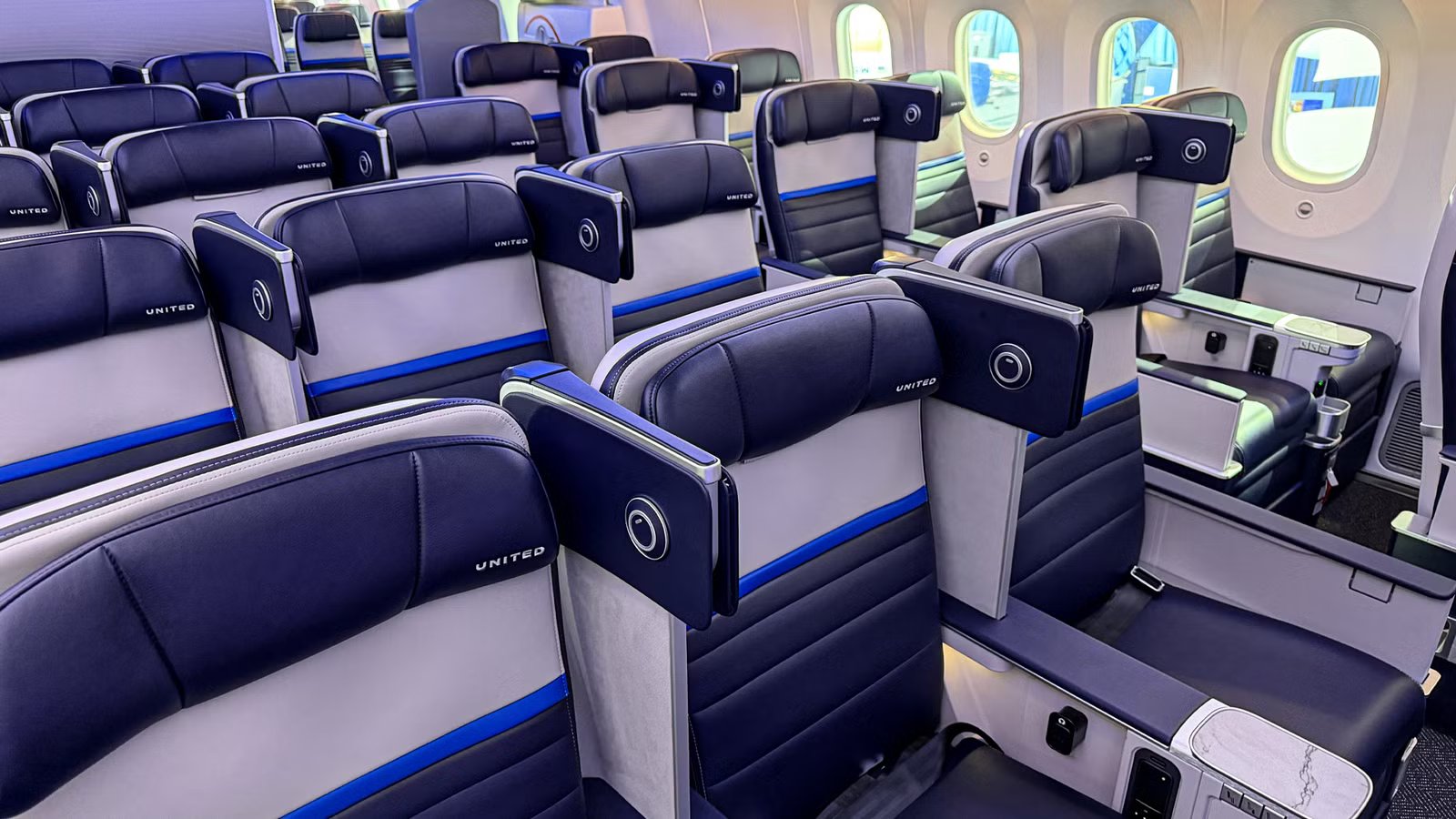
US legacy carriers have been slow to move into the premium economy boom. These carriers were reliant on extra-legroom economy products well into the 2010s rather than offering passengers a distinct premium economy experience. They have now started to catch up, with  Delta Air Lines, American Airlines, and United Airlines all now offering premium economy products. United currently leads, with American behind but still offering broad seat coverage. Delta is currently weaker in terms of the number of premium economy seats available, but is partially offset by its enormous Airbus A350 premium economy cabin.
Read on for a deeper dive into the number of premium economy seats available on America’s legacy carriers’ widebody fleets. The article then explores the advantages passengers can enjoy by flying in each airline’s premium economy, before concluding with thoughts on why premium economy will remain a popular option for business and leisure travelers in the US.
Comparing The Three Legacy American Carriers

Flying in premium economy allows you to enjoy better legroom, service, food, and pre-flight experiences. While it costs more than standard economy, it is substantially cheaper than a full upgrade to business class. You are most likely to find Premium Economy available among the US’s three legacy carriers, when flying aboard a  United Airlines aircraft. It is available on four different aircraft variants and layouts. This carrier has “Elevated Interior” Boeing 787-9s, which have a higher premium product density. With just 222 seats available onboard, 64 are Polaris business class and 35 are Premium Plus. Last financial year, United announced a 9% rise in premium revenue in Q4, 11% across the entire financial year. 27.4 million premium seats were available, amounting to 12% of flown seats, showing that this class is both available and popular.
Another US carrier buying into premium economy is American. It has a broad fleet coverage across three variants and configurations, including its reconfigured Boeing 777-300ERs. A new addition has been the carrier’s 787-8P. This jet has 32 premium economy seats available in a comfortable 2-3-2 configuration. These additions mean that American now offers premium economy on 100 of 124 widebody aircraft.
Finally, Delta has a good deal of variation in premium economy availability depending on the aircraft. Its A350-900s are incredibly premium-dense, with 48 premium economy seats in a 2-4-2 configuration. Meanwhile, its older aircraft have significantly less. Just 20 premium economy seats are available on its Boeing 767-400ER. Delta is set to expand its premium economy offering with the arrival of its A350-1000 order. 15% of the seats on board will be in the premium cabins, and passengers can enjoy greater comfort than on older jets due to improved cabin pressurization and humidity.
United Premium Plus

Wikimedia Commons, Simple Flying
“United® Premium Plus includes some of our high-end amenities from United Polaris, and is the perfect option for someone who wants an upgraded experience in the economy cabin,” said executive vice president and CCO Andrew Nocella when United announced Premium Plus in November 2019. It went on sale a month later for travel in 2019. This product has on-ground and in-flight aspects. You get Premier Access, including dedicated check-in and luggage drop, and more bags. You may also be able to make use of a dedicated security line, although that depends on the airport. While boarding, you will be in the second group, so you’ll have plenty of time to get settled.
Once onboard, Premium Plus passengers can fly in tremendous comfort in Collins MiQ seats. These have a 38-inch (96.5 cm) pitch and an 18.5-19-inch (47-48 cm) width. Recline is also roughly twice that of Economy Plus and Economy at six inches (15 cm).
The table below breaks down United’s premium economy seats per aircraft:
|
Aircraft |
Premium Economy Seats |
Configuration |
|---|---|---|
|
787-9 (elevated) |
35 |
2-3-2 |
|
787-9 (standard) |
21 |
2-3-2 |
|
777-200ER/300ER |
24 |
2-4-2 |
|
767-300/400ER |
22–24 |
2-2-2 |
The amenities and freebies go far beyond the soft drinks available to economy passengers. You will have access to a range of alcoholic beverages, and freshly brewed coffee. The amenity kit is housed in a felt pouch from Therabody filled with luxury hand cream, facial wipes, and lip balm. When flying to Hawaii, you’ll get a locally-themed kit provided by Ua Body.

Everything You Need To Know About United Premium Plus
United Premium Plus is a middle market offering slotted between business class and economy.
American Premium Economy

American Airlines
American introduced its premium economy product in 2016 to a mixed reception. Some passengers found the seats gray and utilitarian, and it soon felt like they lacked modern technology. The carrier is addressing this issue by rolling out new cabin interiors with Flagship Suites. The refreshed premium economy available aboard the carrier’s new 787-9P jets, which have 51 business class, 28 premium economy, and 161 economy seats. You can enjoy better technology, aesthetics, privacy, and comfort while onboard.
The premium economy seats have been updated. They have a 38-inch pitch that increases to 43.25 inches when reclined. Additional comfort is provided by both leg rests and footrests. Each seat also has a wireless charging pad for mobile devices. The headrest wings have been extended, with American hoping that this provides enough privacy without requiring a Japan Airlines-style divider.
The table below breaks down American premium economy seats per aircraft:
|
Aircraft |
Premium Economy Seats |
Configuration |
|---|---|---|
|
777-300ER (reconfigured) |
44 |
2-4-2 |
|
787-9P (new) |
28 |
2-3-2 |
|
787-8 / standard 787-9 |
21–28 |
2-3-2 |
These seats feature a host of additional modern upgrades. USB-C and AC power outlets are available. The entertainment screen has been enlarged to a 13.3-inch 4K QLED touchscreen. Bluetooth audio connectivity lets you pair your wireless headphones or earphones. These screens also have a dark mode, so you can use them at night without straining your eyes or disturbing any passengers around you who are trying to sleep.
Delta Premium Select

Delta first introduced its Premium Select product in 2017 on board its A350-900s. This jet continues to have the carrier’s largest premium economy cabin with 48 seats. The seat is the same as  American Airlines, differing only in Delta’s iconic diamond stitching pattern. You will have 38 inches (96 cm) of pitch and 31-33 inches (79-83 cm) of width. The seats have adjustable leg rests and footrests, a better recline, and larger entertainment screens. The seats also use comfortable memory foam cushions. The product extends beyond the seat, as Delta is often regarded as having the best inflight service among US legacy carriers.
Like United, premium economy passengers can also enjoy a calmer and more exclusive on-ground experience. You can use SkyPriority services, with dedicated check-in, expedited security, and priority boarding. American also offers such services to passengers, but they are not branded under a single name.
The table below breaks down Delta’s premium economy seats per aircraft:
|
Aircraft |
Premium Economy Seats |
Configuration |
|---|---|---|
|
A350-900 |
48 |
2-4-2 |
|
A330-900neo |
28 |
2-3-2 |
|
767-400ER |
20 |
2-2-2 |
The dining available in Premium Select is also a notable step up from what is available in standard economy. Premium Select passengers get access to complimentary spirits, wine, and beer, alongside a range of soft and hot drinks. Meal options are also adjusted based on the flight region. The food is served on proper service ware rather than the usual low-quality disposable fare you can expect on a flight.

American Vs. Delta Vs. United: Which Carrier Has The Best Premium Economy?
These three airlines offer the most prominent premium economy offerings in the domestic aviation market.
US Legacy Carriers Will Continue To Double Down On Premium Economy

Delta Air Lines | Simple Flying
US carriers may have been late to the premium economy party, but the product will stick around in the American aviation sector. Airlines have discovered that premium economy is a “money-generating machine,” as Lufthansa put it. They can earn an extra 33% per square foot on the aircraft when compared with standard economy. The product also generates 6% more revenue than the business thanks to the lower space it requires, while achieving better margins because of the high cost of operating strong business class products.
The product has also become more popular due to the ongoing collapse of first-class aviation, while demand for business class and mainline economy class remains consistent. American was the final US-based carrier to scrap first class. Now, around half of the first class seats are available on  Emirates. Almost every other mainline carrier is seeking alternative, more cost-effective premium products for passengers who don’t want to fly in economy.
Overall, premium economy will remain popular for many years to come, as it sits in a sweet spot in terms of width and pitch, as well as affordability. Passengers can stretch out with the standard 38 to 42 inches of pitch and 18.5 to 20 inches of width, and complete their travel in comfort, without spending thousands of extra dollars. This attribute is popular among businesses due to ever-tightening corporate budgets. Premium typically costs 40 to 60% of a business class ticket. Airline marketing departments are still figuring out how to make premium economy easier for executives to stomach by positioning it as an upgrade from economy rather than a downgrade from business.