dailynewsnblog
Oil prices have started to slip — but not necessarily for reasons that suggest a return to market normalcy.
Subscribe to read this story ad-free
Get unlimited access to ad-free articles and exclusive content.

The International Energy Agency said Tuesday that “demand destruction” has begun to unfold. As a result of the acute energy commodity shortages stemming from the closure of the Strait of Hormuz, oil appears to have reached a point where it is now so expensive that overseas businesses and households have begun curbing investment and consumption.
Countries in Asia, Europe and even other parts of the Middle East that depend on supplies passing through the strait have begun curtailing their use of natural gas, seen waves of flight cancellations and implemented policies to reduce overall fuel use, the agency noted in the report.
It’s a phenomenon likely to affect global economic growth. And while it does not yet appear to be affecting the U.S. economy, any impact would threaten to destabilize an already fragile labor market.
The IEA believes demand destruction could become a global trend.
“Demand destruction will spread as scarcity and higher prices persist,” it said.
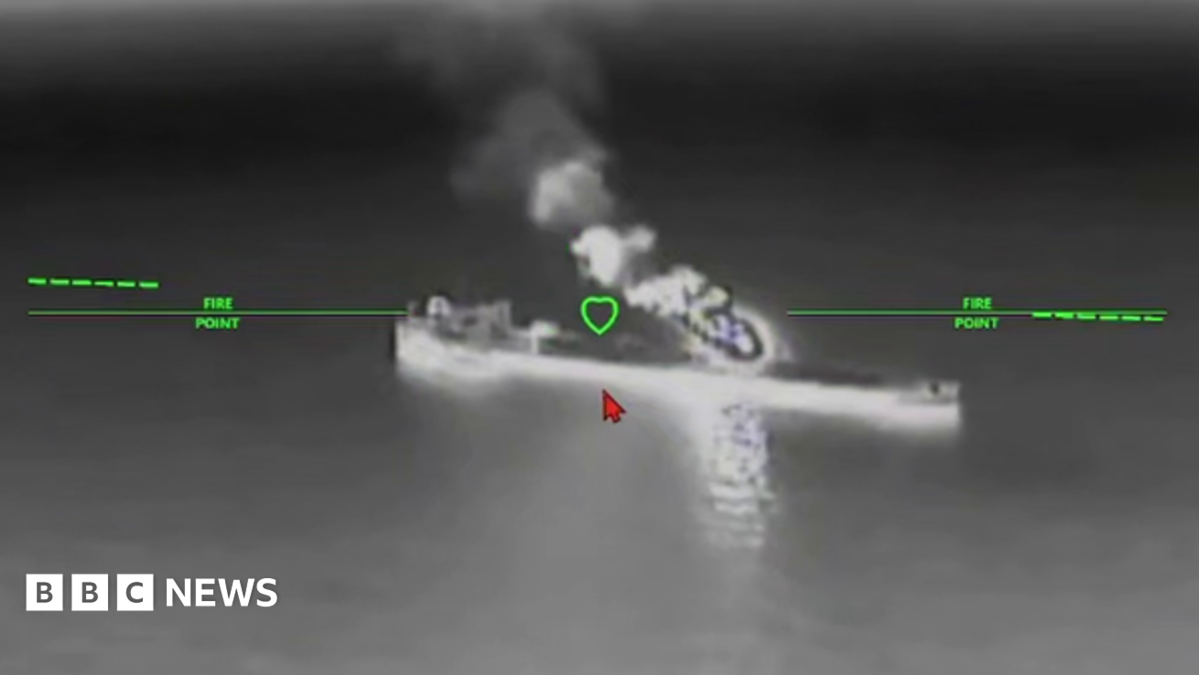
The report comes as President Donald Trump has announced a targeted blockade of the Strait of Hormuz in a bid to increase economic pressure on Iran. The global economy has so far proven resilient — but that may soon change.

Traders have begun pricing in the new dynamic. The international price of a barrel has fallen to less than $98 after rising to as much as $118, while U.S. crude has fallen to $95 a barrel after hitting approximately $113 earlier this month.
U.S. gasoline prices have also begun to show slight declines from recent highs, according to AAA data.
While some of the decline is also due to hopes that the ceasefire announced last week will hold, Trump’s blockade is likely also playing a role.
As supply shortages become more acute, demand by definition will have to decline.
“Resuming flows through the Strait of Hormuz remains the single most important variable in easing the pressure on energy supplies, prices and the global economy,” the IEA said.
In a note to clients published March 31, Joseph Brusuelas, chief economist at RSM consultancy, discussed the lasting harm demand destruction can have on the economy — and why restrictions through the strait of other key industrial inputs besides crude oil, whose prices are also spiking, will also play a role.
“It means fewer cars sold, fewer homes bought, fewer restaurant meals, fewer business investments, and eventually fewer jobs,” he wrote. “And because the Strait of Hormuz crisis isn’t just about oil, the demand destruction this time could reach further than any standard model would predict.”
Thanks to changes in the economy since the 1970s, the potential impact on U.S. consumers may not be as great compared with other regions, he said. More energy efficient vehicles and work from home means the U.S. economy uses about half as much energy per dollar of gross domestic product as it did in 1980, he said. Plus, the U.S. is now a net oil producer.
“There is a real buffer,” he wrote.
On its latest earnings call Tuesday, J.P. Morgan executives said they had not yet seen U.S. consumers making significant changes in consumption as a result of higher oil prices.
“Tt’s not nothing, but it’s not overwhelming,” chief financial officer Jeremy Barnum said.
But Brusuelas warned the U.S. would not be out of the woods in a prolonged-conflict scenario.
“None of these buffers have ever been tested against a disruption this large, hitting this many commodities at once,” he wrote. “If the strait stays closed past the summer, the probability of a recession would most likely be higher than 50%.”