dailynewsnblog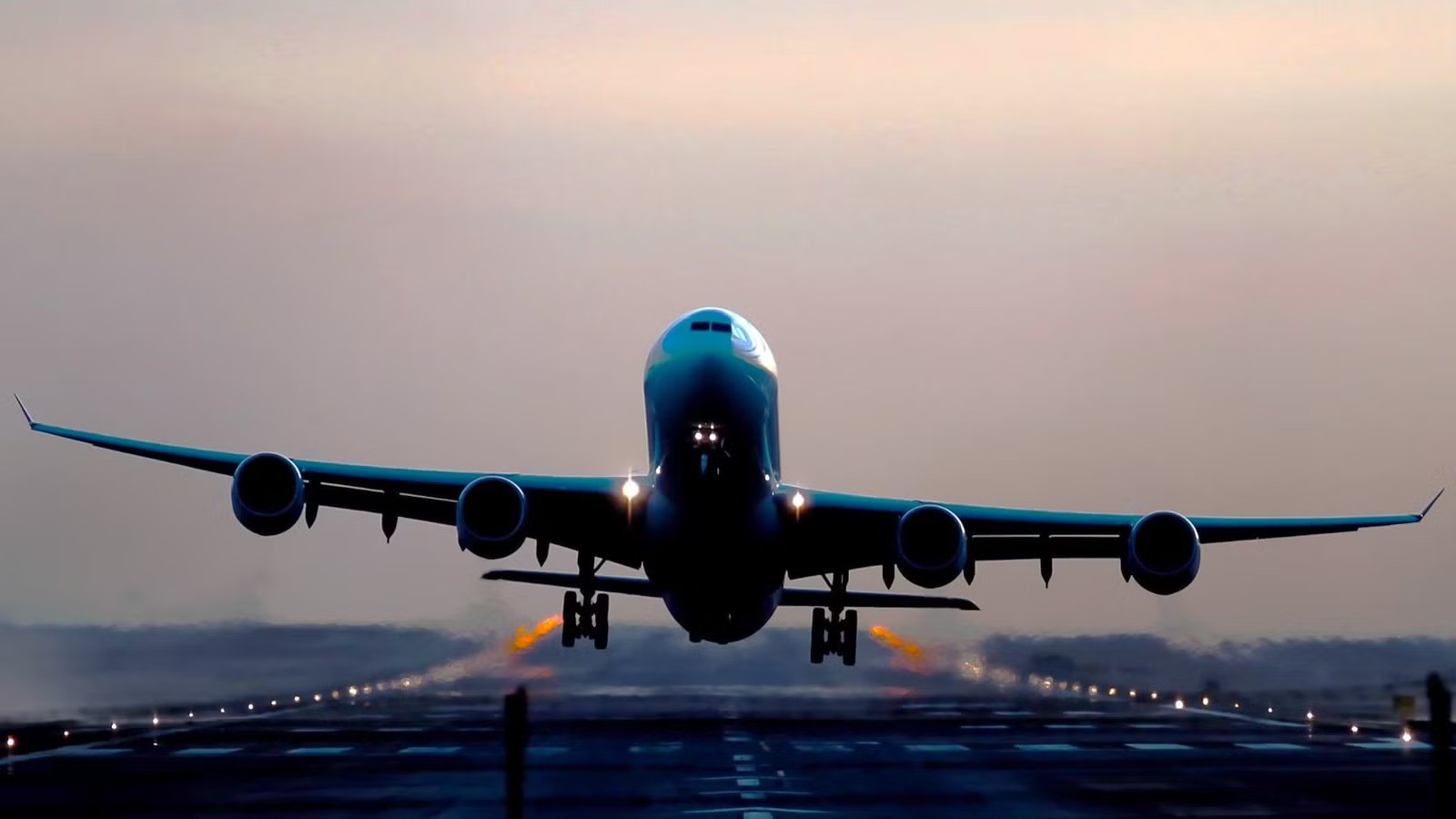
It’s been almost 25 years since the terrorist attacks of September 11, 2001, changed aviation forever. One of the most visible changes was the locked flight deck door. Before 9/11, the cockpit was far more accessible. We would often invite passengers and especially children to the flight deck during the cruise to let them marvel at all the switches, dials and screens and to glimpse at our beautiful planet from above.
For many of us, that magic mattered. In fact, one of the reasons I became a pilot myself was because I was once invited into the cockpit of a Trans Australian Airways  Boeing 727 as a wide-eyed 12-year-old boy. That single moment inspired me to a life of flying. Today, that world is closed off. The door is reinforced, access is tightly controlled by keypad and cameras, and only the crew ever get to see what happens up front.
The Cockpit Is A Mysterious Place For Most Outsiders

This reality is such a shame, because the mystery of the flight deck often feeds anxiety. If people don’t understand what pilots are doing, it’s easy to imagine the worst. The truth is the opposite. Modern airline flying is built around procedures, monitoring, discipline, communication, and constant situational awareness. This is why I enjoy sharing my life on the flight deck through social media.
If I can show people what really happens behind that locked door, perhaps I can remove some of that fear. In the movies, pilots are usually shown with both hands on the controls, dramatically manhandling the aircraft while wearing their jackets and hats. In reality, on a modern long-haul Airbus jet, much of the work is in managing systems, monitoring automation, thinking ahead, and making sure the flight remains safe, efficient, and comfortable.
What Do Pilots Actually Do Once The Aircraft Is Airborne?

As soon as we lift off, the workload remains high. The pilot monitoring calls “positive climb,” and the pilot flying responds “gear up.” The landing gear is retracted, reducing drag and allowing the aircraft to accelerate away from the runway. Very soon after takeoff, we reach our thrust reduction altitude. Passengers often feel this and assume the engines are suddenly easing off. They are, but entirely normally.
We no longer need maximum takeoff thrust, so we reduce to a climb setting that is kinder to the engines and more efficient. Next comes flap retraction. If we have taken off with flap setting two, for example, we accelerate, select flap one, accelerate again, and then retract the wing flaps to zero. At that point, the aircraft is ‘clean,’ meaning the gear is up, the flaps and slats are retracted, and the airplane can climb and accelerate more efficiently with much less drag.
During the initial climb, we’re monitoring the Traffic Collision Avoidance System, or TCAS, to maintain a clear picture of nearby traffic. Air traffic control is doing the separation, but pilots never rely on a single layer of protection. We also maintain what’s known as a ‘sterile cockpit’ until the top of climb. We don’t call the cabin crew, and they don’t call us, unless it’s something urgent. We keep our headsets on, stay focused, and minimise distractions during one of the busiest phases of the flight.
At the same time, we’re tidying up the aircraft after departure. We check that the cabin is pressurising normally, monitor the climb profile, and at 10,000 feet, we switch off exterior lights. If the air is smooth, we can turn the seatbelt signs off. If it’s still bumpy because of nearby weather, we may leave them on for a little longer, but we let the cabin crew know when it’s safe to start work.

What It Takes To Get A Big Jet Airborne: From Check-In To Gear-Up
Captain Chris reveals the secrets behind the perfect departure.
In The Cruise

Above 10,000 feet, the aircraft accelerates towards its normal climb speed. There is also a surprising amount of administrative work in the climb. On a westbound Atlantic flight, somewhere around 20,000 feet, we start logging on to CPDLC, the data link system that allows us to communicate digitally with controllers, sort of like mobile texting, but without the emojis. We calculate our estimated oceanic entry time and send our track request to Shanwick control.
We also make altitude cross-check calls passing levels 20,000 feet and 30,000 feet, confirming that both pilots are on the same page while the aircraft continues to climb. Throughout all of this, we are looking for shortcuts, whether to avoid weather, reduce track miles, or improve the overall efficiency of the flight. Once we reach cruise level, the nature of the job changes, but it absolutely doesn’t stop.
First, we let the cabin crew know we’re at the top of the climb. We generally don’t ask for anything immediately because they’re flat out feeding passengers during the first hour or two. If I fancy a coffee, I’ll make it myself. Apart from stretching my legs, it also shows the crew that I appreciate how busy they are. Then the real cruise management begins.
On a long-haul sector, we’re continuously checking weather, fuel, aircraft performance, route efficiency, aircraft systems and diversion options. Early on, over the North Atlantic, we will look at en-route alternates behind us, such as Shannon, Cork, Dublin and Belfast. Later, we’re checking Keflavik, Reykjavik and Lajes in the Azores. Toward the western side of the Atlantic, we monitor places such as Gander, St John’s, Goose Bay, Halifax and Bangor.
The Importance Of Cruise Management

If we have a medical issue or a technical problem, we need to know not only where we could go, but what the weather is doing there before we need that information in a hurry. We’re also checking the destination and its alternates well before arrival. On a flight to New York, for example, we’ll keep a close eye on the weather updates for JFK plus review alternates such as Newark, Boston, or other commercial alternates.
If poor weather, such as snow, thunderstorms or strong winds, is forecast, that feeds directly into our fuel strategy and our tactical decision-making. Elsewhere, fuel is one of the most misunderstood parts of airline flying, and we never simply fill up the tanks like your car, as carrying extra fuel is comforting but costly. Fuel has weight, and weight costs fuel. For every extra tonne of fuel we carry across the Atlantic, we’ll burn a few hundred kilograms simply carrying that additional fuel.
As such, our fuel planning aims to be safe first, but also intelligent and efficient. We carry trip fuel, contingency fuel, alternate fuel, and final reserve fuel. If the weather is poor, we add more. If the weather is excellent and alternates are benign, we don’t need as much. Performance management throughout the flight also means adjusting our cost index, which on an Airbus jet is essentially the balance between time and fuel efficiency and influences the managed speeds the aircraft flies.
As the aircraft burns fuel, it becomes lighter, and that means we can often climb to a higher, more efficient altitude. On an Atlantic crossing, we may step-climb once or twice, finishing higher than where we started.
Highways In The Sky

The North Atlantic has its own procedures. All traffic follows the Organised Track System, better known as the OTS or NAT tracks. These are adjusted daily to account for winds and optimized traffic flow. Westbound tracks generally try to avoid the strongest headwinds, while eastbound tracks usually aim to take advantage of the jet streams and can produce very quick crossing times, although often with a little more turbulence for the same reason.
In oceanic airspace, aircraft are separated on parallel tracks spaced 30 or 60 miles laterally and by RVSM standards vertically, with 1,000 feet between flight levels. In oceanic airspace, we keep one VHF radio monitoring 121.5, the international emergency frequency, while the other VHF radio is set to 123.45, an air-to-air frequency to pass useful operational information, such as turbulence reports or even sports scores.
We also check in on HF radio for a listening watch with ATC on either side of the Atlantic. Eventually, the crew meals appear. Passengers in the premium cabins get first choice (of course), and only afterwards do we choose from what’s left. Pilots also have separate meals because we’re not supposed to eat exactly the same thing. This rule may sound amusing, and although food poisoning is rare, aviation is all about reducing risk wherever you can.
The Bottom Line

So what do pilots do after takeoff? The real answer is: quite a lot. We manage climb performance, communicate with controllers, prepare for oceanic airspace, monitor weather and traffic, evaluate alternates, optimise fuel burn, adjust cruise strategy, support the cabin crew, and stay ready for anything abnormal at any stage. The aircraft may be flying smoothly under automation, but the flight deck is always alert.
That’s why I believe it matters to pull back the curtain whenever I can. Behind the locked door, there is no mystery and certainly no Captain wrestling the aircraft across the sky all day. There is simply a professional crew, working methodically, thinking ahead, and doing hundreds of small things well.
For nervous flyers in particular, that should be reassuring. Airline flying is disciplined, procedural, and relentlessly safety-focused. If sharing that world helps even a few people feel calm at 38,000 feet, then opening that virtual flight deck door through writing and social media is well worth doing.