dailynewsnblog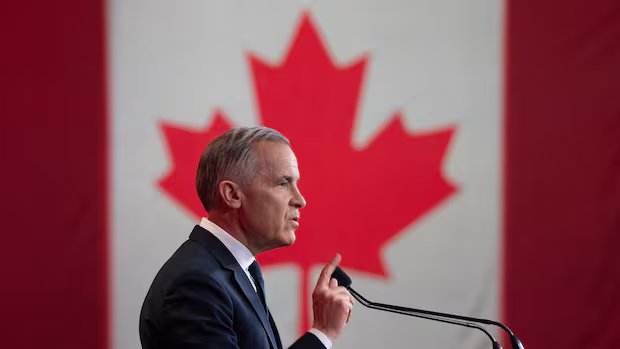

Listen to this article
Estimated 6 minutes
The audio version of this article is generated by AI-based technology. Mispronunciations can occur. We are working with our partners to continually review and improve the results.
There have been a total of 24 prime ministers in Canada’s history, but before Monday night only 13 could claim to have led their party to a majority of seats in the House of Commons. Mark Carney is now the 14th to do it.
It is a remarkable achievement — doubly so for how Carney came to be prime minister and now how he came to have a majority.
It was just 16 months ago that Carney announced his run for the Liberal leadership, with the party trailing significantly in the polls. While he had served prominently as the governor of two central banks, he had never before sought elected office.
And now he has cobbled together one of the more unique majorities in Parliament’s history, with the decisive seats provided nearly 12 months after the last general election by two byelections (pending results in the Quebec riding of Terrebonne) and five floor-crossings from two different parties.
An unnamed Liberal speaking to the Toronto Star recently described the Liberals as an “an anti-Trump coalition.” And while the Liberal agenda is surely more than that, that might be a fitting moniker for this singular majority that Carney has now assembled.
But the eternal question in politics is: what’s next?
With a new — if narrow — majority, the Liberals will be able to more easily move legislation through the House and through the committees that review legislation. The Liberal cabinet will be able to survive confidence votes, and it can start thinking about not having to face a new election until 2029.
In that way, the difference between 171 seats and 173 seats is massive. But for the sake of their own comfort, the Liberals might still want to find another couple seats.
In the life of any Parliament there are some number of sudden exits — Nathaniel Erskine-Smith, the Liberal MP for Beaches-East York, is already seeking to run provincially in Ontario. Another two or three departures wouldn’t be inconceivable. And having gotten to a majority, the Liberals likely don’t want to leave it balancing on a knife edge or even slipping back into a minority.
Given how expansive the Liberal tent has become in recent weeks, there is also some question of how well it will hold together — with the possibility now that, at least in theory, a few Liberal MPs could hold significant sway over votes in the House.
For now, the question is what Mark Carney will do with a majority.
What will Carney do with a majority?
Despite the unquestionable achievement, there are perhaps two risks for the Liberals.
The first is complacency. Getting to a majority could be an excuse to exhale and relax a little. And a majority would at least allow for a little more forward planning.
But it was also just a few days ago that Carney himself, speaking to Liberals, warned, “If we stand still during this rupture, we will surrender our future to others.”
The second risk is the opposite of complacency: moving further or faster than Canadians are ready to accept.
With a majority comes the temptation to use it. And Carney seems particularly keen on action.

Chief political correspondent Rosemary Barton and this week’s Sunday Scrum – Toronto Star Ottawa bureau chief Tonda MacCharles, Hill Times managing editor Charelle Evelyn and CBC News writer and producer Jason Markusoff – discuss the Liberal Party potentially reaching a majority government in the upcoming byelections. Plus, the Sunday Scrum talks about the reaction from Pierre Poilievre, the leader of the Official Opposition, to the recent defection from his caucus and how it could impact the Conservative Party’s strategy.
But Conservative Leader Pierre Poilievre was already making the argument that there is something undemocratic about Carney’s majority. And the opposition will now be primed to argue the Liberals are running roughshod over Parliament — the government has already found itself accused of legislative overreach on a couple of occasions.
On the eve of a majority, the Liberals were at least vowing to be magnanimous.
“Canadians sent a Parliament back after the last election that was very close to a Liberal majority. One or two seats on either side I don’t think will change our duty to be unifiers, our duty to reach across the aisle of the House of Commons to work with other parties on solutions,” government House leader Steve MacKinnon told CBC’s Rosemary Barton this weekend.
“We want to be a unifying government.”
Ramifications on both sides of the aisle
If Carney has benefited from not seeming like a zealous partisan, there is probably some reason for him to continue being pragmatic. But somewhere between complacency and arrogance, there is also a potential opportunity to seize.
In the last 20 years, there have been only two majority parliaments, and both of them proved fleeting — Stephen Harper’s from 2011 to 2015 and Justin Trudeau’s from 2015 to 2019. It’s been more than 25 years since any prime minister was able to win back-to-back majorities.
The Liberals may now have a full four years of runway. They can’t be sure when they’ll get that again.

At Issue this week: Conservative MP Marliyn Gladu crosses to the Liberals just days before critical byelections that are expected to bring Mark Carney a majority government. Pierre Poilievre defends his leadership after another defection. And concerns about Senate independence.
On the other side of the aisle, a Liberal majority could actually enable the Conservatives to be more full-throated in their opposition to the government, though that could conceivably undercut Poilievre’s recent attempts to seem more constructive.
For his own sake, Poilievre has been in need of time. If recent polls were replicated in an election, the Liberals would win more than 200 seats.
But the Conservative leader surely didn’t want to avoid an election this way — with four of his MPs crossing the aisle to the Liberals. And the question now is whether Poilievre’s leadership can survive what could be another three years in opposition.
Compared to 18 months ago, many MPs are not sitting where they thought they would be. Not least Poilievre himself. And now they seem likely to be there for a while.