dailynewsnblog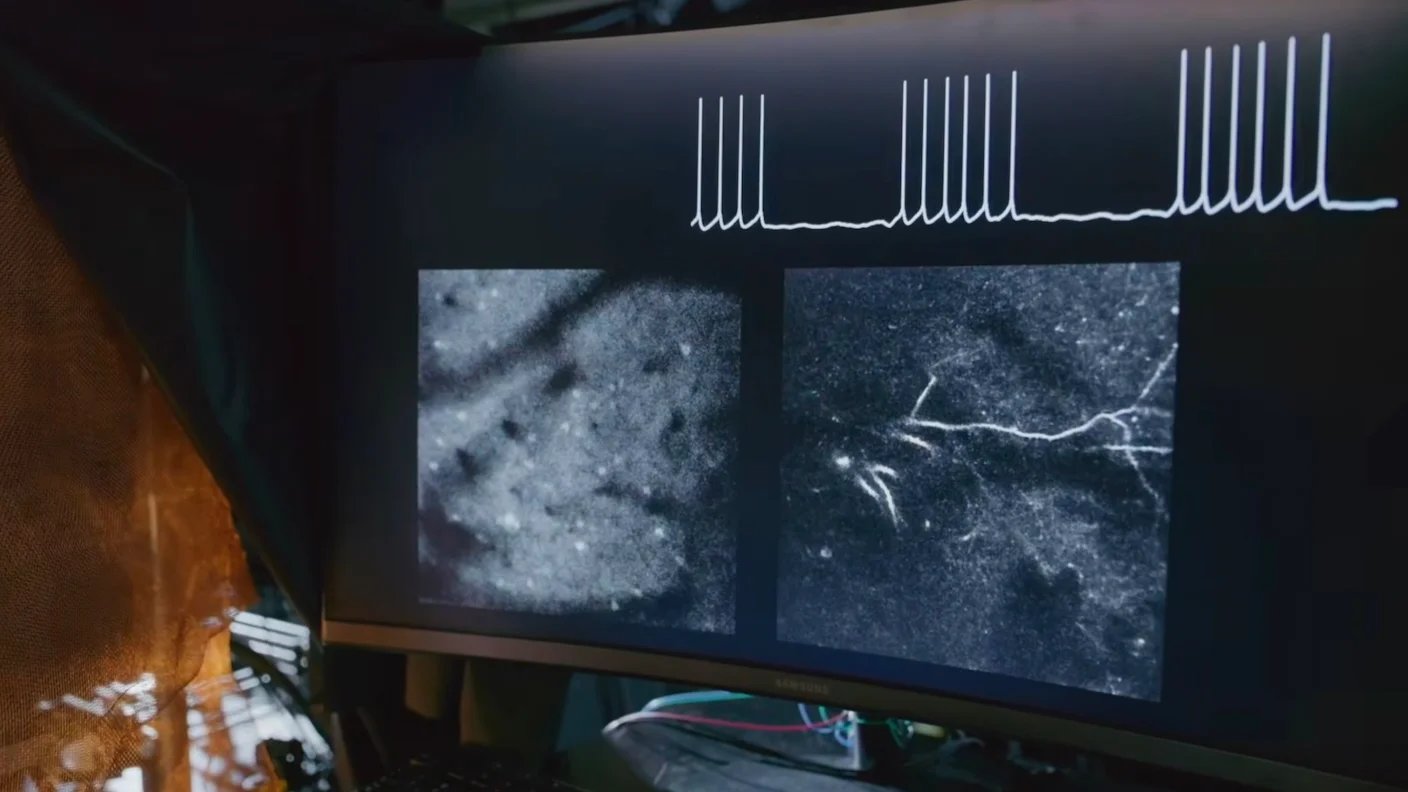
A single shot transforms the mice’s brains into a biomanufacturing machine. Blood proteins churn the injected chemicals into a soft, flexible electrode mesh that seamlessly wraps around delicate neurons. Pulses of light aimed at the mesh quiet hyperactive cells. All the while, the mice go about their merry ways, with no inkling they’ve been turned into cyborgs.
This science fiction-like invention is the brainchild of Purdue University scientists seeking to reimagine brain implants.
These devices, often composed of rigid microelectrode chips, have already changed lives. They can collect electrical signals from the brain or spinal cord and translate these signals into speech or movement—returning lost abilities to people with paralysis or diseases of the brain. Implants can also jolt brain activity and pull people out of severe depression.
Yet most implants require extensive surgery and risk damaging the brain’s delicate tissue. The new technology would avoid these downsides by building electrodes directly at the target.
“Our work points to a future where doctors could ‘grow’ soft, wire-free electronic interfaces inside the brain using the patient’s own blood, then gently dial brain activity up or down from outside the head using harmless near-infrared light,” study author Krishna Jayant said in a press release.
Probes Galore
The brain produces every one of our sensations, movements, emotions, and decisions. Scientists have long sought to decode and manipulate its activity with a range of hardware.
Some devices use electrodes to monitor single neurons in a lab dish. Others are physically inserted into brain regions that encode cognition and emotion. Some designs sit atop the brain, without puncturing its delicate tissue, and capture dynamic brain waves like a wide-lens camera.
But brain tissue is soft and squishy; microelectrodes are not. The mismatch often leads to scarring, signal loss, and shortened device lifetimes. Replacing broken or infected implants is surgically complex and can further damage the brain. Some experts have even raised ethical concerns about long-term care.
A recent explosion of soft, biocompatible materials suggests alternatives are possible, and we’ve seen a wave of creative new probes. In one example, a silk-like mesh drapes over the brain’s surface, and a related version maps electrical activity in brain organoids. Another device is smaller than a cell and, after injection, hitches a ride on immune cells into the brain. These systems can record and alter brain activity. But prebuilt implants often require surgery and struggle to integrate with their hosts without damaging surrounding tissue.
So, why not grow an electrode directly inside the brain?
“The ability to synthesize [conductive] materials on demand at a target site could overcome the limitations of conventional synthetic implants,” wrote M.R. Antognazza and G. Lanzani at the Italian Institute of Technology, who were not involved in the study.
Under Construction
Our cells are natural manufacturers, constantly assembling things like proteins, genetic messengers, and membranes. Cells rely on two essential ingredients to construct the complex structures of life: Biological building blocks and catalysts to bind them together. Synthetic materials work the same way. Monomers link like Lego blocks to form polymers with the help of a catalyst.
The discovery of electrically conductive polymers, meanwhile, has galvanized efforts to grow living bioelectronics directly inside the body. In a previous study, researchers genetically engineered cells to produce a protein catalyst that helps assemble conductive structures on the surfaces of living neurons. Another approach used hydrogen peroxide—a common first-aid staple—to compile monomers into reliable electrodes that monitor nerves in leeches.
These quirky early successes showcased the promise of brain-built electronics, but hit hard limits. The chemistry often relied on catalysts toxic to neurons. Even when successfully formed, the electrodes mostly just listened. Changing brain activity required additional physical cables.
The Purdue team rewrote the recipe. They designed a monomer, called BDF, that with the help of hemoglobin—a protein in red blood cells—becomes a soft, flexible, and electrically conductive mesh surrounding neurons at the site of injection. The willowy electrode hugs the brain’s anatomy and moves with it, minimizing physical damage. It’s responsive to near-infrared light and can translate light pulses from outside the skull into electrical signals that alter brain activity.
“Our key idea was to let the body’s own chemistry do the hard work,” said study author Sanket Samal.
The appeoach worked in several tests. Injecting BDF into store-bought beef and lamb steaks produced the electrode mesh within a day at human body temperature. In zebrafish embryos, a darling in neuroscience research, the reaction proceeded smoothly inside their yolks. Over 80 percent of the embryos survived, developed normally, and actively swam around—suggesting minimal harm.
But steak dinners and translucent fish are a far cry from our brains. Mice are closer. With the help of blood, BDF formed electrodes in mice’s motor cortexes after injection with minimal surgery. The mice’s brains maintained a normal balance of activity as they skittered around.
The team also coaxed dendrites, the tree-like input branches of a neuron, to produce the conductive mesh. Dendrites aren’t just passive cables, they’re “mini computers” that contribute to the brain’s computation and learning. Current methods struggle to precisely single out and control dendrite activity without messing with other parts of the neuron.
With near-infrared light, dendrite-built electrodes changed the way the neural branches behaved. The light temporarily lowered brain activity, and mice trained to press a lever were unable to perform the task. It didn’t wipe out their memory though: After turning off the light, the animals regained the skill. Their brains showed no signs of infection, inflammation, or over-heating throughout the study.
Inhibiting brain signals has upsides. Hyperactive brain activity in epilepsy and Parkinson’s disease, for example, is currently dampened with medication or—in severe cases—brain implants. If validated, brain-grown electrodes could be a less invasive alternative. Though to be clear, the method still requires surgery to inject the materials. Adding biocompatible magnetic ingredients, which can also control brain activity, could further boost the system’s potential.
How long the materials stay put and if they’re safe over the long term remains unclear. But in theory, the strategy could also control spinal cord nerves or heart tissue. Researchers could also adapt the strategy to use other types of materials that regulate brain activity in different ways, like ramping it up.
With further improvement, the electrode wouldn’t “just coexist with brain cells for months or years; it becomes part of them, stable across lifetimes,” said Jayant.