dailynewsnblog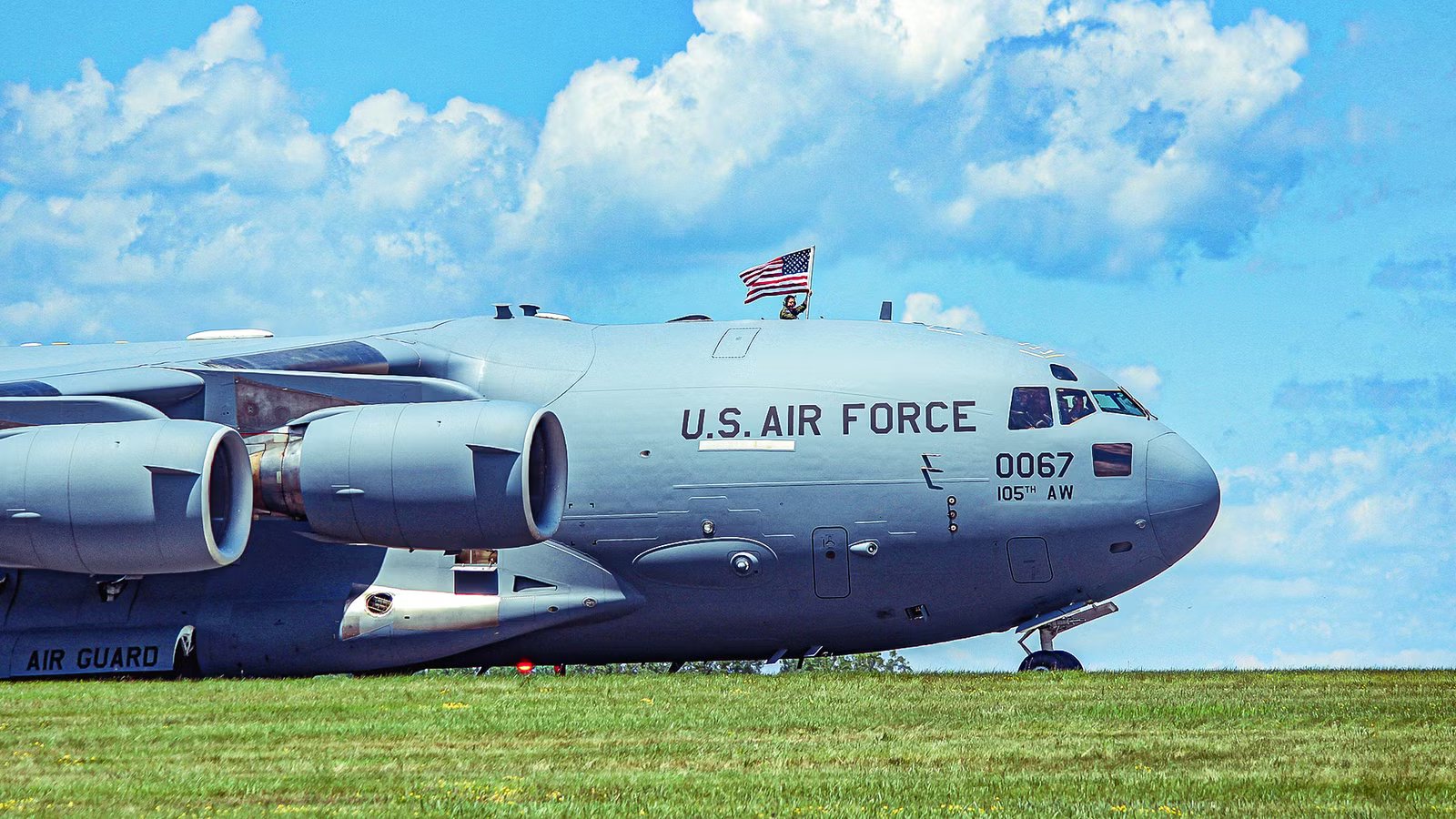
The  BoeingC-17 Globemaster III is set to undergo a complete digital cockpit overhaul soon because critical avionics components, specifically mission computers and multifunction displays, are projected to run out of spare parts by fiscal year 2027, while the US Air Force plans to keep the 275-aircraft fleet operational until at least 2075. Under a $266.6 million contract awarded in December 2025, Boeing will replace legacy systems with a Modular Open Systems Architecture (MOSA), enabling faster upgrades and ensuring long-term sustainability.
Based on recent USAF data and Boeing’s official program disclosures, the urgency is clear: without this upgrade, key Line Replaceable Units (LRUs) would become unsupportable within the next two years, grounding aircraft that still have decades of structural life remaining. This matters directly to US global mobility operations, as the USAF operates 222 C-17s that underpin rapid deployment, humanitarian missions, and joint operations worldwide, including support for allies and domestic response capabilities.
The Urgency Behind The C-17’s Digital Transformation

The need to modernize the C-17 Globemaster cockpit is rooted in a growing and unavoidable challenge: obsolescence. Much of the aircraft’s avionics architecture was designed in the late 20th century, at a time when digital integration was far less advanced than it is today. While the aircraft itself remains structurally sound and operationally capable, the electronic brains that support its mission are increasingly difficult to sustain.
According to reporting from Aviation Today, the US Air Force has identified a looming shortage of critical Line Replaceable Units (LRUs), including mission computers and multifunction displays. These components are essential to flight operations, and the service has projected that spares for some of these systems could be exhausted as early as fiscal year 2027. Once that happens, even fully functional aircraft could be grounded due to the lack of replacement parts.
This situation is not uncommon for long-serving military platforms, but the scale of the C-17 fleet makes it particularly significant. With more than 275 aircraft (and prototypes) produced between 1993 and 2015, including 222 operated by the US Air Force and 53 by international partners, the logistics of sustaining such a fleet are immense. The urgency of the problem has forced the Air Force to act decisively, culminating in a $266.6 million contract awarded to Boeing in December 2025 to begin a comprehensive cockpit modernization effort, as reported by Aerospace Global News.
From Analog Legacy To Modular Digital Architecture

At the core of the modernization effort is a transition from legacy avionics systems to a Modular Open Systems Architecture (MOSA). This shift represents a profound change in how the C-17’s cockpit will function and evolve. Traditional avionics systems are often tightly integrated, meaning that upgrading one component can require significant changes to others. This complexity has historically made upgrades costly and time-consuming.
MOSA, by contrast, introduces a “plug-and-play” approach, similar to LEGO-bricks, to avionics design. Systems are built around open standards, allowing individual components to be replaced or upgraded independently. Boeing emphasized this capability in its official announcement, noting that the new architecture will enable rapid integration of emerging technologies and mission-specific enhancements. This flexibility is particularly important for an aircraft expected to remain in service for another half-century.
|
System |
Legacy Equipment |
Upgrade Replacement |
Function |
|---|---|---|---|
|
Mission Computer |
Legacy Mission Computer Processor |
MOSA Mission Computer |
Flight management, mission systems integration |
|
Multifunction Displays |
CRT/LCD MFD units |
Large Area Displays (LAD) |
Flight, navigation, systems display |
|
Display Processors |
Legacy Display Electronics Unit |
Open architecture display processor |
Graphics & display generation |
|
Data Buses |
MIL-STD-1553 |
High-speed Ethernet / Open data bus |
Aircraft system communications |
|
Navigation Interface |
Legacy INS/GPS interface |
Integrated navigation architecture |
Navigation data integration |
|
Communications Interface |
Legacy radio interface |
Open systems comm architecture |
Data link & communications |
The benefits of MOSA extend beyond technical flexibility. By reducing dependence on proprietary systems, the architecture opens the door to greater competition among suppliers. This not only helps control costs but also accelerates innovation, as multiple vendors can contribute to the platform’s evolution. For the C-17, this means that future upgrades, either related to navigation, communications, cybersecurity, or everything together, can be implemented more quickly and efficiently than ever before.

Why The F-35 Is The US Air Force’s Most Important Fighter Jet
Discover why the F-35 is the US Air Force’s most critical fighter — from stealth and sensors to strategy, readiness, and future upgrades
The Role Of Industry Partners In The Upgrade

While Boeing is leading the cockpit modernization effort, the scale and complexity of the project require a broad network of industry partners. Among the most significant is Curtiss-Wright, which has been awarded a major subcontract to provide the mission computing systems that will underpin the new cockpit.
According to Investing.com, the contract has an estimated lifetime value of more than $400 million. Curtiss-Wright will deliver MOSA-aligned mission computers capable of handling the increased processing demands of a modern digital cockpit. These systems will serve as the central hub for avionics functions, integrating data from multiple sources and presenting it to pilots in a more intuitive and efficient manner.
The involvement of specialized suppliers like Curtiss-Wright reflects a broader trend in defense procurement. Modern military systems are increasingly developed through collaborative ecosystems, where each partner contributes expertise in a specific domain. This approach not only enhances the quality of individual components but also ensures that the overall system benefits from the latest technological advancements.
For the C-17 program, this collaborative model is particularly important. The aircraft must remain compatible with a wide range of existing and future systems, from ground-based logistics networks to other aircraft in joint operations. By leveraging the expertise of multiple partners, the Air Force can ensure that the upgraded cockpit meets these diverse requirements while maintaining the reliability and robustness for which the C-17 is known.
Extending The Life Of A Strategic Workhorse

The ultimate objective of the cockpit overhaul is to extend the operational life of the C-17 to at least 2075. This ambitious timeline reflects both the aircraft’s enduring capabilities and the lack of a near-term replacement, as the production of this aircraft type ceased in 2015. Despite being designed decades ago, the C-17 remains one of the most capable airlifters in the world.
With a maximum payload of 170,900 pounds and the ability to operate from runways as short as 3,500 feet, the aircraft offers a combination of range, capacity, and flexibility that is difficult to match, as previously covered by Simple Flying. These capabilities have made it a cornerstone of global mobility operations, enabling rapid response to crises around the world. Extending the service life of such an aircraft is not without challenges.
By 2075, the oldest C-17 airframes will be approaching 80 years of age. Maintaining structural integrity over such a long period requires extensive maintenance and periodic upgrades. However, the cockpit modernization addresses a different but equally critical aspect of longevity: technological relevance. Similar upgrades are also being introduced on another long-serving USAF aircraft – the Boeing B-52 Stratofortress.
By replacing outdated avionics with a modern digital architecture, the Air Force ensures that the C-17 will not become obsolete in an increasingly digital battlespace. Pilots will benefit from improved situational awareness, enhanced automation, and more intuitive interfaces, bringing the aircraft in line with newer platforms.

Is The C-17 Globemaster Bigger Than The C-5 Galaxy?
How do the design philosophies of the C-5 Galaxy and C-17 Globemaster reflect their intended roles in military operations?
Bridging The Gap Until Next-Generation Airlift Arrives

A key factor driving the modernization effort is the timeline of future airlift programs. The US Air Force is developing the Next-Generation Airlift (NGAL) program to eventually replace the C-17, but this initiative is still in its early stages. Current projections indicate that operational NGAL aircraft will not enter service until the 2040s. Even once NGAL becomes operational, it will take years to build and deploy enough aircraft to replace the existing fleet. During this transition period, the C-17 will remain essential to global airlift operations.
The cockpit upgrade is therefore not only about extending the life of the aircraft, but also about ensuring continuity of capability and relevance. Without modernization, the C-17 fleet could face increasing operational limitations, potentially affecting mission readiness. By contrast, the upgraded cockpit will allow the aircraft to integrate smoothly with future systems, including advanced communications networks and joint operational frameworks.
This bridging role underscores the strategic importance of the C-17. It is not a legacy platform awaiting replacement, but an active and evolving component of the Air Force’s future force structure. The modernization effort ensures that it can continue to fulfill this role effectively.
A Digital Future For A Proven Airlifter

As the aviation industry continues to embrace digital transformation across most aircraft, the C-17’s cockpit overhaul stands as a compelling example of how legacy platforms can adapt to new technological realities. The shift to a digital, modular architecture is about creating a foundation for continuous evolution, not a simple replacement for outdated hardware.
With innovative MOSA at its core, the upgraded C-17 will be able to incorporate future technologies with relative ease. This could include everything from advanced navigation systems and enhanced data links to improved cybersecurity measures. The ability to integrate such technologies quickly and efficiently will be critical in an era where threats and operational requirements are constantly changing.
Finally, the decision to modernize the C-17 reflects a broader philosophy within the United States Air Force: invest in proven platforms while preparing for the future. By combining structural longevity with technological adaptability, the service is ensuring that the C-17 remains a vital asset for decades to come.