dailynewsnblog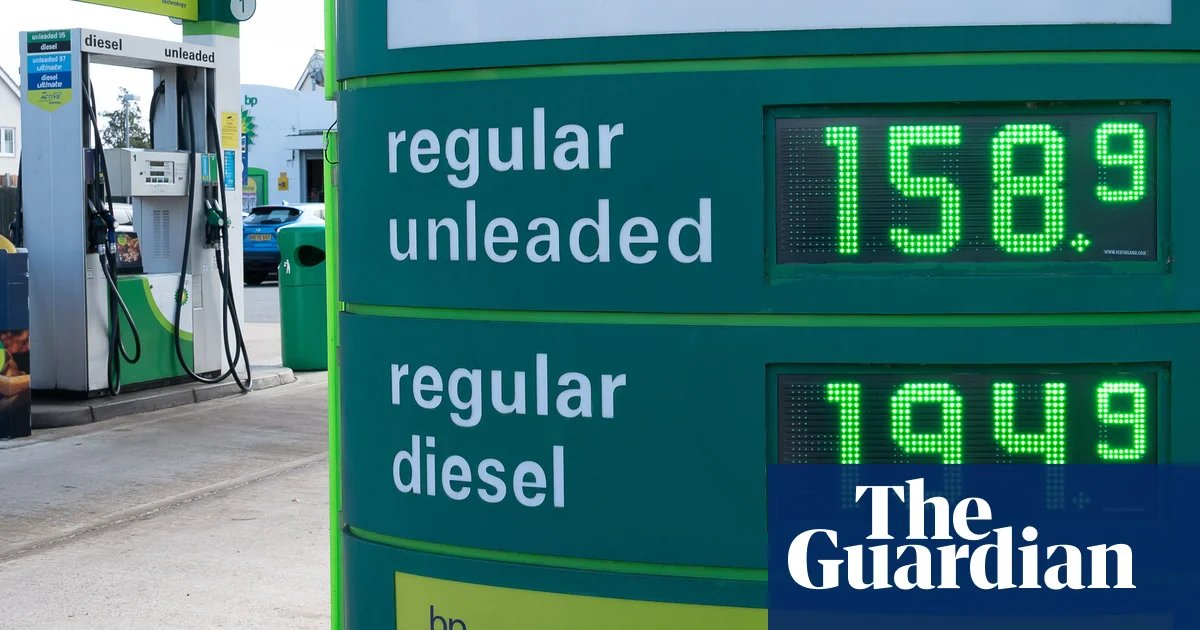
Higher energy prices as a result of the Iran war are likely to deal a blow to Britons’ living standards, leaving them nearly £500 worse off this year, a thinktank has warned.
The Resolution Foundation said households faced rising costs from both higher gas and electricity bills and at the petrol pump.
Market pricing suggests that rising energy prices will probably tip living standards growth into negative territory, the thinktank said on Monday. Its research showed the typical working-age household, which had been on track for 0.9% income growth this year before the Iran war started, could now see income fall by 0.6% – a difference of £480.
Oil and gas prices have risen sharply since the start of the war in late February and increased again on Monday, with Brent crude back above $100 (£74) a barrel.
While some lower-income households are receiving a long-overdue real-terms increase in their benefits, the foundation estimates that average income growth for the poorest fifth this year will be just 1.2%, rather than the 2.8% forecast before the US and Israel launched attacks on Iran on 28 February, unleashing a wider Middle East conflict.
Israel continues to bomb Lebanon despite a two-week ceasefire agreed between the US and Iran last Wednesday, and Donald Trump’s blockade of the strait of Hormuz and Iranian ports, taking effect on Monday, threatens to escalate the conflict again after US peace talks with Iran failed.
The picture is brighter for UK families in the bottom half of the income distribution with three or more children, the thinktank said. Even after the inflation shock, the abolition of the two-child limit is estimated to deliver 7.7% income growth for this group this year – compared with zero growth for poorer families with fewer than three children.
Jonathan Marshall, the foundation’s principal economist, said energy bills were set to rise this summer, wiping out the £117 average savings a household arising from the regulator lowering its energy price cap from April.
The thinktank urged ministers to accelerate work on a social tariff ahead of winter, when energy costs will hit hardest, to offer targeted support to struggling households. It has estimated the cost at £3.7bn.
Speaking at the foundation’s panel discussion on Monday, Jeremy Hunt, the former Conservative chancellor, said a social tariff was the “most promising way to go … because that would allow you to target benefits at low-income families, irrespective of whether they’re on benefits or not”.
He proposed a “targeted, time-limited” package of £5bn to £10bn for one year, which he said should be doable within Rachel Reeves’s fiscal rules, and to avoid “bad longer-term outcomes” of soaring public debt dragging on economic growth.
Hunt said the Treasury is “mindful of our fiscal position”, so they will say “we want the people who are not on the social tariff to have slightly higher bills, to pay for lower bills for people on the social tariff”.
“It is definitely politically easier for Rachel Reeves to say, ‘this is something I’m going to deal with when I come to the budget in November.’
“But if the moment she announces a social tariff, she announces that bills for the 80% are going to go up in order to fund lower bills for the 20% of poorer households, that is a way to kill a policy stone dead from the outcome.”
Hunt also noted that the scale of the energy price rises was “nothing like 2022” when costs spiked after Russia’s full-scale invasion of Ukraine, saying that the markets would not allow a repeat big universal support package for all households.
In 2022, former prime minister Liz Truss intervened to cushion the impact of energy price increases for all households.
Dhara Vyas, chief executive of Energy UK, stressed the importance of shifting towards clean energy sources to reduce Britain’s reliance on oil and gas. “Our energy security is more at risk now than it has ever been,” she said.
Analysts are expecting crude oil prices to stay elevated in the months ahead, with JP Morgan Chase forecasting levels above $100 a barrel in the current quarter to June, followed by an easing in the second half of the year. Last week, Goldman Sachs lowered its forecast for Brent crude to average $90 a barrel in the second quarter, from $99 previously.
James Smith, chief economist at the Resolution Foundation, said: “Despite hopes for a sustained peace, the path of this conflict remains uncertain and energy prices remain well above prewar levels, meaning many households face a decline in their purchasing power this year.
“De-escalation is certainly welcome, but damage to household finances this year is to a large degree already done. The government should act now to prepare a social tariff that reaches households falling through the cracks this winter.”