dailynewsnblog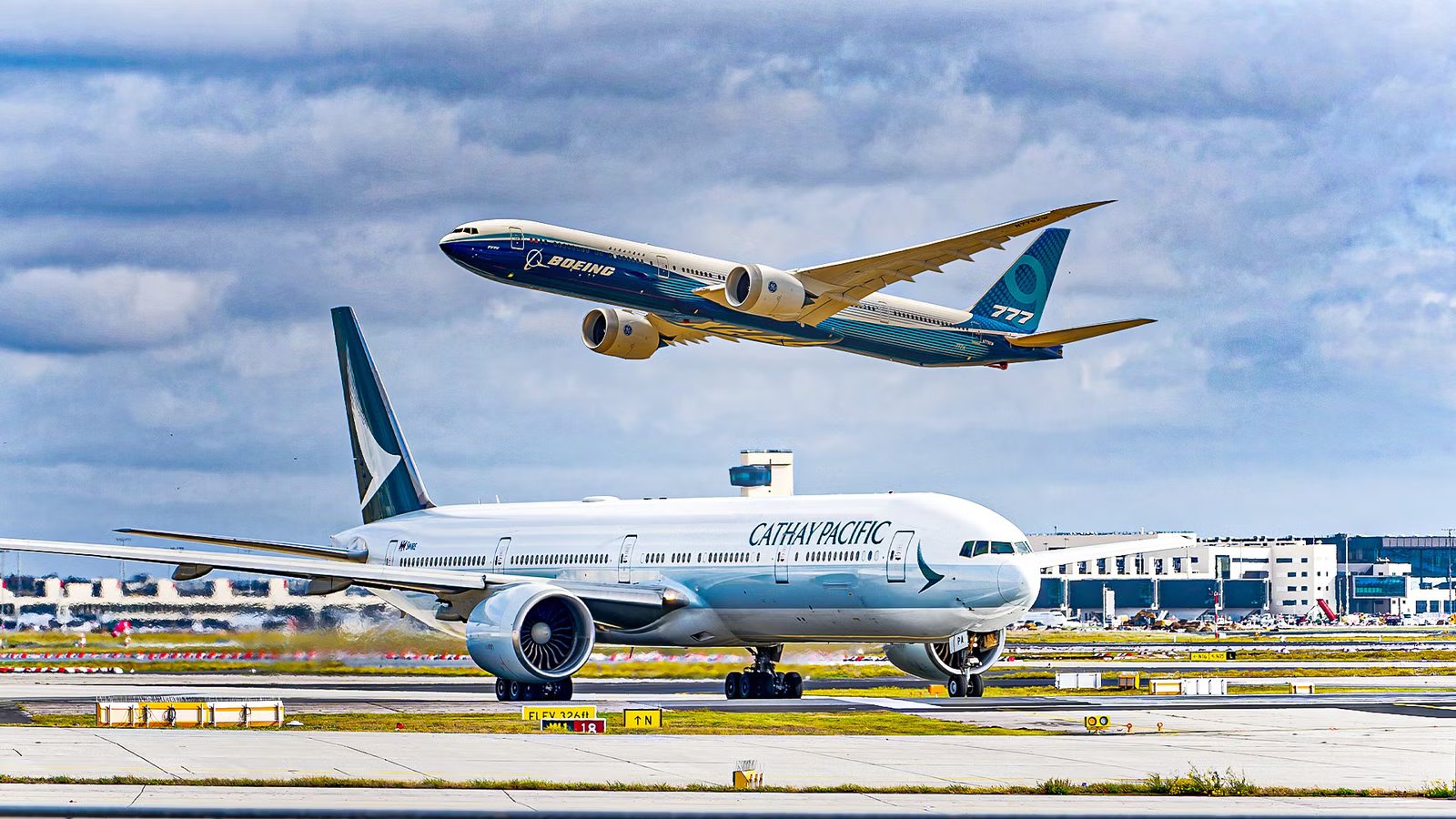
It is time for the Boeing 777-300ER to give way to the new Boeing 777X, representing one of the most significant leaps in widebody evolution since the turn of the century. The aviation industry is moving steadily toward a future defined by efficiency and high-capacity twin-engine operations, where  Boeing aims to be at the forefront. This guide breaks down the technical dimensions and engineering feats that allow the 777-9 variant to surpass its predecessor, providing a clear perspective on how much larger this aircraft truly is.
Physical dimensions in aviation are never a matter of vanity. More often, it is almost always a direct response to the economic demands of global hubs. For a carrier like All Nippon Airways or  United Airlines, every additional meter of fuselage must be justified by increased revenue potential or operational savings. This comparison highlights the delicate balance Boeing maintained while stretching the airframe, ensuring that while the 777X is longer and wider than the 777-300ER, it remains compatible with the existing infrastructure of the world’s busiest airports.
A Noticeable Stretch

When viewing the two aircraft side-by-side, it’s clear that Boeing did not shy away from adding to the fuselage. The Boeing 777-9 reaches a total length of 76.7 meters, which is approximately 251 feet and nine inches from nose to tail. In comparison, the 777-300ER stands at 73.9 meters (242 feet 4 inches). This nearly nine-foot increase makes the 777-9 the longest commercial twin-engine jet ever produced, narrowly edging out its own predecessors and rival airframes.
This physical stretch serves a clear functional purpose by expanding the interior floor space. Through lengthening the fuselage, Boeing has created room for approximately 30 additional passengers in a typical two-class configuration, bringing the total count from 396 in the 777-300ER to 426 in the 777-9. What airlines will be noticing is that this increased capacity can allow for higher revenue generation on every flight without requiring the massive fuel burn of a four-engine jumbo jet.
The implications of this length extend to the ground operations and the structural integrity of the airframe itself. Managing a 76-meter fuselage requires precise engineering to maintain balance and aerodynamic stability during takeoff and landing. Furthermore, the increased length necessitates advanced taxiing cameras and pilot aids to ensure the tail remains clear of obstacles during tight turns at congested airports.
Breaking The Rules Of Wing Design

The fuselage stretch is undoubtedly impressive, bringing the 777 program into its longest iteration yet. Despite this, the wingspan represents the most radical engineering departure from the 777-300ER. The older model features a wingspan of 64.8 meters (212 feet 7 inches), but the 777-9 extends this to a staggering 71.8 meters (235 feet 5 inches) when in flight. This seven-meter difference can work due to a new carbon-fiber composite wing design that provides a higher aspect ratio, significantly improving aerodynamic efficiency and fuel burn over long distances.
The challenge of such a wide wingspan is that it would normally disqualify the aircraft from using standard airport gates, which are often restricted to the 65-meter limit known as ICAO Code E. To solve this paradox, Boeing introduced folding wingtips, a first for commercial aviation. When the aircraft taxis to a gate, the outer three and a half meters of each wing fold upward, reducing the span back to 64.8 meters and allowing it to park in the same spaces currently occupied by a 777-300ER.
Safety remains the paramount concern with such a high-profile moving part. The folding mechanism is integrated into the flight control systems with strict no-go logic, ensuring that the aircraft cannot initiate a takeoff roll unless the wingtips are fully extended and locked. This automated process minimizes pilot workload while providing a mechanical solution to a physical constraint that would otherwise have limited the aircraft to a handful of ultra-large hubs.

Why The Boeing 777X Will Evolve Long-Haul Flying
The aircraft features many new innovations from the older generation 777s.
Power And Performance

At the heart of the 777-9’s increased scale are its powerplants, which are officially the largest and most powerful jet engines ever built. The GE90-115B used on the 777-300ER was the previous record holder, but the new GE9X surpasses it in both size and efficiency. With a fan diameter of 3.4 meters (134 inches), the engine casing of the GE9X is nearly as wide as the fuselage of a Boeing 737, illustrating the sheer physical volume required to propel the longer 777-9.
Despite its massive size, the GE9X is designed to be more efficient than its predecessor. It utilizes a higher bypass ratio and advanced materials like ceramic matrix composites to operate at higher temperatures, resulting in a 10% reduction in fuel burn compared to the GE90. Even if the 777-9 is a larger and heavier aircraft than the 777-300ER, it can still carry its increased passenger load with a smaller carbon footprint per seat.
|
Feature |
GE90-115B (777-300ER) |
GE9X (777-9) |
|
Fan Diameter |
3.25 Meters |
3.40 Meters |
|
Bypass Ratio |
9:1 |
10:1 |
|
Materials |
Composite Fans |
Fourth-Gen Composite / CMCs |
|
Fuel Efficiency |
Baseline |
10% Improvement |
For pilots and ground crews, the size of these engines presents new operational considerations. The intake is so large that it could easily swallow a standard shipping container, and the thrust generated is unparalleled in the commercial sector. However, the true beauty of the GE9X is that it manages this power with less noise than the previous generation, ensuring that the longer, heavier 777-9 can meet the increasingly strict noise abatement regulations at major urban airports.
The Passenger Viewpoint

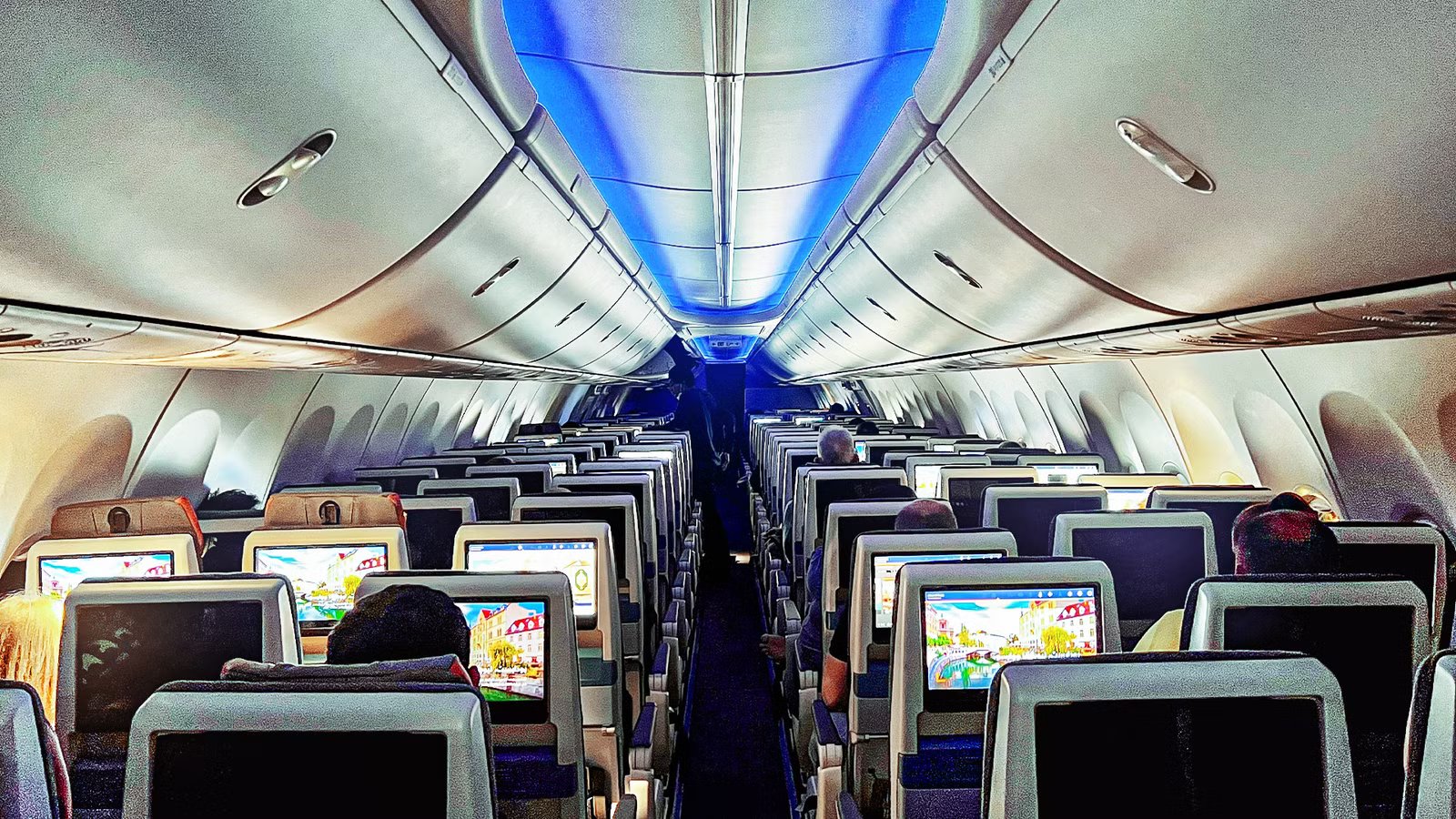
Boeing achieved a significant interior expansion through advanced structural engineering, even though the external fuselage diameter remains consistent with the previous generation. Utilizing thinner, more efficient sidewall insulation and re-sculpting the internal frames, the cabin width of the 777-9 was increased to 5.96 meters (19 feet 7 inches). This ten-centimeter, or four-inch, gain may seem marginal on paper, but it represents a fundamental shift in passenger comfort for the long-haul sector, particularly for carriers operating high-density configurations.
This extra width allows airlines like Japan Airlines or  Emirates to maintain a ten-abreast economy layout while providing slightly wider seats and aisles. In the 777-300ER, a 3-4-3 seating arrangement often felt restrictive, but the carved-out architecture of the 777X creates a sense of openness that mimics the Dreamliner experience. This almost invisible expansion is complemented by windows that are 16% larger than those on the older 777, positioned higher on the fuselage to ensure the horizon remains at eye level for a broader range of travelers.
The atmospheric comfort of the 777X further separates it from its predecessor by adopting the environmental standards of the Boeing 787. The cabin altitude is maintained at 6,000 feet, significantly lower than the 8,000-foot environment found on the 777-300ER, which helps reduce fatigue and jet lag on the ultra-long-haul routes it is set to dominate. Combined with higher humidity levels and improved air filtration, the 777X transforms the interior into a more hospitable environment, which is something that airlines demand more and more to keep passengers coming back.

Inside The Boeing 777X’s Folding Wing Mechanism
Here’s how Boeing’s engineers have ensured the 777X’s iconic folding wingtips can operate safely and reliably.
A Drop In Range?

The comparison of the raw range between the two variants reveals a deliberate trade-off between distance and payload efficiency. According to technical data from AviatorJoe, the 777-9 has a standard range of 7,285 nautical miles (13,500 km), which is slightly less than the 7,370 nautical miles (14,600 km) offered by the 777-300ER. However, this 85-mile difference is offset by the 777-9’s ability to carry 30 more passengers and a significantly higher volume of cargo, making it a more profitable asset for major global hubs.
To support this increased weight, the 777-9 has a maximum takeoff weight of 775,000 lbs (351,550 kg), which is actually the same as its older competitor, the 777-300ER. The larger wing area and superior lift-to-drag ratio provided by the composite wing design allow the aircraft to reach its initial cruise altitude more quickly. This means that despite its heavier frame, the 777-9 spends less time in the fuel-intensive climb phase, optimizing its performance for the mid-to-late stages of an intercontinental flight.
The increased length also introduces new considerations for ground handling and taxiing. With a wheelbase that is 1.1 meters (3 feet 7 inches) longer than the 777-300ER, pilots must account for a larger turn radius when navigating congested taxiways. To assist with this, Boeing integrated high-definition ground maneuver cameras that provide a top-down view of the landing gear, ensuring that the new king of the twin-engine jets can navigate infrastructure originally designed for much smaller airframes.
How Many More Delays?

The 777X is still moving through its final stages of certification in 2026, being pushed further and further back, putting immense pressure on Boeing to deliver on its promises. The month of April 2026 marks a pivotal milestone with the scheduled first flight of a production-standard 777-9, an event that shows the program is finally nearing its commercial debut. For carriers that have waited over a decade for this evolution, the aircraft represents a necessary modernization of the ultra-high-capacity market.
The strategic importance of the 777-9 is most visible in the East Asian and Middle Eastern markets, where it will serve as the primary replacement for aging Boeing 747 and Airbus A380 fleets. Major operators around the world are looking to the 777X to maintain their transpacific dominance while reducing the operational costs associated with four-engine quad-jets. With recent massive orders from Korean Air and  Air India, the total backlog for the 777X family now exceeds 600 units, demonstrating the industry’s somewhat worrying reliance on this specific airframe to manage the busiest long-haul corridors in the world.
Looking toward the official entry into service now targeted for early 2027, the 777-9 will redefine the economics of hub-to-hub flying for the next 30 years. It offers a pragmatic solution for a market that requires the capacity of a jumbo jet but demands the fuel efficiency of a modern twin-engine design. As  Lufthansa prepares to be the launch operator, the arrival of the 777X will finally close the chapter on the 777-300ER era, ushering in a period where folding wingtips and carbon-fiber wings are the standard for the world’s longest and most productive routes.