dailynewsnblog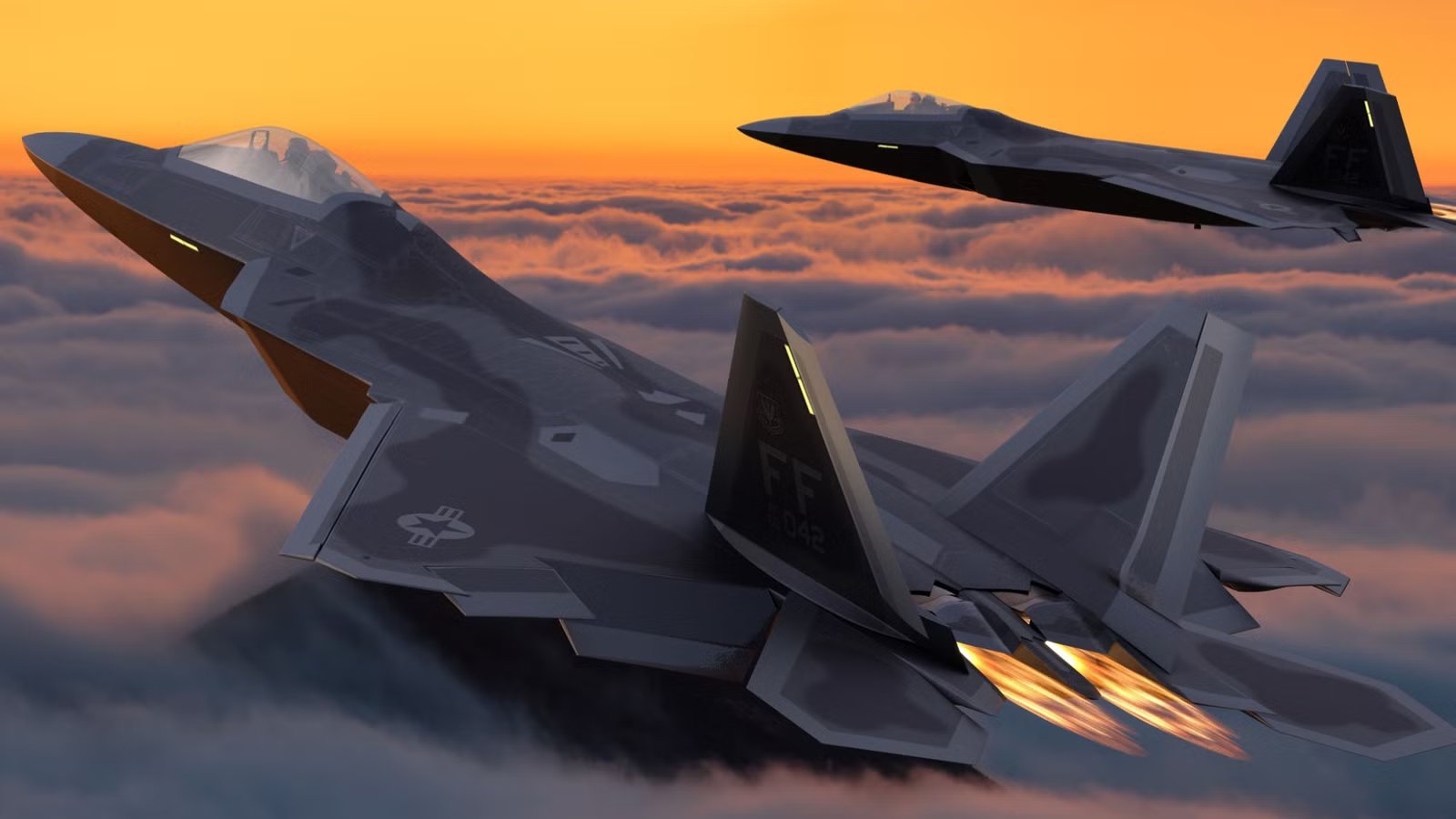
The United States Air Force is confronting a widening missile range disadvantage against China, particularly in potential Indo-Pacific conflict scenarios. At the center of the concern are the AIM-120 missiles carried by the F-22 Raptor and F-35 Lightning II, which are now believed to be outranged by China’s PL-15 air-to-air missile, as noted by the 19FortyFive. This issue has come into sharper focus in 2026 as analysts assess the evolving dynamics of aerial combat. The imbalance matters because beyond-visual-range (BVR) engagements increasingly define modern air superiority.
Recent combat observations and intelligence assessments suggest that Chinese missile technology, especially dual-pulse propulsion, has matured rapidly. The PL-15, developed to target high-value assets and stealth fighters, represents a significant leap in range and engagement flexibility. Meanwhile, the United States and its allies are racing to close the gap with upgrades to existing systems and entirely new missile programs.
The Core Of The Emerging Disadvantage And Lessons From Combat

The central concern for the US Air Force lies in the effective range of its primary air-to-air missile, the AIM-120 Advanced Medium-Range Air-to-Air Missile (AMRAAM). While the latest AIM-120D variant introduced improvements in guidance, networking, and range, it is increasingly viewed as insufficient against newer threats. Reports indicate that China’s PL-15 significantly exceeds the AMRAAM’s reach, allowing Chinese fighters to engage first. In modern aerial warfare, the ability to fire first often determines survival.
For stealth fighters like the F-22 and F-35, this range gap undermines a key advantage: the ability to detect and engage enemies before being detected themselves. If adversary missiles outrange US weapons, American pilots may be forced into defensive postures earlier in an engagement. This shifts the balance from proactive to reactive tactics. The implications are particularly serious in contested environments such as the South China Sea or Taiwan Strait.
One of the most revealing insights into the PL-15’s capabilities came from an India-Pakistan aerial confrontation last year. As noted by The Aviation Geek Club, during the engagement, Pakistan Air Force Chengdu J-10C deployed Chinese-made missiles against an Indian Air Force (IAF) Rafale at a distance of 200km, including variants believed to be derived from or similar to the PL-15. This marked one of the first real-world indications of how Chinese missile technology performs in combat. IAF noted that these weapons demonstrated impressive reach and engagement flexibility, far more capable than expected.
The battle highlighted how dual-pulse propulsion systems can extend a missile’s effective engagement window. Unlike traditional single-burn rockets, dual-pulse motors provide sustained thrust during the terminal phase of flight. This makes it harder for targeted aircraft to evade. The encounter served as a wake-up call for Western air forces, reinforcing concerns already present in intelligence assessments.
While details remain partially classified, the idea is clear: Chinese missile technology is no longer theoretical or experimental, but fully operational and more capable than once thought. This raises the stakes for any future confrontation involving advanced air forces.

6 Aircraft That Represent The Future Of Air Combat
Discover six aircraft redefining modern air warfare, from stealth fighters to missile trucks, shaping the balance of air power in 2026 and beyond.
Inside the PL-15: China’s Long-Reach Weapon

The PL-15 is widely regarded as China’s premier beyond-visual-range air-to-air missile. Equipped with an active electronically scanned array (AESA) radar seeker, it offers improved resistance to jamming and enhanced targeting precision. Its estimated range, often cited as exceeding 200 kilometers, places it ahead of most Western counterparts currently in service. The missile is designed to be carried internally by stealth fighters such as the J-20.
A key feature of the PL-15 is its dual-pulse rocket motor, which provides a second burst of energy during the latter stages of flight. This allows the missile to maintain speed and maneuverability as it approaches its target. The design reflects a broader Chinese emphasis on long-range engagement capabilities. It is specifically intended to target high-value assets, such as AWACS aircraft, tankers, and advanced fighters.
In many ways, the PL-15 represents a shift in air combat philosophy by prioritizing reach and sustained energy over sheer speed. This aligns with China’s broader anti-access/area denial (A2/AD) strategy.
Western Responses: Closing the Gap

The United States is actively working to address the range disparity through both upgrades and new programs. The AIM-120D continues to receive incremental improvements, including better data-link capabilities and extended range. However, the greater effort lies in developing the AIM-260 Joint Advanced Tactical Missile (JATM). This next-generation weapon is expected to surpass the PL-15 in range while maintaining compatibility with existing platforms.
Meanwhile, Europe has taken a different approach with the Meteor missile. Developed by a consortium of European defense companies, Meteor uses a ramjet propulsion system instead of a traditional rocket. This allows it to sustain high speeds over long distances, maintaining energy throughout the engagement. The missile is already integrated into platforms such as the Eurofighter Typhoon and Dassault Rafale.
Missile Comparison: Range and Capability
|
Missile |
Country/Region |
Estimated Range |
Propulsion Type |
Key Feature |
|
PL-15 |
China |
200+ km |
Dual-pulse rocket |
AESA seeker, long-range engagement |
|
AIM-120D |
USA |
~160–180 km |
Single-pulse rocket |
Networked targeting, reliability |
|
AIM-260 JATM |
USA |
Classified (200+ km expected) |
Advanced rocket |
Designed to surpass PL-15 |
|
Meteor |
Europe |
200+ km |
Ramjet |
Sustained high-speed engagement |
The contrast between American incremental upgrades and European propulsion innovation highlights different strategic approaches. Both aim to counter the same challenge: ensuring that Western air forces can engage first and decisively.
As air combat continues to evolve, range is emerging as the defining metric of superiority. Stealth, sensors, and networking remain critical, but they must be paired with weapons capable of exploiting those advantages. Without sufficient missile reach, even the most advanced aircraft risk being outmatched. This reality is driving rapid investment in next-generation munitions.
The development of the AIM-260 and continued upgrades to allied systems signal a recognition of the urgency. Future conflicts will likely involve highly contested environments. In such scenarios, the side that can engage first and maintain energy through the engagement will hold the upper hand. The challenge posed by the PL-15 is reshaping Western air combat doctrine.