dailynewsnblog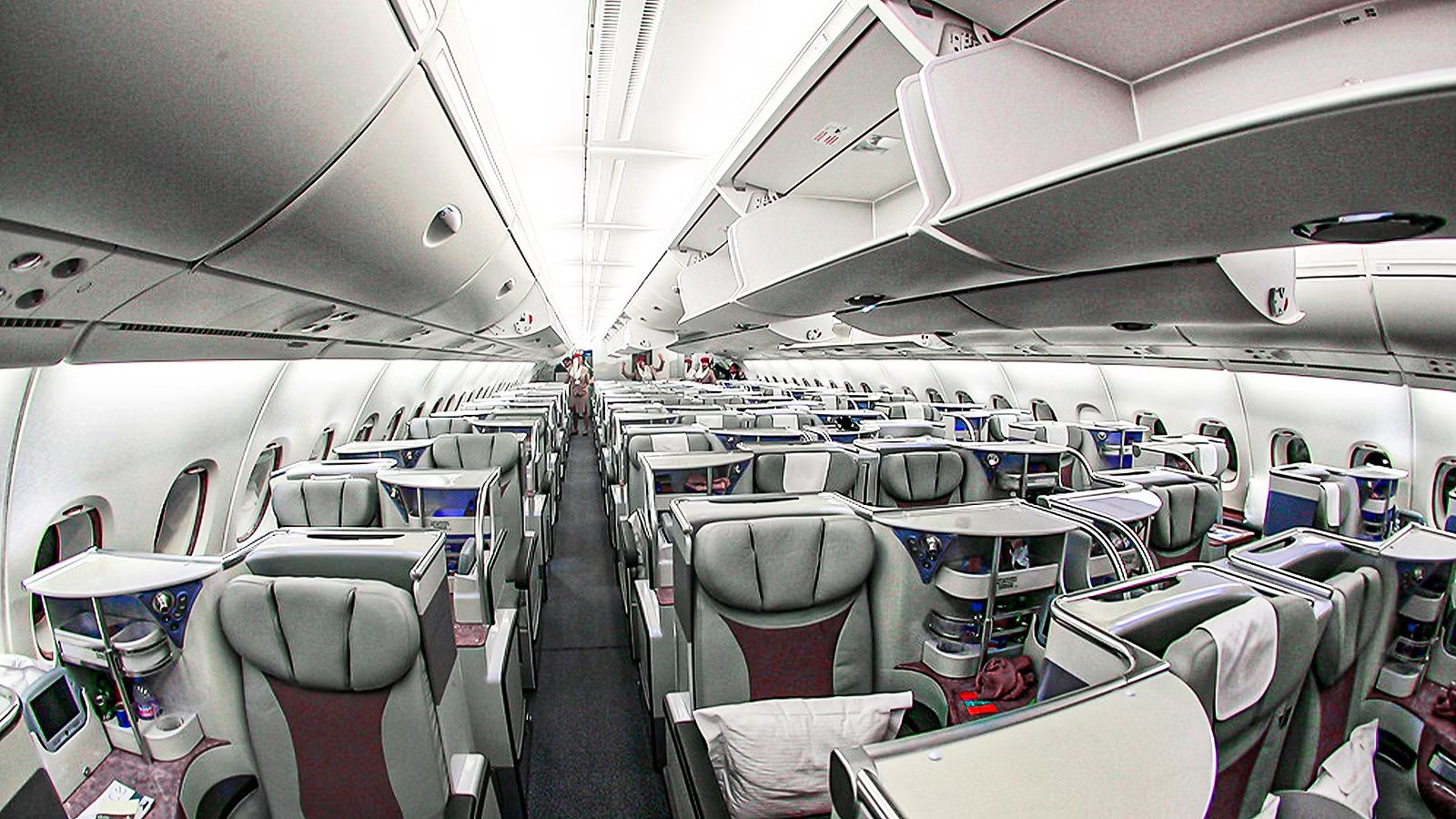
For all the attention that has been paid to the Airbus A380’s bars, suites, showers, and cavernous sense of space, the plane’s real genius is less obvious. The superjumbo was not just built to carry a lot of passengers, but it was rather built to separate functions with unusual precision. On most airliners, the passenger cabin is what defines the plane. On the A380, the visible cabin is only part of the overall story. Behind the polished surfaces and mood lighting sits an aircraft architecture that quietly divides space between customer experience, crew workflow, operational control, and fatigue management.
That is essentially what makes the A380 such a compelling subject of analysis, even years after production of the type was ended. The aircraft is incredibly long, and it features two full-length passenger decks offering a massive amount of floor area. It remains the only commercial jet of its kind ever designed. That scale gives Airbus and airline cabin designers freedom that smaller widebodies simply do not have. The overall result is an interior full of hidden thresholds, sealed-off workspaces, and cleverly layered zones that most passengers never notice at all. On the A380, luxury and logistics are inseparable. What feels serene and effortless from seat 2A or 68K is often made possible by an entire parallel world operating out of your sight.
The “Harry Potter” Cupboard
A concealed office beneath the forward staircase

One of the A380’s most charming secrets also reveals a key piece of how the aircraft operates day in and day out. Tucked directly under the forward staircase on some aircraft, most famously the  Emirates A380, is a tiny compartment that crew is known to call the “Harry Potter cupboard.” To passengers, it appears to be just dead space. In practice, however, it functions as a purser’s office. On this private workstation, the senior cabin crew member can manage paperwork, monitor and coordinate cabin operations, and, in some cases, control elements of the in-flight entertainment system.
This matters significantly because the purser onboard an A380 has an incredibly complex task, and they are not just another flight attendant. Rather, they are effectively managing a small flying hotel, often with multiple cabins, large crews, and complex service routines all unfolding at once. What makes the cupboard rather fascinating is not its size but rather what it represents. On many modern aircraft, airlines have stripped out dedicated crew workspaces in order to try to squeeze in as many seats as possible.
The A380, by contrast, was designed with enough sheer volume to preserve operational niches that feel outdated in today’s density-driven cabin market. In that sense, the hidden office shows how the superjumbo was conceived not merely as a passenger platform, but also as a layered workspace. Even an apparently whimsical cupboard under the stairs can turn out to be a piece of serious systems design. This unique cupboard continues to serve a unique purpose in a world that has otherwise mostly begun to ignore crew workspaces on ultra-long-haul aircraft.
The Secret Third Deck Passengers Never See
12 bunks tucked below passenger seats

Most travelers think that the A380 has just two decks because that is all that they will ever see. Functionally, however, many examples of the plane operate with something closer to three levels. Beneath the main passenger floor, in a space that would otherwise be devoted entirely to cargo or systems, airlines will often choose to install a lower-deck crew rest module. Qantas has described its A380 cabin crew rest area as a hidden compartment located beneath the economy cabin, with 12 bunks in the space.
Access is typically via a discreet staircase behind an unremarkable door, making the entrance easy to miss unless you know exactly where to look. That below-floor arrangement says a lot about how the A380 solves a long-haul problem. Ultra-long sectors demand a large crew, and a large crew demands a genuinely large amount of rest space, not just a curtained-off jumpseat. By pushing that rest zone below the cabin, the aircraft preserves more visible passenger real estate upstairs while still giving the crew a dedicated space.
This is critical for the crew to reset and sleep between service periods. It is also a psychologically effective cabin. The cabin experience remains calm and uncluttered, primarily because the labor that sustains it disappears into the airframe itself. The “third deck” is therefore less of a gimmick than a brilliant expression of the A380’s basic philosophy, as it keeps the machine running without ever letting passengers see the complex dynamics of crew management.

Inside The Airbus A380 Staircase Structure
Having two decks on an aircraft is no easy feat to manage. The Airbus A380 reimagined how stairs can be used onboard, doing so on a massive scale.
A Pilot Rest Suite Hidden Behind The Cockpit
A pair of private zones and a separate secure pilot rest

The A380 does not just hide space for the cabin crew to relax. It also creates a separate refuge for the people flying the aircraft. In the baseline A380 architecture, pilots have a dedicated rest area located at the very front of the aircraft in the same secure zone as the cockpit, rather than mixed with the cabin crew bunk area. Analysis of the  British Airways A380 cockpit has described that space as including its own lavatory and two private rooms with beds and armchairs.
The point is not extravagance. Rather, it is carefully controlled fatigue management. On very long flights, augmented crews rotate through protected rest periods so that the active pilots returning to the flight deck are sharper for the most demanding phases of flight. This is one of the clearest examples of how invisible cabin design supports overall safety. Passengers may assume pilots simply remain in the cockpit for the entire flight, but on ultra-long-haul operations, that is neither practical nor desirable.
The A380’s size allows carriers to build a proper division between the operating crew and customer spaces, which reduces distractions and keeps flight deck rest secure. Airline layouts will vary, as Airbus has even proposed moving some of this mezzanine-area space into combined lower-deck rest arrangements to free room for more premium seats, but the principle remains constant. The pilots’ hidden suite is not a luxury extra, but it is an embedded part of how the A380 safely sustains long missions.
A unique mezzanine not used by passengers

The A380’s flight deck is one of the dynamic aircraft’s smartest design tricks because it does not really sit on either passenger floor. Rather, it occupies an intermediate, mezzanine-like level at the very front of the fuselage. While that sounds like a small architectural detail, it has huge consequences across the board. On the Boeing 747, the raised cockpit creates the famous hump and leaves only a partial upper deck behind it.
By tucking the cockpit between a pair of different passenger levels, the company preserved the continuity of the upper deck and enabled the plane’s defining feature. That is, the jet’s massive full-length passenger decks rather than one full deck and one partial one. That decision on its own helps explain why the A380 feels so different from any other widebody. The upper floor is not an appendage, but rather a second cabin stretching almost the entire length of the aircraft itself.
Airbus itself has referred to the area behind the cockpit as the mezzanine area at the first door, reinforcing that this forward section is neither conventionally upstairs nor downstairs. The practical benefit is thus obvious. Airlines gain more uninterrupted space for premium seating, lounges, galleys, and overall circulation, all while passengers experience a cleaner, more coherent cabin plan. The plane’s exterior may look bulky, but this hidden deck-stacking logic is one reason its interior works so elegantly.
The Cabin-Flex Trick
This can create additional revenue-generating seats

Extremely few hidden Airbus A380 features are more revealing of airline economics than Cabin-Flex. In 2018, Airbus launched an A380 Cabin-Flex option with Qantas that allowed the upper-deck Door 3 exits to be deactivated on lower-density premium layouts. Once those exits are no longer required, the surrounding door area and its associated access space can then be reworked into usable cabin real estate.
Airbus has said that the gain could be worth up to 11 additional premium economy seats or seven more business-class seats, with a typical retrofit return on investment of around one year. What makes this so interesting is how invisible the change is to passengers. Walking through the cabin, most people would simply see a blank wall or a cleaner side section, not a former emergency exit transformed directly into revenue space.
Nonetheless, that quiet architectural tweak changes the economics of the upper deck. Premium cabins are where airlines make some of their most attractive margins, so reclaiming even a small patch of floor area can really matter. In effect, Cabin-Flex shows that the A380 was never frozen in time as a monument to excess.

British Airways’ Airbus A380s Will Have The World’s Largest Business Class In 2026: 110 Club Suite Seats
The Airbus A380 is about to become British Airways’ most opulent aircraft.
The Rear Spiral Staircase
The lesser-known of the interdeck staircases

For most passengers, the A380’s rear spiral staircase looks like one more theatrical flourish on an already theatrical aircraft. In reality, it is a key piece of the aircraft’s overall working anatomy. The A380 has two staircases linking its decks, including a broader forward staircase and a narrower aft one. The rear one matters operationally because it gives the crew another vertical route through the aircraft, allowing service flows to continue without forcing staff to march the entire length of the premium cabins every time they need to move between different levels, according to Airbus.
That is especially useful on an aircraft where upper-deck galleys and premium seating zones are physically far removed from much of the main-deck cabin activity. The best overall evidence that this staircase is infrastructure, not decoration, comes from both airline practice and careful Airbus engineering. Most airlines choose to gate off these stairs during flight, highlighting how they are not meant for passenger use.
Airbus has gone further by redesigning the aft stair module in later cabin-optimization work. Its straightened aft-galley stair concept was intended to create space for just 14 extra passengers and two food trolleys. In other words, even the shape of the staircase is judged by service efficiency and revenue potential.