dailynewsnblog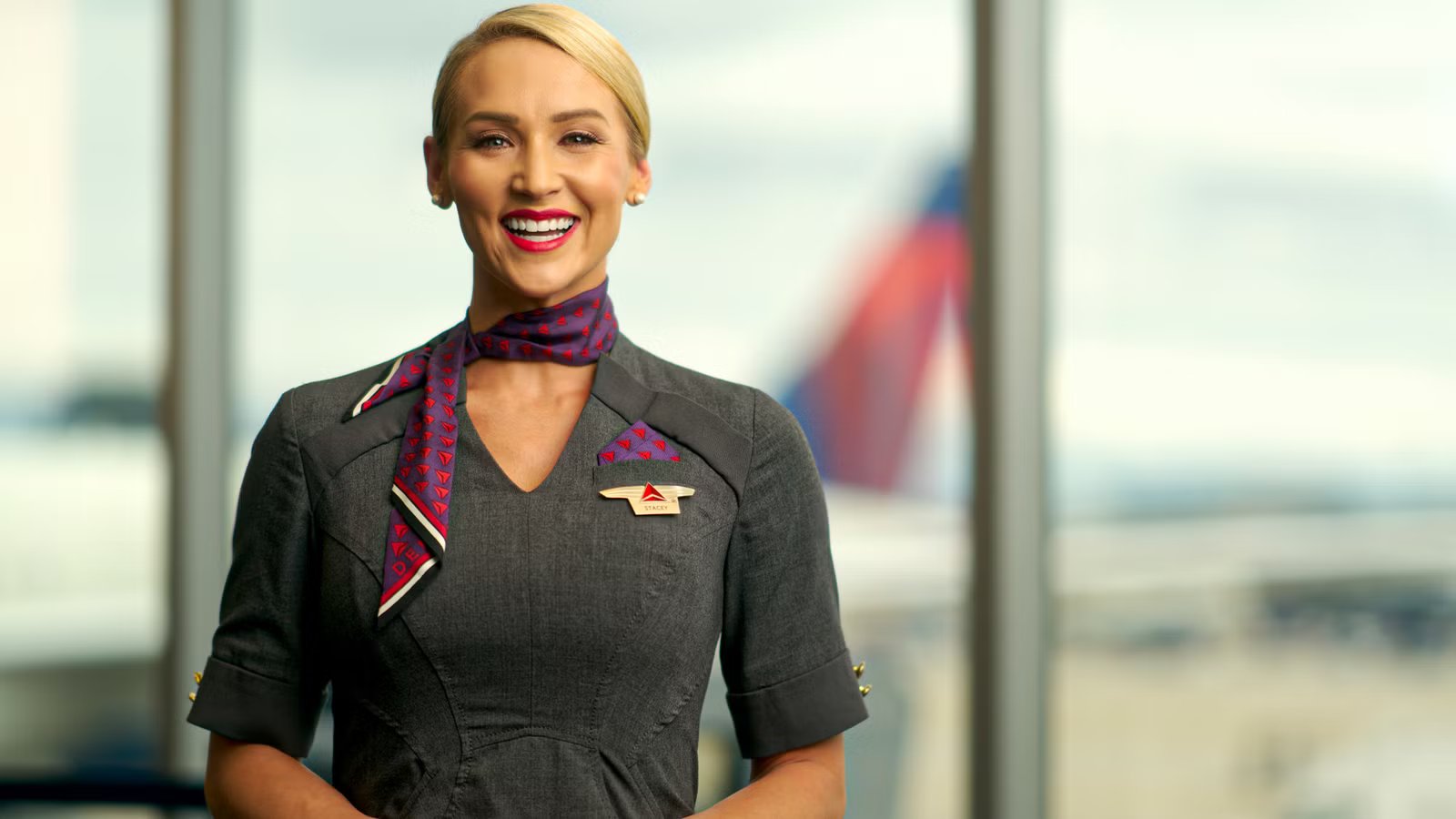
One of the first impressions that a passenger has of an airline is during boarding. Beyond the appearance of the aircraft, the interaction between a passenger and a flight attendant during boarding sets the tone for the quality of the service to come, reflecting positively or negatively on the airline. However, these brief greetings also serve a material purpose for the flight attendants, as they are trained to notice various traits of individuals. This allows them to proactively identify passengers who may pose a risk to the safety of the flight, and also to determine who may be able to assist during emergencies.
Exact terminology may vary by airline, but the general term is ‘Able-Bodied Passengers’ (ABP). These are passengers who, in the eyes of the flight attendants, appear physically fit enough to perform certain duties during an evacuation. On the flip side, this practice, which consists of little more than a brief head-to-toe scan, also identifies those who may not be fit for such responsibilities. This can also lead to cabin crew having to relocate passengers to ensure that passengers who cannot be relied on for assistance aren’t seated in exit rows.
The Importance Of Identifying Able-Bodied Passengers

During an emergency, flight attendants often seek out or require assistance from passengers to facilitate safe and timely evacuations. While airliners are certified to allow all passengers to evacuate within 90 seconds with half the doors blocked, cabin crew still need the help of passengers. Typically, crews are evaluating age and fitness level, but different airlines also have their own unique policies. Some carriers have crews assessing a passenger’s English comprehension, while other flight attendants may check how a person is dressed.
Crews make a note of the passengers that they can rely on in case of an emergency, as well as where they’re to be seated. In addition, flight attendants pay special attention to passengers seated in exit rows, and most airlines require crews to verbally confirm with passengers if they are able and willing to assist during an evacuation. Often, it’s these passengers who are given the task of opening exits swiftly during an emergency, and it’s therefore critical that they are capable and aware of the responsibility.
In addition to opening exits, able-bodied passengers are relied upon for directly assisting other customers during an evacuation, either helping them towards exits or onto the inflatable slides. In addition, able-bodied passengers may be called upon to help deal with an unruly or disruptive passenger, particularly if they are endangering the safety of the flight and need to be restrained. Although flight attendants are the first to respond to such scenarios, everyone’s help counts.
Identifying Potentially Disruptive Passengers

Just as flight attendants observe which passengers can be relied on for assistance, they also take note of those who may end up causing issues during the flight. The most obvious potential trouble-makers are those who board drunk or intoxicated, but some individuals may show few signs beyond possibly being belligerent. Passenger disruptions remain a major problem in the airline industry, as this endangers the lives of other occupants and can result in costly, inconvenient diversions.
To avoid these issues, flight attendants prefer to tackle issues preemptively, opting for de-escalation tactics to evaluate a passenger’s risk level and ensure that issues don’t arise once in the air. Ultimately, these situations can be tricky to handle, and de-escalation strategies are not always effective. Passengers are ultimately required to comply with crew member instructions on all airlines, and an escalated passenger may need to be removed from the flight, a decision that ultimately rests with the captain.
Air rage incidents skyrocketed in 2021 as travel began recovering from the COVID-19 pandemic, and they remain elevated compared to pre-pandemic levels. While explanations for the cause behind this worrying trend vary, what is certain is that flight attendants are dealing with these events in high numbers, requiring heightened awareness on the ground and diligence in-flight.

Inside The Boeing 787 Dreamliner’s Crew Rest Area
Step inside the hidden world of Boeing 787’s crew rest areas, a space that remains a mystery to most passengers.
Identifying Passengers That Will Require Assistance

Flight attendants take careful notice of able-bodied passengers who may be able to help out in an emergency, but on the other end of the spectrum, crew members also take note of those who may require assistance. Sometimes, this can be as mundane as noticing a first-time flyer who may be nervous, a typically mundane scenario that can still cause issues, or someone who may be visibly ill. In this case, the passenger may experience complications during the flight that require special attention.
Elderly or disabled passengers require extra attention and care during a flight, as well as during emergencies. In addition, while virtually anyone can select an exit row seat during online booking, flight attendants need to confirm that those seated in exit rows meet the physical requirements outlined by regulators and confirm the passengers’ willingness to assist. In the United States, exit row passengers must be at least 15 years old, have full mobility in their arms and legs, be able to understand crew member instructions in English, and cannot be traveling with a pet or a seatbelt extender.
If a passenger is assigned an exit row seat and does not meet the requirements or is uncomfortable with assisting during an evacuation, he or she will be moved to another seat. Flight attendants will usually attempt to switch the passenger in question to a similar seat, which can be difficult as airlines are increasingly monetizing exit row seats by advertising the added legroom and charging for it. Sometimes, an able-bodied passenger may be asked to move to the exit row seat, particularly if the flight is full.
Passengers Who Can Provide Special Assistance

Having a doctor onboard can be a significant help during a medical emergency. Time is often of the essence, yet it takes time for planes to descend and land at a diversion airport. If an airliner is flying over an ocean, it may be hours away from another airport. However, unless a passenger volunteers this information, flight attendants are unaware of whether a doctor is onboard the plane. Instead, they may make an announcement if a medical emergency occurs, asking if anyone is a doctor.
Flight attendants will, however, be informed if flight or cabin crew members are deadheading, and will often know if crew members from their company are traveling onboard their flight while off duty as well. This can be extremely helpful, since these crew members are familiar with company procedures and are the first people called for assistance during an emergency. This applies to aiding flight attendants inside the cabin, but pilots can also assist the on-duty flight crew as well.
|
Flight |
Date |
Origin |
Destination |
Aircraft |
Landing Site |
Occupants |
Survivors |
|---|---|---|---|---|---|---|---|
|
United Airlines UA232 |
July 19, 1989 |
Denver |
Philadelphia (via Chicago) |
N1819U (McDonnell Douglas DC-10-10) |
Sioux City |
296 |
184 |
In the famous United Airlines UA232 crash in 1989, Captain Dennis E. Fitch was traveling as a passenger when the DC-10’s number two engine suffered an uncontained engine failure, damaging the plane’s hydraulics. An experienced DC-10 pilot and training check airman, he volunteered to assist the crew throughout the flight. Together, the four pilots onboard crash-landed the crippled trijet in Sioux City, and although 112 people lost their lives, this landing is lauded as one of the greatest acts of airmanship in modern aviation history, made possible in part because of the help of the off-duty Captain Fitch.

I’m A Flight Attendant: This Is What Happens When A Flight Is Overbooked
The good and the bad news.
Balancing Safety With Service

Legally, flight attendants are required to be present for safety reasons, but these responsibilities also have to be performed in conjunction with cabin service. During boarding, passengers in premium cabins are served beverages on many airlines, while flight attendants on some carriers may also take meal orders, distribute hot towels, and serve snacks. Around the world, many Asian carriers have developed a reputation for the quality of the onboard service, with  Singapore Airlines being a notable standout, while the three US legacy carriers are known for having rather inconsistent service between flights.
Flight attendants perform multiple safety duties during a flight in addition to the in-cabin service that many people associate with the profession, but one of the most notable examples of this comes from  United Airlines. Flight attendants greet passengers during boarding, direct them to their seats, and quickly assess them mentally, but uniquely, they also distribute sanitizing wipes to every customer, despite COVID having ended years ago. This is an intentional policy, as United CEO Scott Kirby has stated that this creates additional interaction between the crew and customers, leaving a positive impression.
All airlines fundamentally sell the same product to consumers, which means that it’s incredibly important to find ways to differentiate. Service is theoretically one of these areas, but it can be difficult for an airline to offer consistently great service, given that this relies on thorough training and happy employees. Given service expectations and the rigorous safety duties, being a flight attendant is one of the most demanding jobs that one can have in aviation.