dailynewsnblog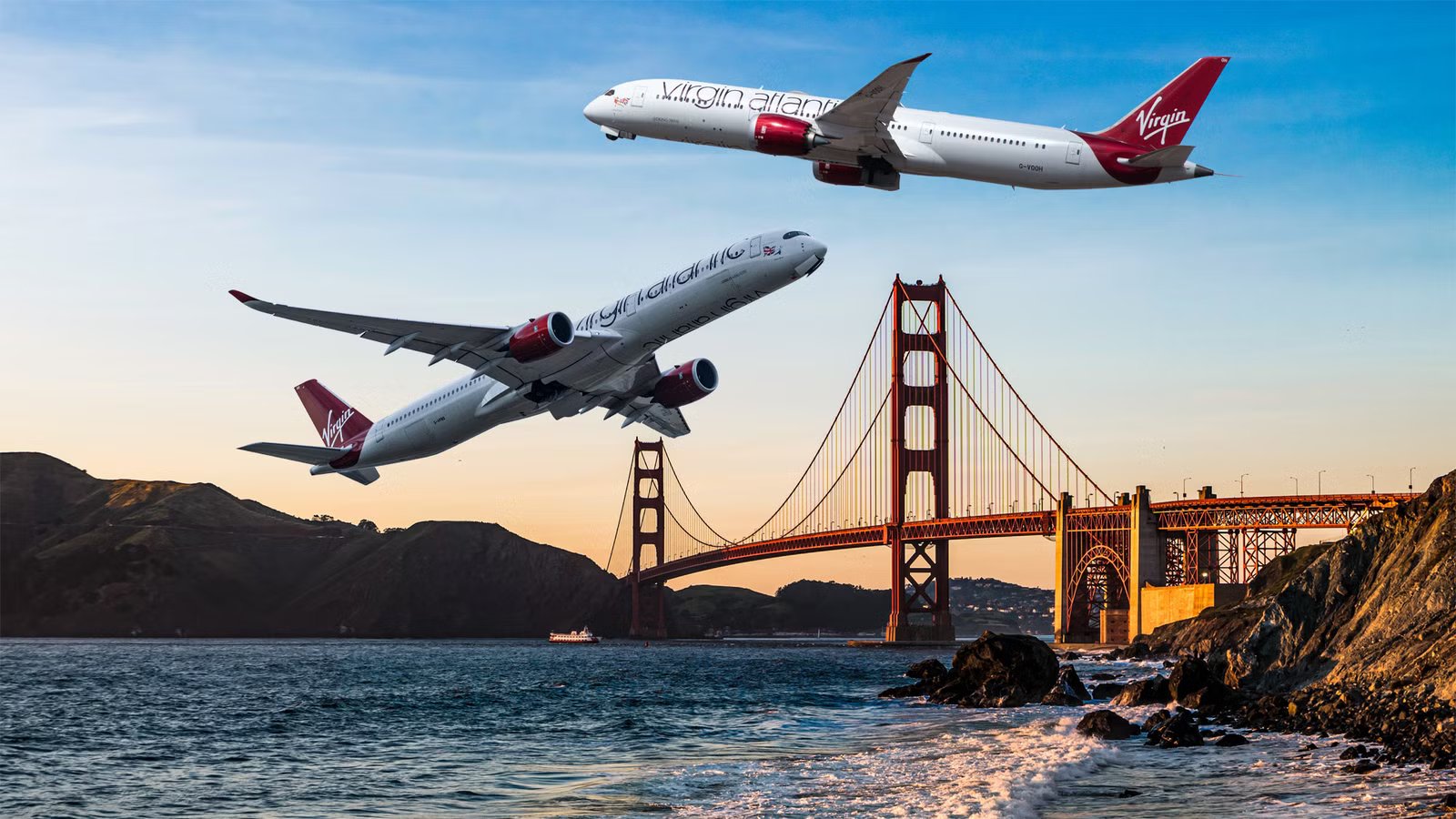
As for Virgin Atlantic passengers, Summer 2026 will bring a tale of two California routes. On the surface, the airline’s West Coast aircraft swaps look like simple and routine network planning shifts. In reality, however, they create two very different premium travel experiences. San Francisco is the clear winner in this discussion. Starting on May 16, Virgin Atlantic will place its 335-seat Airbus A350-1000 on Virgin Atlantic Flight 19 and Flight 20, which will give passengers access to the airline’s far newer and more competitive Upper Class Suite. Los Angeles, by contrast, will see a major shift in the opposite direction.
From March 29, Virgin Atlantic Flight 141 and Flight 142 will shift from the A350-1000 to the Boeing 787-9, meaning many passengers will instead find themselves in Virgin’s older Upper Class cabin, a product that has been heavily criticized for its herringbone layout, limited privacy, and dated overall feel. That contrast is ultimately what makes this story very compelling. This is not just a question of one aircraft replacing another, or of seats being added and removed from the schedule. It is about how a fleet decision changes the journey that passengers will actually buy. Customers are looking for privacy versus exposure, modern suite design versus an aging cabin concept, and a notably different sense of comfort on two flagship transatlantic routes that, until now, sat much closer together in terms of overall product quality.
What Do These Two Routes Do In The Market?

Virgin Atlantic’s two nonstop routes to major California destinations are not just random services. Rather, they tell us as industry observers quite a lot about the nature of these services and the airline’s overall premium and network strategy. Virgin Airlines Flight 19 and Flight 20 are not just another rotation between London Heathrow Airport (LHR) and San Francisco International Airport (SFO). From May 16, 2026, onward, it will become an upgraded daily frequency that will put the massive 335-seat Airbus A350-1000 on one of Virgin’s most premium-relevant American markets.
Virgin Atlantic Flight 141 and Flight 142 keep a daily 787-9 in the market from April 21 onward. That makes this route different from the airline’s showcase service to San Francisco. Nonstop premium services to San Francisco are best suited to corporate travelers, tech traffic, high-yield point-to-point demand, and passengers connecting to Virgin and Delta’s broader transatlantic network. San Francisco’s meeting and convention profile is closely tied to technology and life sciences, which fits neatly with Virgin’s decision to place its better Upper Class product on that route.
Starting on March 29, 2026, the LA-bound flights will become a daily Boeing 787-9 operation, even as Virgin continues to maintain broader Los Angeles International Airport (LAX) inbound capacity through other routes. This suggests that this service is less about showcasing the airline’s best hard product and more about preserving frequency in a huge, mixed-demand market built around entertainment, conventions, premium leisure, and general London to Los Angeles volume. Therefore, while SFO is set to see the flagship cabin, LAX keeps the strategic seat count and schedule presence intact.
A Look At Virgin Atlantic’s Boeing 787-9 Premium Products

Flickr
Virgin’s Boeing 787-9 really offers a unique premium product, but it does come in two unique cabins. The airline’s premium economy product, which it quite simply markets as “Premium”, is quite competitive. Recliner seats offer up to 38 inches (96.5 cm) of pitch, and their seats are between 18 and 21 inches wide (45.7 to 53.3 cm), depending on aircraft position. The seats also feature 13.3-inch (33.8-cm) screens, priority airport treatment, and a materially better experience than standard economy, according to One Mile At A Time.
Upper Class, however, is where the product is a bit weaker than what the carrier offers on its A350s. The current 787-9 layout has 31 Upper Class seats and 35 Premium seats, and Virgin’s own future retrofit plans make clear that the airline knows this cabin now lags the overall market. The Upper Class seat is the old herringbone product, and it is 22 inches (55.9 cm) wide, converting into a 6-foot-6-inch bed (198.1 cm), with an 11.1-inch (28.2-cm) screen and access to the onboard bar area.
Twenty years ago, that layout was unbelievably groundbreaking. In 2026, however, it feels exposed and pretty old-fashioned. The main issue is not flat-bed capability but rather geometry. Passengers face the aisle rather than the window, privacy is limited, and storage is poor. The 787 airframe itself remains pleasant, with larger windows, lower effective cabin altitude, and higher humidity. On Virgin’s jets, those engineering strengths do not really compensate for a dated premium hard product.

Why Premium Economy Isn’t Always Worth It
The poor value proposition behind many premium economy tickets, and why this is the case.
What Is Different About The Airbus A350-1000?

The Airbus A350-1000 is a platform where Virgin Atlantic looks most like the premium airline it wants to be. In Virgin’s 335-seat configuration, the plane carries 44 Upper Class seats, 56 Premium seats, and 235 Economy seats. The differences between these cabins and those on the airline’s Dreamliners are most visible at the front of the aircraft. The airline’s A350 Upper Class Suite is not just newer than the 787 seat, but it is also conceptually better.
Virgin Atlantic describes it as window-facing, with retractable privacy screens, more storage, mood lighting, and an 18.5-inch touchscreen (47.0 cm), in addition to access to The Loft social space rather than the older bar concept. The bed length stretches to six feet seven inches (200.7 cm). Interestingly, the seat itself is nominally narrower than the 787’s legacy herringbone seat, which shows that width alone is not the point. What passengers are really buying on the A350 is privacy, orientation, and a sense of overall modernity.
Virgin’s Premium cabin benefits from the same broader next-generation product logic. The cabin offers a 38-inch pitch (96.5 cm), large leather seats, and the quieter, more spacious feel of the A350 airframe. On a westbound transatlantic flight, that quieter cabin can translate into less fatigue and a more restful journey. Therefore, the A350 feels like a current-generation business class flagship product, while the 787 really just feels like a legacy holdover.
Why Did Virgin Atlantic Make These Unique Decisions?

Virgin Atlantic elected to make these noteworthy swaps for a relatively simple reason. The carrier is rationing scarce premium hardware to the routes where it matters the most for the airline commercially. The airline has said its network changes for this summer were a response to evolving customer demand, and it has separately argued that high demand for premium cabins is driving a larger premium push across the entire fleet.
Until the 787 retrofit arrives in 2028, Virgin has two very different premium products on the market at the same time. Management thus has to choose where the better one earns the highest return. San Francisco is thus the obvious candidate as a tech-heavy, convention-heavy, corporate-leaning market where premium travelers are more likely to notice value, and pay for a superior Upper Class suite. Los Angeles is still crucial, but it is also a broader and more diversified market where maintaining frequency may matter more than maximizing hard-product quality on every rotation.
The wider Summer 2026 schedule supports that interpretation, because Virgin is also reallocating premium aircraft to other demand-heavy routes. Thus, this is a bit less of a vote against Los Angeles than it is an algorithmic capacity reallocation exercise. The airline will ultimately want to keep the 787 where schedule relevance sustains its use.

Virgin Atlantic’s Longest Nonstop Flights With The Airbus A350-1000 In 2026
A game-changing aircraft takes center stage. Uncover the key role the A350-1000 plays in Virgin Atlantic’s ambitious flight plans.
What Changes Will The Airline’s 787 Retrofit Bring To The Cabin?

The upcoming Virgin Atlantic Boeing 787-9 retrofit is designed to do much more than simply freshen up the cabin. The airline says that the Dreamliner fleet will receive a full interior redesign from 2028, with new seating in all three cabins and styling inspired by the A330neo. The biggest changes will occur at the premium end.
Upper Class will grow from 31 to 44 seats, while Premium will expand from 35 to 56. For the first time, the 787 will also gain Retreat Suites, with eight of these extra-spacious seats in each Upper Class cabin. Economy seats, by contrast, are set to shrink sharply from 192 down to 127, showing that Virgin is deliberately looking to introduce a more premium-heavy configuration for the aircraft.
Virgin has not yet published every seat detail for the standard Upper Class and Premium products, but the direction is clear. More privacy, more modern technology, and a layout much closer to the airline’s newer-generation cabins. The retrofit will ultimately roll out from 2028 onwards and is due to be completed by the time 2030 comes around.
What Is Our Bottom Line?

At the end of the day, Virgin Atlantic is a major player in transatlantic premium travel. The carrier is known for offering premium cabins with an incredibly unique and boutique-like service. Even in economy-class cabins, passengers often indicate that they will fly Virgin exclusively because of the airline’s service.
Legacy operators often aim to capture high-spending travelers, as they provide the largest portion of overall revenue. These are incredibly valuable travelers to target, as they are often recurrent travelers tied to corporations. However, these passengers are extremely picky, and they care a lot about the overall quality of service that they are offered.
The carrier’s decision to reallocate capacity away from Los Angeles highlights shifts in demand trends, something that typically moves the needle for airline route decisions. At the end of the day, if the carrier believes it can generate stronger revenues, it will look to allocate capacity toward higher-yielding markets.