dailynewsnblog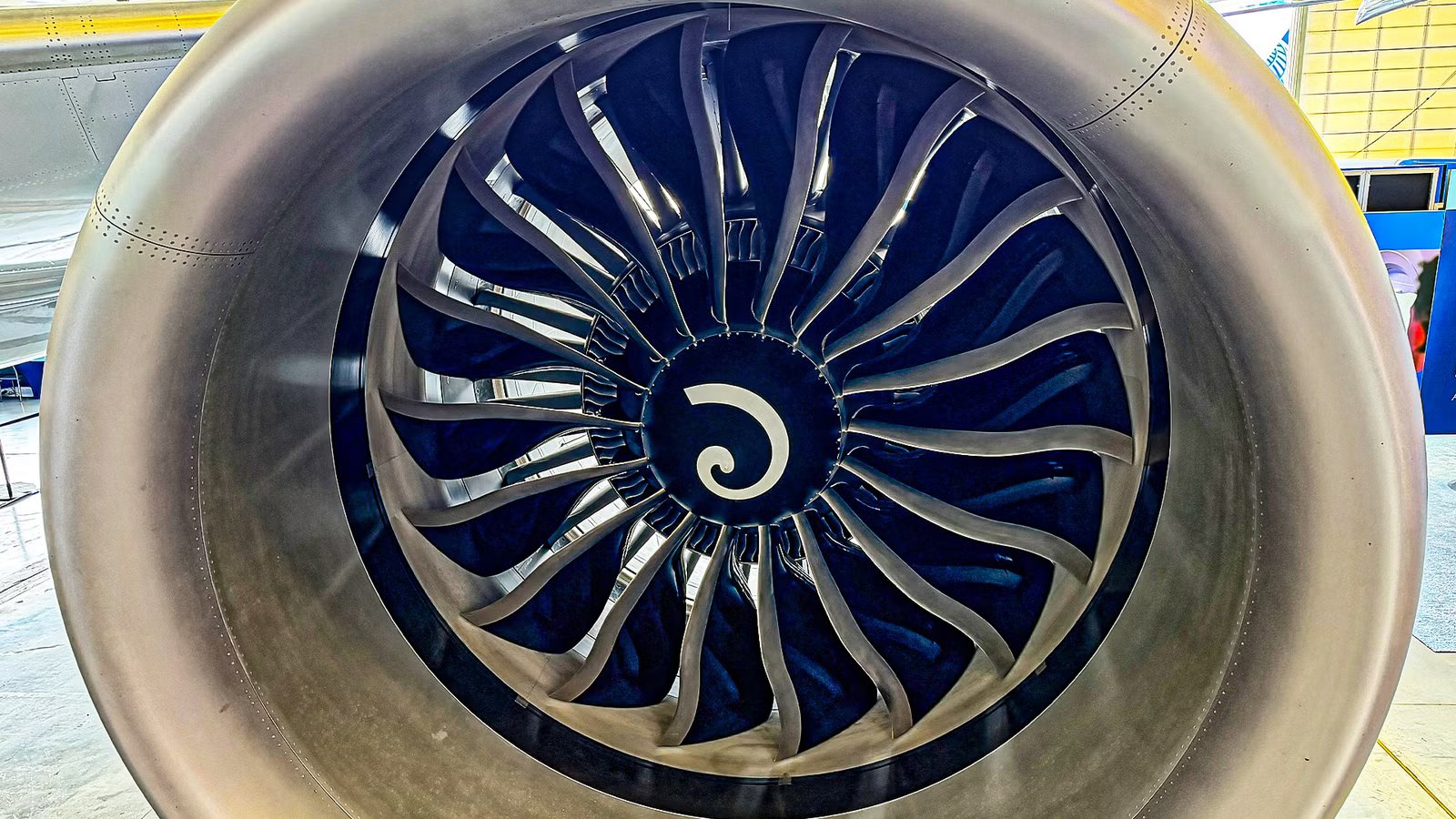
The Boeing 787 came into the market as a composite-built disruptor, promising a 20% leap in fuel efficiency and a cabin environment that redefined passenger comfort. Yet, beneath the carbon-fiber wings and dimmable windows lies a more complex financial reality: the propulsion system. Determining exactly how much a Boeing 787 costs is largely reliant on the engines that power it. Operators see these massive turbofans as the primary drivers of long-term operational viability and the largest single line item in their maintenance budgets.
This is not a fixed-price environment, and the sticker price of a GEnx or Trent 1000 engine serves more as a baseline for a complex geopolitical and commercial chess match. The market is defined by a fierce duopoly between General Electric and Rolls-Royce, where reliability records and power-by-the-hour service agreements often matter more than the initial capital outlay. This article explores the current list prices, the deep discounts typical of the 2026 landscape, and why the real cost of a Dreamliner engine is measured in decades of service rather than a one-time transaction.
Engines Are Costly

A single engine for a Boeing 787 typically carries a list price between $25 million and $30 million. For a standard set of two engines, an airline is looking at a gross investment that can exceed $60 million before a single gallon of fuel is burned. In the context of a 787-9, which currently lists for approximately $292 million, the engines alone account for roughly 15% to 20% of the aircraft’s total value, acting as a significant anchor on the carrier’s balance sheet.
Supporting this figure is a historical trail of high-value transactions that illustrate the scale of the investment. For instance, a 2018 order by Air Lease Corporation for GEnx-1B engines to power three Dreamliners was valued at over $170 million at list prices, placing the per-engine cost at approximately $28 million. While inflation and the integration of next-generation materials have pushed these figures higher in recent years, the $25 million benchmark remains a standard starting point for industry analysts and fleet planners alike.
The depth of this cost is driven by the sheer complexity of the hardware involved. These are sophisticated thermodynamic machines utilizing carbon-fiber fan blades and 3D-printed internal components designed to operate at temperatures higher than the melting point of the metals they are made from. The 787 utilizes a unique all-electric architecture, where the engines generate up to 500 kW of power to run the aircraft’s systems instead of using traditional bleed air. The engineering requirements are more stringent and, consequently, more expensive than those of the previous generation.
Lifting The Burden Of Maintenance

The list price of an engine is often described as a conversational starting point rather than a final invoice. The transaction price for a GEnx or Trent 1000 is heavily influenced by the sheer volume of the order and the strategic relationship between the carrier and the manufacturer. A single engine order is a rarity; instead, airlines negotiate for dozens or even hundreds of units at once, creating a competitive bidding war that can slash the nominal list price by nearly half.
Most modern airlines no longer buy engines in the traditional sense and enter into power-by-the-hour or TotalCare agreements. These arrangements shift the financial burden of maintenance back to the manufacturer, with the airline paying a fixed fee for every hour the engine is in flight. This model often results in a lower initial purchase price for the hardware, as the engine manufacturers, General Electric and Rolls-Royce, view the long-term service contract as the primary source of profit over the engine’s twenty-year lifespan.
|
Engine Model |
List Price (Per Unit) |
Est. Transaction Price (Bulk Order) |
Typical Discount |
|
GE GEnx-1B |
$29.5 Million |
$16.2 Million |
45% |
|
RR Trent 1000 |
$25.1 Million |
$15.1 Million |
40% |
The scale of these discounts was most recently illustrated by the  United Airlines expansion in early 2026. Ordering three hundred engines to power their growing 787 fleet, United leveraged its massive purchasing power to secure pricing far below the advertised $30 million mark. The inclusion of spare engines, typically required at a ratio of one spare for every ten installed units, adds another layer of complexity to the negotiation. For a carrier like All Nippon Airways, the world’s largest Dreamliner operator, the cost of maintaining a robust pool of spare engines is a multi-billion dollar endeavor that requires a constant recalibration of asset value against operational readiness.

How Many Engine Types Power The Boeing 787 Dreamliner?
The Boeing 787 Dreamliner soars through the skies, but what powers this marvel of aviation?
Who Will Win The Engine War?

The market sentiment in 2026 has solidified into a near-unilateral preference for General Electric’s GEnx-1B. The 787 was designed to offer airlines a choice between two powerplants, but the reality of the last decade has seen GE capture a staggering 78% of the total market share, according to Leeham News. Industry analysts point to reliability as the primary driver, where the perceived risk of operational grounding has outweighed the lure of slightly lower list prices or better initial fuel burn promises from the competition.
This dominance was cemented by the massive fleet renewals, most notably United Airlines’ 300-engine order. When discussing the selection, United’s leadership, like many others see the predictability of the GEnx-1B as the foundation upon which long-haul networks are built. This sentiment is echoed by  Delta Air Lines, which recently opted for 60 GEnx units, moving away from the Rolls-Royce relationship that had defined its older widebody fleets. For these carriers, the cost of an engine is the confidence that the aircraft will be available for its scheduled departure at high-utilization hubs.
The implications for Rolls-Royce are existential, forcing the British manufacturer to launch the Trent 1000 XE in late 2025 as a necessary effort to reclaim lost ground. The XE promises three times more time on-wing than its predecessor, but the damage to the Trent 1000 brand remains a significant hurdle in the secondary and leasing markets. The engine war is no longer a battle of marginal fuel efficiency and now a battle of sheer durability, where GE’s conservative engineering approach has proven to be the more profitable path for the world’s most demanding airlines.
Much Cheaper Than Alternatives

The investment required for a pair of Dreamliner engines is significant, yet it represents a mid-range capital expenditure within the broader widebody market. A narrowbody engine, such as the CFM LEAP-1B found on the Boeing 737 MAX, might list for approximately $15 million; the scale then shifts dramatically as one moves into the larger twin-aisle categories. At the top of the pyramid, the General Electric GE9X, powering the Boeing 777X, now carries a list price around $50 million, making a single 777X engine more expensive than some entire regional jets.
The primary reason for the 787’s specific pricing tier is its unique bleed-less architecture, a departure from almost every other commercial aircraft in service. In a traditional engine, pressurized air is bled from the compressor to run the cabin’s air conditioning and anti-icing systems. The GEnx and Trent 1000 instead utilize massive starter-generators to extract power electrically. While this improves fuel efficiency by roughly 3%, it places an immense mechanical load on the engine’s accessory gearbox and necessitates more robust, expensive internal components than a standard turbofan of similar size.
When measured against its direct competitor, the Airbus A350, the 787 offers a lower entry cost for its powerplants. The Rolls-Royce Trent XWB, which is the sole engine option for the A350, has a list price closer to $35 million. This price gap is largely due to the higher thrust requirements of the A350-900 and -1000, which are larger, heavier aircraft than the 787-8 or -9. By opting for a slightly smaller, more specialized engine family, Boeing enabled the 787 to maintain a competitive price-per-seat metric that remains difficult for larger widebodies to beat on medium-to-long-haul routes.

Comparing The 2 Boeing 787 Dreamliner Engines
The Boeing 787 comes with both GE and Rolls-Royce engine options, although GE’s engines have become more popular in recent times.
Moving Past The Struggles

The acquisition of a turbofan engine is merely the first chapter in a 20-year financial narrative. While a $25 million check secures the hardware, the true fiscal weight of the Boeing 787 propulsion system is found in its operational life, where reliability issues can quickly erase any savings negotiated at the time of purchase. For an airline, the most expensive engine is not the one with the highest list price, but the one that forces an aircraft to remain on the tarmac during peak travel seasons.
The most prominent example of this fiscal risk is the well-documented struggle of the Rolls-Royce Trent 1000. For several years, the engine was plagued by premature cracking in the intermediate pressure turbine blades, a technical failure that at its peak grounded more than 40 Dreamliners globally. This forced carriers like Air New Zealand and  British Airways to lease older, less efficient aircraft to maintain their flight schedules, a move that cost millions in unbudgeted operational expenses. Even in 2026, as the Trent 1000 XE begins its rollout, the shadow of those groundings persists in the form of higher insurance premiums and more frequent inspection intervals that disrupt the rhythmic predictability required for profitable long-haul flying.
These disruptions have elevated the time on wing (TOW) to the status of a holy grail for airline CFOs. TOW represents the number of flight hours or cycles an engine can complete before it must be removed for a heavy maintenance visit. A GEnx-1B engine can often exceed 20,000 hours of operation before its first major overhaul, a level of durability that allows an airline to amortize the initial $25 million investment over a much longer period. When an engine fails to meet its TOW targets, the cost of the unplanned removal and the subsequent shop visit, which can easily exceed five million dollars, transforms a high-performance asset into a liability.
Ready For The Future?

For the major global carriers, the purchase of an engine is less about the initial multimillion-dollar check and more about the predictability of the subsequent two decades. The true cost is hard to keep track of, dictated by the volume of the original order, the structure of the power-by-the-hour service agreement, and the engine’s ability to remain on the wing without unscheduled maintenance. Reliability has become the ultimate currency, far outweighing the marginal fuel savings that once dominated the conversation.
For the aviation industry, the choice between General Electric and Rolls-Royce has profound implications for the residual value of the aircraft itself. In the secondary market, a Boeing 787 powered by GEnx-1B engines currently commands a higher lease rate and a more robust resale value, largely due to its superior reliability record over the last ten years.
The financial landscape for these engines is set to change once more as the industry surges toward 100% sustainable aviation fuel compatibility. The hardware itself is largely capable of burning these fuels, but the cost of the fuels and the potential impact on engine longevity remain the next great unknowns. The price of a Dreamliner engine will increasingly be tied to its environmental efficiency and its ability to operate within the tightening carbon-neutral regulations of the European and North American markets.