dailynewsnblog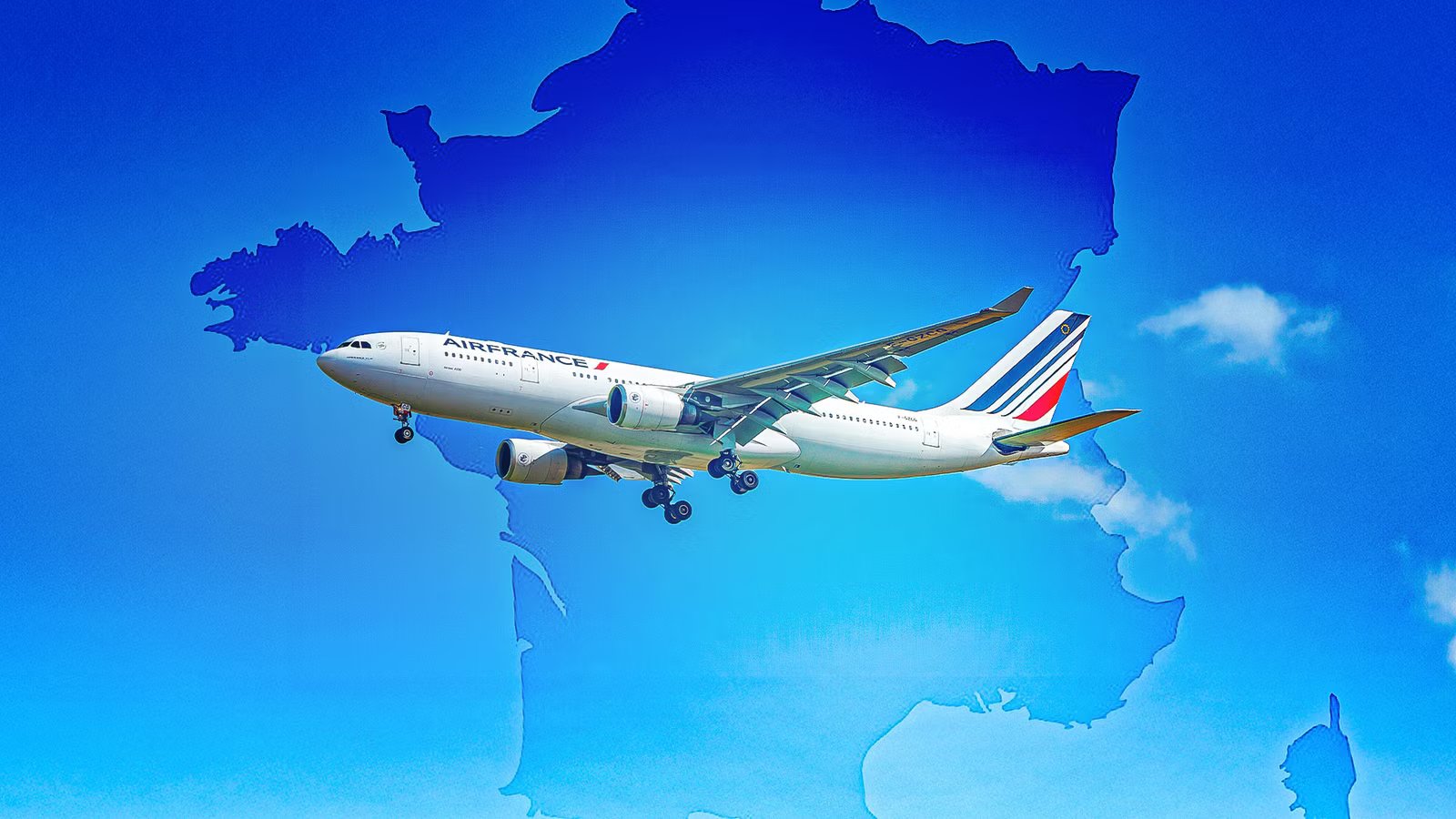
French carrier  Air France has set a firm retirement date for its subfleet of Airbus A330-200 aircraft, which are the oldest widebody aircraft in its fleet. Starting in summer 2027, the airline will deploy larger and more modern Boeing 787-9 or Airbus A350-900 aircraft, with Cirium data showing its A330s are not scheduled to fly beyond Q1 2027.
While this marks a change in the airline’s fleet, deploying newer aircraft will also provide customers with elevated in-flight experiences, while also providing the carrier with operational efficiencies, such as better fuel economics, along with higher passenger and cargo capacity on these routes.
Upgrading A330 Routes With Newer Aircraft

As per data published by AeroRoutes, Air France is set to retire its Airbus A330-200 aircraft by the first quarter of 2027. The question is, what aircraft will replace the outgoing A330 operations? Over the next year, several Air France A330 routes will be gradually replaced by Boeing 787-9 and A350-900 aircraft. These changes also come in tandem with the airline’s schedule for Summer 2027.
The following is how the airline’s A330 operations from its home at  Paris Charles De Gaulle Airport (CDG) will be replaced next summer:
|
Destination From CDG |
Replacement For A330 |
|---|---|
|
Abuja (ABV) |
A350-900 |
|
Brazzaville (BZV) – Pointe Noire (PNR) |
A350-900 |
|
Douala (DLA) |
B787-9 |
|
Lomé (LFW) |
A350-900 |
|
Luanda (NBJ) |
B787-9 |
|
Malabo (SSG) |
B787-9 |
|
St. Maarten (SXM) |
A350-900 |
While this reflects the plans scheduled for Summer 2027, it is worth noting that data from FlightRadar24 indicates that the carrier is currently using its A350s and 787-9s on services to these destinations. For example, Air France operates four weekly services to Lomé, and since January, data shows that the A350 has been deployed more commonly on this route, with the A330 and the Boeing 777 aircraft types making an appearance occasionally.
Better Efficiency, Increased Capacity & Newer Products

While the airline’s average A330 age is recorded to be 23 years, all the A350s and 787s have a single-digit fleet age. That being said, because the Dreamliner and the A350 are the latest generation widebody jets available on the market, the carrier is guaranteed to experience improvements in operational efficiency in terms of reduction in fuel burn and carbon footprint. Furthermore, the removal of a fleet type will further simplify the airline’s fleet management, enabling the carrier to achieve better economies of scale.
Additionally, since either of the aircraft options used to replace the A330s is larger, this would also mean the carrier can increase its passenger capacity (especially in high-revenue premium cabins) on these routes while enjoying the benefits of operational efficiency. Data from aeroLOPA indicates that the airline’s A330s have a capacity of 224 seats with 36 seats in business class. Compared to this, the A350-900 can accommodate 292 or 324 passengers (depending on cabin configuration), including 34 or 48 seats in business class, while the 787-9 can accommodate 279 passengers, including 30 seats in business class.
This would ultimately see the airline’s capacity increase by 24% by deploying the Dreamliner, while the A350, depending on the configuration used, can provide the airline with a 32 to 45% increase in capacity. Especially if the airline opts to deploy its premium-heavy configured A350, the airline will see a 33% increase in business class capacity onboard.

The Striking Differences Between The Airbus A350 & Boeing 787 Dreamliner
The Airbus A350 and Boeing 787 serve similar roles, but they differ in size, range, cabin features, and more.
A Simplified Fleet Structure

With the A330s set to be phased out by Summer 2027, Air France would be left with three primary aircraft types on its long-haul fleet. This would include the Boeing 777 aircraft family, which includes the -200, -300ER, and the -F (freighter) variants.
Apart from this, the airline will also have the aforementioned A350-900s and the 787-9 aircraft, making up Air France’s long-haul fleet. While the airline does not have any Boeing aircraft currently on order, the carrier is expecting more A350 aircraft to join its widebody fleet, and this includes the Airbus A350F, which is the freighter variant of the popular A350 aircraft. However, this variant is yet to be produced and certified.
On the narrowbody side, as per the latest order and delivery data available from Airbus, the carrier is still expecting a number of Airbus A220-300 jets, which would enable Air France to boost its regional and short-haul operations within Europe.