dailynewsnblog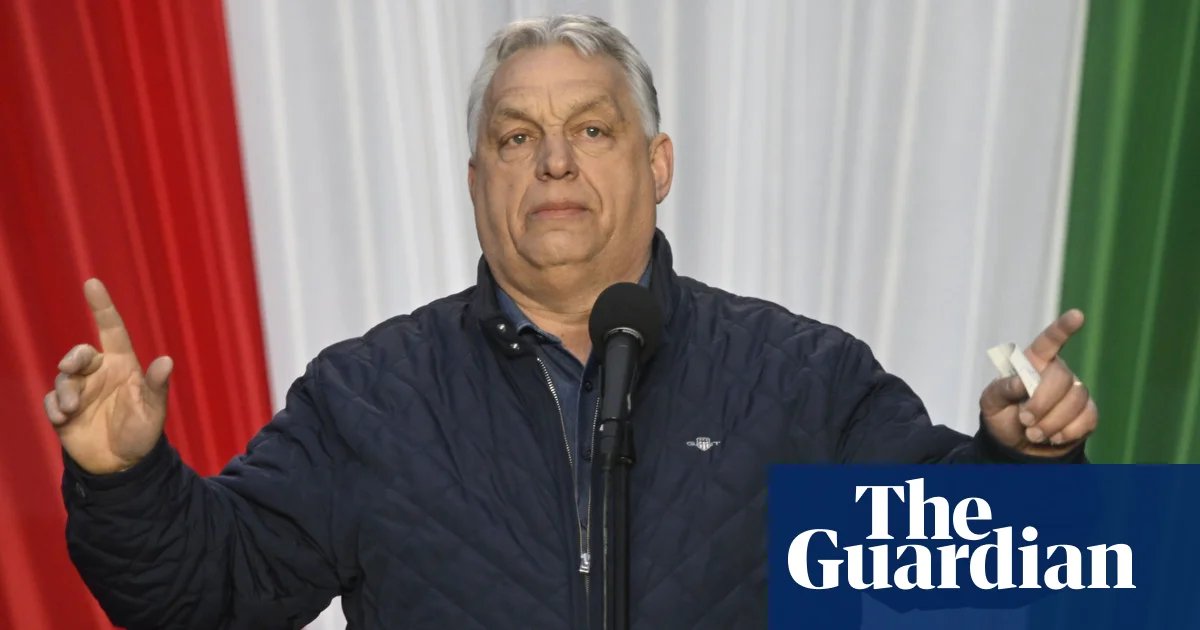
Hungarians are heading to the ballot boxes to vote in a hard-fought parliamentary election that could oust Viktor Orbán after 16 years in power and potentially reshape the central European country’s relations with the EU, Moscow and Washington.
In the campaign, Orbán – the EU’s longest-serving leader – has trailed in the polls as he faces an unprecedented challenge from Péter Magyar, a former elite member of Orbán’s Fidesz party.
The challenge to Orbán’s power has sent rightwing leaders from across the globe scrambling to rally behind him. This week, JD Vance turned up in Budapest for a two-day visit, the US vice-president telling reporters that his aim was to “help” Orbán win.
The US president, Donald Trump, has also repeatedly endorsed Orbán, most recently on Friday, when he vowed on social media that he would bring US “economic might” to the country if Orbán is re-elected. Months earlier, leaders including Italy’s Giorgia Meloni and Israel’s Benjamin Netanyahu also made it clear that they were backing Orbán.
The result is an election that has played out on both the global and domestic stage, as Orbán argued that the country’s biggest threat is the war in Ukraine and he alone is capable of keeping the peace, while Magyar focused on domestic issues, with pledges to crack down on corruption, repair the strained relationship with the EU and funnel funds to the country’s crumbling public services.
After Magyar and his centre-right Tisza party crisscrossed the country, holding as many as six rallies a day, most polls have put his party in the lead. Analysts have expressed caution, however, as undecided voters and Hungarians abroad could still sway the result, as could alleged vote-buying.
For many in Hungary, Sunday’s vote will also be a test of how deeply Orbán’s political system is embedded, after the rightwing populist leader spent more than a decade working to transform Hungary into a “petri dish for illiberalism”: rewriting election laws to his party’s benefit, manoeuvring to put loyalists in control of an estimated 80% of the country’s media and clamping down on dissenting voices.
The result will be closely watched by the Maga movement and the global far right, many of whom have long cited Orbán as an inspiration and sought to follow his playbook.
Questions have also swirled over Orbán’s government and its relationship to Moscow amid allegations of Russian interference in the ballot, as well as audio that appeared to suggest a minister had shared confidential EU information with the Russian government.
Orbán’s government has cited the leaks – including a transcript in which Orbán reportedly told the Russian pesident, Vladimir Putin, “I am at your service” – as evidence of foreign interference.
At a Friday night rally for Orbán in Székesfehérvár, a city of about 100,000 people in central Hungary, hundreds of people turned up, eagerly waving flags and cheering as cameras panned over the city where the first kings of Hungary were crowned and buried. “I’m so happy to be here,” gushed Cecília, 78. “He’s the best leader in the world.”
Sunday was set to be the fifth time since 2010 that she had voted for Orbán “Viktor Orbán will win, of course, with a supermajority,” she said.
Others were more circumspect. “When it comes to polls, it depends on who does them, but the situation does seem tense. I’m worried for him,” said Sándor, 69. “He seems tired.”
Scattered among the crowd were also a handful of Magyar supporters. “I was curious to hear the prime minister speak,” said Richárd, 27.
What he had heard, he said, hinted at a fundamental difference between the two leading parties. “For 16 years, Fidesz has been campaigning on hatred and fear,” he said. “While Tisza has been trying to express hope at all of their events.”