dailynewsnblog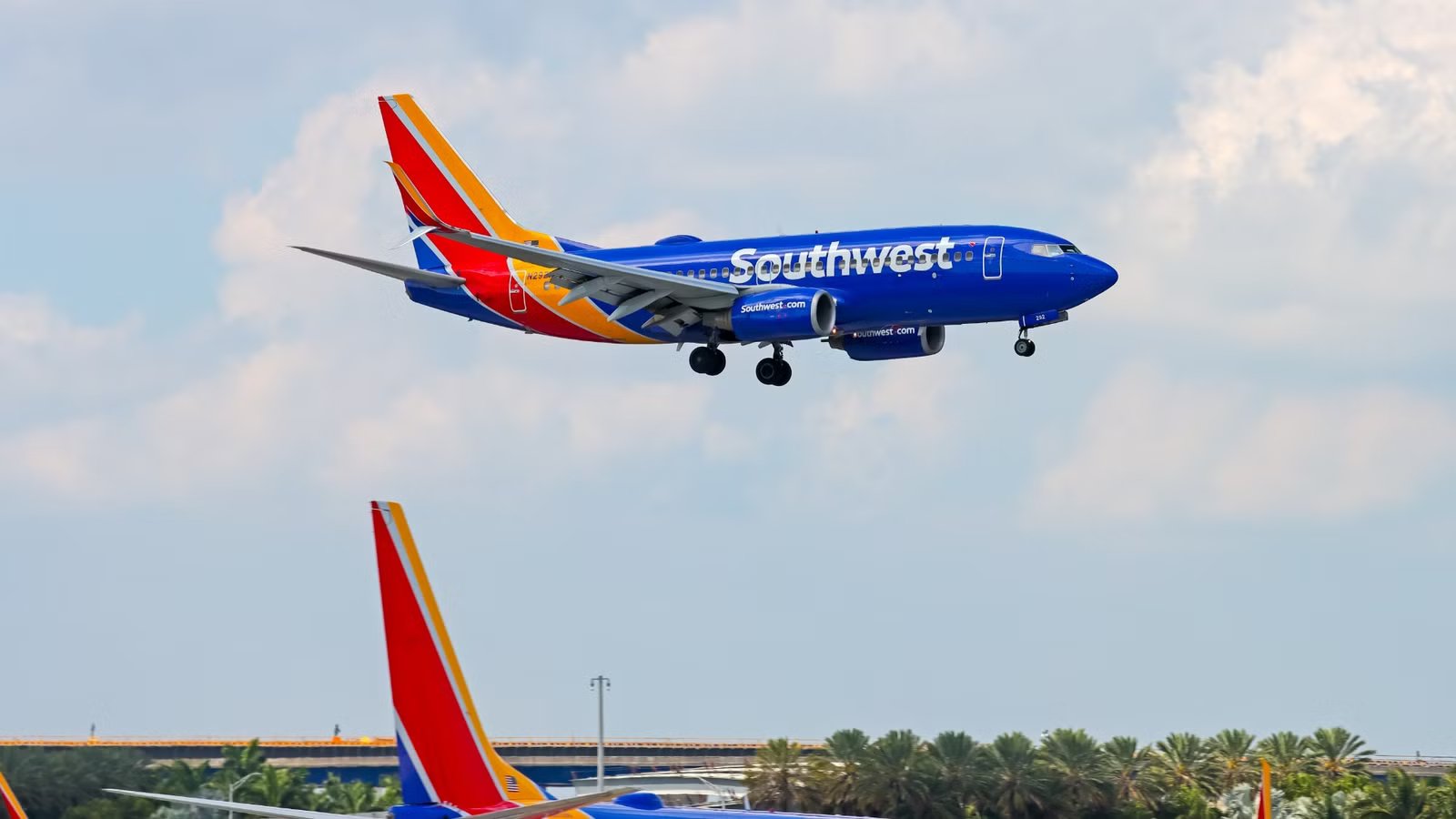
Southwest Airlines’ planned layoff of more than 100 workers is directly tied to its Chicago O’Hare International Airport (ORD) withdrawal, primarily because it is a relatively small workforce story with a significantly larger strategic meaning. The cuts show how aggressively the airline is pruning weaker parts of its overall network as it doubled down on services to and from Chicago Midway Airport (MDW), where it has far greater scale and a much longer operational history.
It is important to keep in mind that this is not an isolated labor story. Rather, it is the employment consequence of a broader profitability reset. This comes as Southwest heads directly toward first-quarter earnings, with recent guidance claiming solid demand despite a much tougher fuel-cost environment. We dive deeper into this specific incident and the causes and effects of this unique headline decision.
A Look At The Specifics Of These Layoffs

This set of layoffs centers on 107  Southwest Airlines employees who are connected to O’Hare airport, according to data supplied by Illinois employment filings, which was directly tied to the airline’s March 31 notice. This action is linked to Southwest’s decision to discontinue service at the airport starting on June 4, 2026. Southwest has also said affected customers will be able to be rebooked or refunded, while impacted frontline employees will be allowed to pursue open roles elsewhere within the airline’s diverse network.
The carrier also noted that this includes available opportunities at Midway Airport (MDW). This is a key distinction for the purpose of our discussion. This decision certainly comes as a meaningful local employment hit, but the company is presenting the move as part of a station closure and overall network reshuffle rather than a standalone labor reduction. These are, at the end of the day, strategic job cuts attached directly to a market exit.
A Broader Move Away From O’Hare Airport

These layoffs ultimately make the most sense when read as the employment aftershock of Southwest Airlines’ retreat from O’Hare airport. The airline began service there in February 2021, ending decades in which its Chicago identity was tied almost entirely to Midway. Southwest never developed at O’Hare the kind of entrenched position it enjoys at a longtime Midway Airport base. By March 2026, the airline was openly saying that operating at O’Hare had proven financially challenging.
Therefore, the crew believed it could more effectively serve the Chicago Metropolitan area from Midway, which has long been the airline’s key gateway to the entire region. The airline planned to keep more than 80 destinations, including the 15 that it already served from O’Hare, on offer from Midway.
This tells us as industry observers that the O’Hare experiment ultimately failed a profitability test. The airport gave Southwest a second Chicago option and some competitive visibility, but not enough strategic payoff to justify staying. The layoffs are therefore the clearest local proof of a wider network decision already made at the corporate level.

How Much Money Will Southwest Airlines Save With Its 1st-Ever Layoffs?
The airline made a bold move this week.
Southwest’s Broader Performance In 2026

This development fits nicely into a broader discussion of Southwest’s performance so far in a turbulent 2026. The airline entered 2026 projecting improvement, but it had not yet reported March-quarter results as of April 11. Its first-quarter conference call is scheduled for April 23. In late January, the airline guided to at least $0.45 in adjusted EPS for the first quarter, said unit revenue should rise at least 9.5%, and projected higher full-year earnings.
By the time mid-March came around, Southwest was quick to indicate that demand was broad-based across both business and leisure travel, with March on pace to become its biggest corporate travel month on record. This is certainly impressive given March is typical a weaker travel month across the board.
Nonetheless, the quarter’s backdrop has been a bit more complicated for the carrier. Analysts have indicated that war-related turbulence in the fuel market has pushed jet fuel prices higher and squeezed margins all across the industry, especially for low-cost carriers, and Southwest raised checked-bag fees on April 7 in order to offset some price pressure.