dailynewsnblog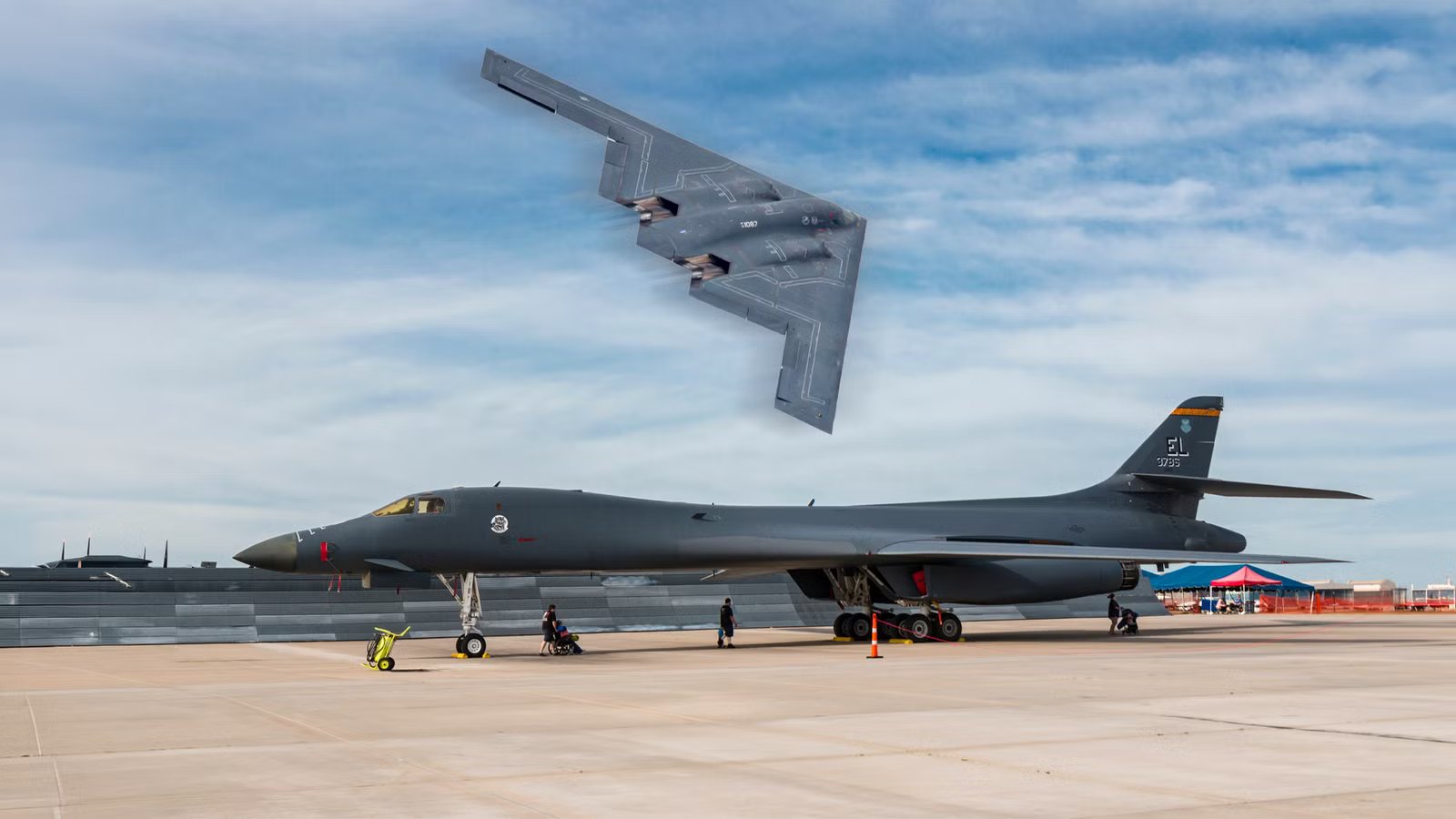
While the US Air Force is decommissioning Rockwell B-1 Lancer supersonic bombers, it has invested $7 billion in modernizing its fleet of Northrop Grumman B-2 Spirit stealth bombers. The iconic swing wing ‘Bone,’ as the B-1 is known, has been worn down by years of more intensive flying due to its higher performance design and mission assignments.
That means that the B-2 will serve alongside its successor, the smaller 6th-Gen B-21 Raider. The USAF had a plan to divest its 19-strong fleet of aging B-2 fifth-generation bombers by 2032, but the revised bomber strategy has been updated to keep the larger and higher payload stealth flying wings longer.
Two of the most important factors in the reason for the retention of the B-2s are recent innovative repair processes that have saved up to 75% on Spirit bombers, coupled with its ordnance capacity of up to 60,000 pounds. The incoming twinjet B-21 is estimated to have a payload of between 30,000 and 40,000 pounds, making the older B-2 quadjet’s payload 150% to 200% that of the new bomber. Unfortunately for the older and wearier B-1s, there have been no breakthroughs to keep them in service longer than their planned expiration date.
Making The Air Force’s Spirit Even Tougher

As enemy air defenses become increasingly capable, especially those of near-peer adversaries, the USAF is investing in survivability enhancements for the B-2 Spirit. The increasingly contested environment that it is expected to operate in demands higher quality stealth, superior software adaptability, and modernized standoff weapons capacity.
The first item on this list of upgrades for the flying Dorito, as the B-2 is jokingly referred to, is improving its low observability. That means using modern materials to upgrade and restore the radar-absorbent material and other stealth features of the B-2. As the world’s first flying wing and stealth bomber, the B-2 was on the bleeding edge of technology when it debuted three decades ago, but its innovative materials and systems have been worn down over the years.
According to Air and Space Forces magazine, since at least 2023, the US Air Force has been working towards superior radar-absorbent structures for the engine inlets, exhaust, and radome. To support this modernization, the depot maintenance process that restores stealth coatings every decade or so has also been refined over the years to streamline and enhance turnaround time on major overhauls for the B-2 fleet.
A Faster, Better, Cheaper Stealth Bomber

Highlighting the improvements to the stealth maintenance of the B-2, which is notoriously cost-intensive, was a major success story when the Spirit of Georgia was resurrected after a severely damaging mishap. The repair for the B-2 was initially estimated to cost over $100 million. According to Slash Gear, process improvement and the application of lessons learned brought the final bill down to less than $24 million.
The USAF is now trying to apply that same preventative maintenance and process improvement to the software side of B-2 upkeep. The ‘Spirit Realm One’ upgrade is an open mission system, or modular and adaptable software update for the systems of the Spirit. This digital upgrade is meant to simultaneously improve the diagnostic and maintenance process while significantly streamlining updates to integrate new weapons and systems.
The War Zone reports that one of the first new pieces of ordnance to be integrated was the 5,000-pound GBU-72/B bunker-buster. But looking beyond adding weapons like new standoff missiles and even hypersonics, the integration of new processors that are thousands of times faster than their 1980s predecessors will also make the B-2 a more powerful electronic warfare platform and significantly improve pilot awareness on the battlefield with improved target data displays.

How Many B-2 Spirit Bombers Are Left?
The US’ B-2 stealth bomber is an awesome warplane, but how many are there?
The New And Improved B-2 Spirit

The open mission system of the Spirit Realm One is a comprehensive modernization that replaces both aging hardware and introduces far more adaptable software to future-proof the B-2 as it serves decades longer than originally anticipated. Compared to its 1980s-era ‘brain,’ the new systems will allow the USAF to deploy new capabilities in weeks rather than years, through significantly faster iterative updates in response to emerging threats as they evolve.
This upgrade introduces new ‘agnostic’ flight hardware and displays that will allow the USAF to introduce equipment and products from other makers, rather than being confined to the sole proprietary product of the original manufacturers. By using a non-proprietary software architecture, the B-2 can now easily integrate third-party software and hardware from different vendors, ensuring it stays ahead of emerging threats.
The Spirit Realm Software Factory is a dedicated facility that uses digital twins of every aircraft in the fleet. The highly advanced system of automation and testing thoroughly checks every potential fault to ensure that there are zero defects when rolling out updates to the precious B-2 Armada of the USAF. The recent improvements have even made it possible for pilots to receive mission-critical updates while they are on deployment.

Why The B-2 Spirit Remains Critical To US Defense
Northrop Gumman’s B-2 Spirit has unmatched stealth, power, and global reach that make it an irreplaceable asset in US defense strategy.
Northrop Grumman And The Price Of Progress

The modernization strategy for the B-2 fleet was officially launched when the USAF awarded Northrop Grumman the $7 billion contract in May 2024. This agreement covered all 19 aircraft currently on the active roster of airworthy B-2s. That breaks down to around $350 million worth of investment in each of the aircraft over a 5-year period of upgrades and improvements. Beyond basic maintenance, the funds support software maintenance and engineering for enhanced capabilities.
This budget ensures the B-2 can fly in modern, highly contested airspaces where legacy 1980s computer systems would otherwise be overloaded by modern electronic warfare and other new threats. Simultaneously, the restoration of the Spirit of Georgia (AV-892) has become a blueprint for how the Air Force can perform faster and more cost-effective repairs on composite aircraft.
Innovative temporary repairs performed by the 509th Maintenance Squadron saved an estimated $52 million and cut nine months off the original schedule, allowing the aircraft to ferry itself for permanent fixes rather than being dismantled. For the first time on the B-2, engineers used a new composite resin borrowed from another platform that could cure outside of an autoclave or massive heat chamber.
The resin alone eliminated the need for specialized, oversized equipment and reduced the risk of costly rework. Technicians then utilized laser scanners and finite element method simulations to confirm structural alignment without weeks of physical dismantling, proving that what looked like a total loss was salvageable for just $23.7 million. These advancements directly improve the efficiency of the entire fleet in terms of reduced downtime, extended fleet longevity, and forging new practices and procedures that can be applied to the incoming B-21 Raider fleet as well.

How Crew Rest & Sleep On B-2 Spirit Bomber Flights
Staying sharp on the stick.
Electronic Warfare Upgrades For The B-2

Significant improvements to the electronic warfare capability of the B-2 are instrumental in ensuring the Spirit is more resilient in high-threat environments. The Spirit Realm updates include a massive database of hostile radar signatures and other electronic frequencies used by adversary systems. This impressive catalog is easily updatable through the new open mission system that allows the entire fleet to adapt quickly when new threats are identified.
This more flexible, resilient system with enhanced sharing makes every aircraft in the fleet better by ensuring that they can evade and jam modern enemy sensors more effectively with a very fast turnaround time between ‘zero day’ detection and countermeasure development.
The new displays also support superior battle space survivability by providing pilots with a unified battlefield picture, showing friendly and enemy positions in real-time. For the first time, B-2 operators can simultaneously transmit and receive both voice and high-speed data, a critical requirement for modern multi-domain operations. The Adaptable Communications Suite (ACS) drastically reduces the time needed to upload real-time mission planning data, allowing for rapid retargeting in flight.

The 4 Largest Air Force Bases By Bomber Fleet Presence
A closer look at the homes of the USAF’s heaviest-hitters.
The Spirit’s New Standoff And Hypersonic Missiles

This upgrade from Spirit Realm is enabling the rapid integration of advanced standoff munitions and potentially hypersonic weapons by allowing the Air Force to deploy new capabilities through agile software releases rather than years of hardware refitting. SR-1 provides the digital foundation to support a more diverse and lethal range of standoff weapons. For example, the integration of the AGM-158B JASSM-ER is a direct result of the more flexible SR-1 framework.
The new stealthy cruise missile allows the B-2 to strike high-value targets from over 500 nautical miles away, effectively keeping the $2 billion bomber out of the reach of most modern surface-to-air missile systems. Recent modernization efforts have even enabled the B-2 to deploy Quicksink munitions, giving the stealth bomber a new tactical role in destroying moving surface ships from high altitudes.
SR-1 simplifies the complex digital ‘handshake’ required for the aircraft to pass target data to the missile, ensuring high accuracy in GPS-denied environments. The missile is itself low-observable, so it can penetrate dense air defenses that might still pose a risk to the bomber, even with its own stealth coatings.
The open architecture is designed to accommodate unspecified advanced weapons, which likely include the GBU-72/B 5,000-pound bunker buster and next-generation cruise missiles like the Extended Range Attack Munition (ERAM).