dailynewsnblog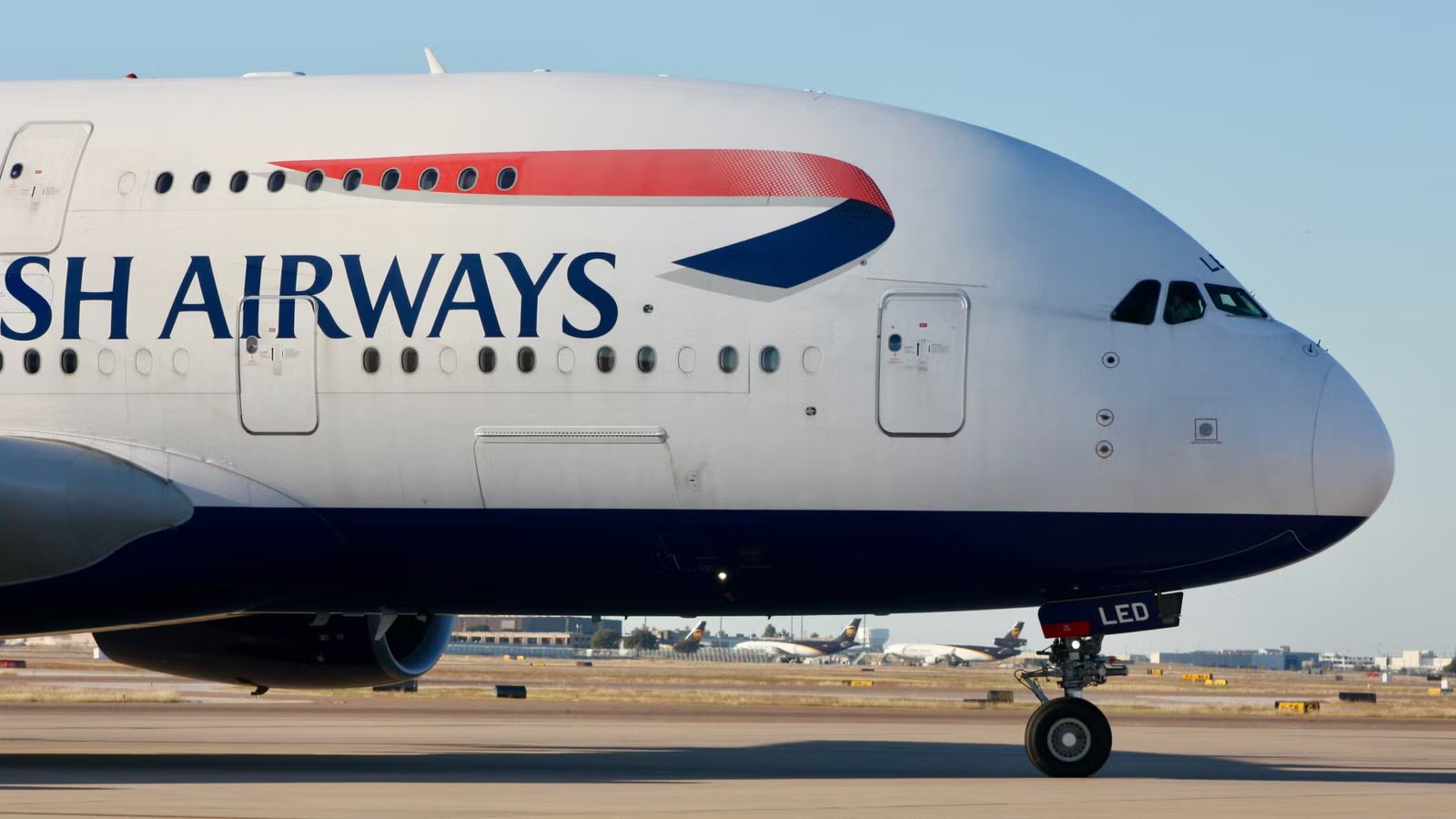
A dramatic  British Airways Airbus A380 arrival at London Heathrow Airport (LHR) has handed aviation watchers an extremely timely reminder that a pilot’s decision to perform a go-around is not a mistake, but rather a safety decision on its own. Footage of this incident shared online appears to show the superjumbo touching down long before powering back into the air, turning a tense arrival directly into a textbook example of caution.
We aim to discuss exactly what viewers at the scene saw, why late touchdowns can sharply raise runway-excursion risk, and how even the world’s largest passenger jet is governed by aviation’s simplest rule. At the end of the day, when the landing no longer looks right, it is up to crews to go around and try again. This is a key piece of why aviation remains so incredibly safe across the board, and why operators continue to choose safety over convenience.
What Happened In This Incident?

The incident in question involves British Airways Flight 268. The aircraft was operating a nonstop service from Los Angeles International Airport (LAX) to the carrier’s principal hub at London Heathrow. The aircraft in question was an Airbus A380, the flagship of the British Airways fleet. Based on spotter footage and analysis on social media, the aircraft appeared to touch down, then power back up and climb away for a go-around rather than continue a landing that had developed too deep into the runway.
Flight-tracking data shows that this flight departed from LAX on April 10 and reached Heathrow at 2:04 PM. Then it touched back down in London around 2 minutes ahead of its scheduled 3:25 PM arrival. That timing matters because it places the event in the final seconds of the approach and touchdown phase, not as a weather diversion or en route technical issue. Nonetheless, it was still a last-moment landing safety call.
What Exactly Is This Unique Kind Of Landing Maneuver?

A touch-and-go is a unique kind of maneuver in which an aircraft lands on the runway, makes brief contact with the ground, and then immediately accelerates and takes off again without coming directly to a full stop. In training, the main purpose of teaching these kinds of maneuvers is to allow pilots to practice several critical phases of flight in very quick succession.
This allows pilots to practice approach, flare, touchdown, directional control, power application, and takeoff. This ultimately saves time and allows repeated landing practice in one session. Outside of training, what people call a touch-and-go is often really a rejected landing or go-around after touchdown, something which is rather different in overall purpose. In those scenarios, the crew is not practicing at all.
Under these circumstances, the crew chose safety because the landing was unstable in nature. The aircraft touched down too far along the runway, or conditions changed suddenly. The purpose is incredibly simple, as the pilots wanted to force a bad landing to continue. In aviation, going around is a normal, disciplined safety action, not a sign that something has gone wrong inherently.

“It’s Not A Game”: FAA Targets Gamers As US Faces 3,500 Air Traffic Controller Shortfall
As the US faces a 3,500 air traffic controller shortfall, the FAA is making a bold move by targeting gamers for recruitment.
What Does All Of This Mean For British Airways?

For British Airways, this is more of a productive story about the airline’s safety culture than it is about crisis management. The key takeaway is that the crew appears to have rejected a landing that no longer looked acceptable and instead chose the safer option rather than forcing the aircraft onto the runway.
That ultimately matters because unstable or long landings are closely linked to runway-excursion risk, and standard aviation guidance is explicit that a go-around should follow when stabilized-approach criteria are no longer being met. In practical terms, the incident likely meant some extra fuel burn, a short operational disruption, and an internal review of the approach data and crew decision-making.
But unless there is evidence of extensive aircraft damage, procedural breach, or a wider systemic issue, it is unlikely to become a major reputational problem for the airline. If anything, the more favorable interpretation is that the airline’s procedures worked exactly as intended under pressure.