dailynewsnblog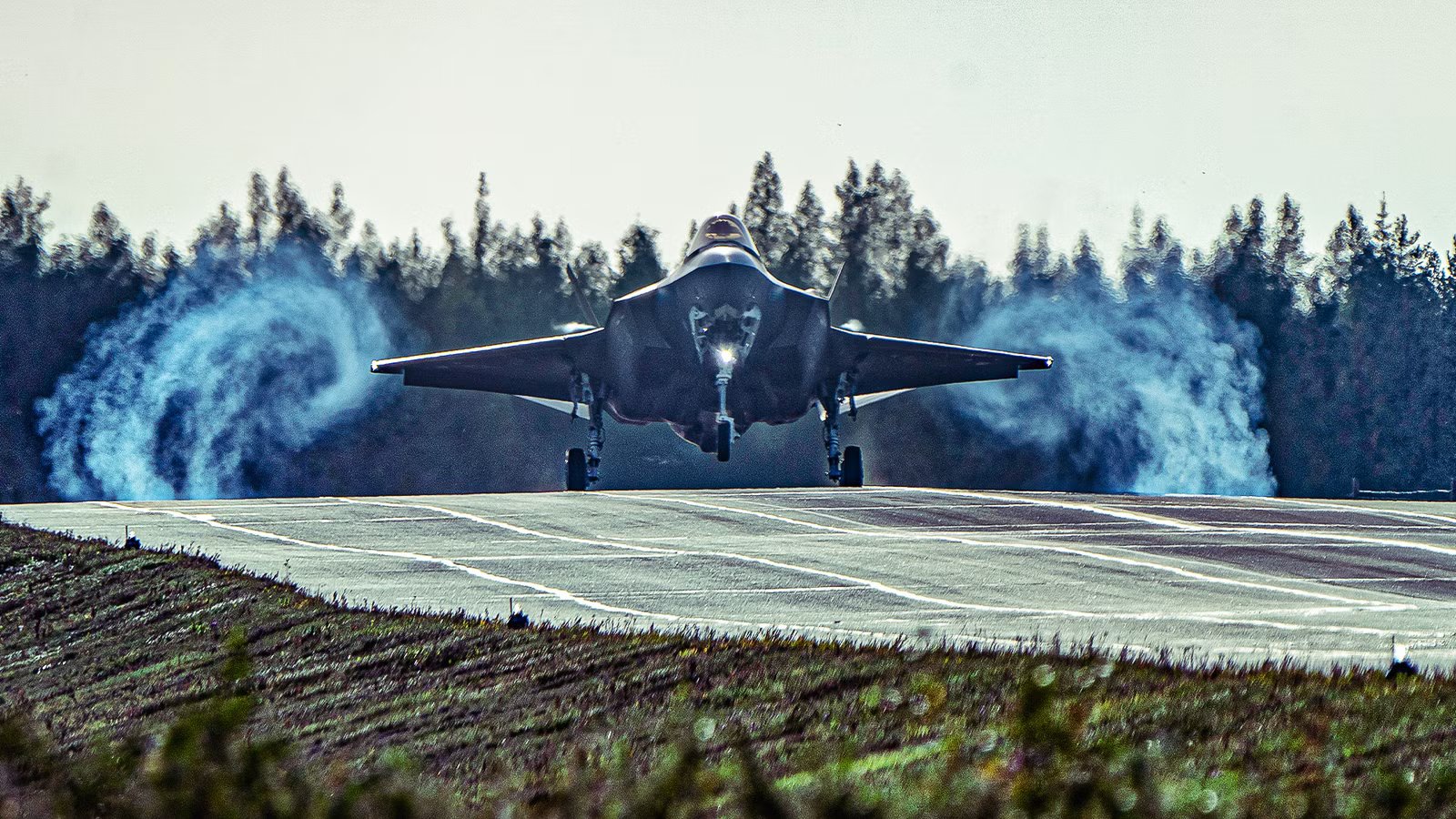
The F-35 Lightning II is a fifth-generation multirole combat aircraft developed by Lockheed Martin to perform a wide range of missions, including air superiority, strike operations, intelligence gathering, and electronic warfare. Designed with stealth characteristics to reduce radar visibility, the aircraft also integrates advanced sensor fusion, allowing pilots to combine data from multiple onboard and external sources into a single operational picture.
The F-35A variant, which uses conventional takeoff and landing, is the most widely deployed version and forms a key part of several NATO and allied air forces. Germany selected the F-35A to replace its aging Tornado fleet, largely due to its ability to fulfill NATO’s nuclear-sharing requirements without modification. The aircraft is already certified to carry US B61 nuclear bombs, making it the only available option capable of ensuring continuity in that role within the required timeframe.
In addition to its nuclear mission, the F-35 enhances interoperability with allied forces, enabling joint operations through shared data networks and standardized systems. Let’s explore why Germany may now be considering expanding its F-35 fleet, the challenges facing Europe’s Future Combat Air System, and what these developments reveal about the future of European defense strategy.
Germany’s Original F-35 Decision

Germany’s decision in 2022 to acquire the F-35 Lightning II marked a significant shift in its defense policy. Faced with a rapidly worsening security environment in Europe, Berlin moved away from its traditionally cautious approach and prioritized speed, reliability, and NATO integration. Replacing the aging Tornado fleet became urgent, not just as a modernization effort, but because it underpinned Germany’s role in the alliance’s nuclear-sharing arrangement.
That nuclear mission was the decisive factor. Germany hosts US B61 nuclear bombs, and only certain aircraft are certified to deliver them under strict requirements. At the time, the F-35A was the only platform capable of taking on that role without delay, allowing for a smooth transition as the Tornado is phased out. Any alternative would have risked creating a gap in Germany’s contribution to NATO’s deterrence posture.
European options such as the Eurofighter Typhoon were considered but ultimately seen as too slow and uncertain for this specific mission. Certifying the aircraft for nuclear delivery would have taken years and required US approval, adding both cost and risk. In choosing the F-35, Germany opted for immediate capability and alliance reliability over a more independent European solution.
The Rumors Of Expansion

F-35 Lightning II aircraft have fueled speculation about a broader strategic shift in Berlin’s defense planning. While officials have publicly denied that any formal decision has been taken, the fact that internal discussions are taking place is significant in itself. It suggests that policymakers are reassessing earlier assumptions about force structure, readiness, and the scale of future airpower requirements.
In practice, such debates often emerge when there is concern that existing procurement plans may not fully match the evolving threat environment. A central driver of this reassessment is the looming retirement of legacy platforms around 2030, particularly the Tornado fleet. Without sufficient replacement numbers, Germany risks a capability shortfall at a time when NATO’s eastern flank remains under sustained pressure and deterrence demands are increasing.
Expanding the F-35 fleet is seen as a relatively fast and low-risk option, offering proven technology, interoperability with allies, and immediate operational relevance. It would also allow Germany to maintain continuity in critical missions while avoiding the delays and uncertainties associated with new development programs. Beyond the numbers, the debate points to a broader shift in strategic thinking.
Germany is no longer focused solely on replacing aging equipment; it is reconsidering the overall scale and capability of its air force in light of more complex and demanding security challenges. This includes preparing for high-intensity conflict scenarios, integrating advanced technologies, and ensuring long-term resilience. Even if no expansion is ultimately approved, the fact that it is being seriously considered highlights growing uncertainty about whether current plans are sufficient for the decade ahead.

The World’s Largest Air Forces By F-35 Numbers
Stealth, advanced sensors, and networked warfare converge in this game-changing fighter. See which countries are leading the charge.
What FCAS Was Supposed To Be

The Future Combat Air System was designed as a cornerstone of Europe’s push for defense autonomy. Launched by France, Germany, and Spain, the initiative aimed to ensure that Europe could develop and field its own next-generation air combat capabilities without relying on external powers. At its heart was the goal of combining advanced technologies with industrial cooperation, positioning Europe as a leader in future air warfare.
Rather than focusing on a single aircraft, FCAS is built around a ‘system of systems”’concept. A next-generation crewed fighter would operate alongside unmanned drones, often referred to as ‘remote carriers,’ while being linked through a digital combat cloud that enables real-time data sharing across platforms. This networked approach reflects a shift in modern warfare, where information dominance, sensor fusion, and coordination across assets are just as critical as speed or stealth.
|
Category |
Specifications |
|---|---|
|
Role |
Fifth-generation multirole stealth fighter |
|
Manufacturer |
Lockheed Martin |
|
Variant |
F-35A (Conventional Takeoff and Landing) |
|
Length |
51.4 ft (15.7 m) |
|
Wingspan |
35 ft (10.7 m) |
|
Height |
14.4 ft (4.4 m) |
|
Maximum Speed |
Mach 1.6 (≈1,225 mph / 1,975 km/h) |
|
Combat Radius |
684 miles (1,100 km) |
|
Ferry Range |
1,367 miles+ (2,200 km+) |
|
Service Ceiling |
50,000 ft (15,240 m) |
|
Engine |
Pratt & Whitney F135 turbofan |
|
Thrust |
43,000 lbf (191 kN) |
|
External Hardpoints |
Yes (for increased payload when stealth is not required) |
|
Maximum Payload |
18,000 lbs (8,100 kg) |
|
Nuclear Capability |
Certified (B61 nuclear bomb compatible) |
However, this level of ambition comes with significant challenges. With projected costs reaching around €100 billion and timelines extending into the 2040s, FCAS is a long-term investment rather than a near-term solution. Its complexity, combined with political and industrial disagreements, means it cannot address immediate capability gaps, leaving countries like Germany to rely on existing or off-the-shelf systems in the meantime.
Industrial Conflict At The Core

A central issue undermining the Future Combat Air System is the ongoing dispute between Dassault Aviation and Airbus. The disagreement centers on control over the program’s most critical component: the next-generation fighter, which is effectively the heart of the entire system. Without a clear agreement on how this element is designed and managed, progress across the broader program becomes difficult.
Dassault has consistently argued for strong, centralized leadership over the fighter’s design and development, stressing that complex aerospace programs require a single authority to ensure efficiency, coherence, and accountability. Airbus, however, has pushed for a more balanced structure that reflects Germany’s financial contribution and ensures broader industrial participation across partner nations. This clash has created repeated delays, with each side reluctant to concede control over such a strategically and commercially valuable asset.
This conflict extends far beyond management structure. It touches on highly sensitive areas such as intellectual property rights, technology transfer, and future export potential, issues that directly impact national industries and long-term competitiveness. Without a resolution, these disputes risk not only delaying FCAS further but potentially derailing it altogether, reinforcing doubts about Europe’s ability to deliver a unified next-generation fighter program.

Lockheed Martin Isn’t Losing Sleep Over Germany Ditching The F-35: Here’s Why
The defense contractor really does not seem bothered.
Strategic Divergence Between Allies

The tensions within the Future Combat Air System also reflect deeper strategic differences between France and Germany. France’s military doctrine emphasizes strategic autonomy, including the ability to project power globally and sustain its independent nuclear deterrent. This requires a fighter capable of operating from aircraft carriers and performing a wide range of missions beyond Europe. Germany, by contrast, focuses more on NATO integration, collective defense, and cost efficiency, shaping a very different set of operational requirements.
These differing priorities make designing a single platform extremely difficult. A carrier-capable, nuclear-certified aircraft with expeditionary capabilities is inherently more complex and expensive than a land-based system optimized for alliance operations. Trying to merge these requirements into one design risks creating a compromise that is heavier, costlier, and harder to deliver on time, further straining an already ambitious program.
Political mistrust further complicates the situation. In Germany, there is a growing perception that Berlin may end up financing a project that disproportionately benefits French industry, particularly given Dassault Aviation’s leading role. In France, meanwhile, there are concerns that Germany, through partners like Airbus, is seeking access to sensitive technologies without making equivalent contributions. These competing suspicions make compromise more difficult, reinforcing the risk that disagreements could stall or even derail the program altogether.
The Geopolitical Dilemma

Germany now faces a difficult balance between immediate security needs and long-term strategic goals. The F-35 Lightning II offers a reliable, combat-proven capability that can be fielded quickly and integrated seamlessly into NATO operations. However, choosing it in greater numbers also reinforces dependence on the United States for critical areas such as maintenance, software updates, and operational infrastructure, raising broader questions about sovereignty and strategic autonomy.
At the same time, continued investment in the Future Combat Air System aligns with Europe’s ambition to build an independent defense industrial base. FCAS is intended to ensure that future airpower capabilities are designed and controlled within Europe rather than imported. Yet ongoing delays, industrial disputes, and rising costs make it an uncertain and distant solution, especially when measured against the urgency of current security challenges.
As a result, Germany’s approach increasingly reflects a pragmatic hedge. By sticking with FCAS politically while considering additional F-35 purchases in practice, Berlin is attempting to cover both timelines, securing immediate readiness while preserving the option of long-term autonomy. This dual-track strategy may not fully resolve the underlying tension, but it allows Germany to manage risk in an increasingly unpredictable strategic environment.