dailynewsnblog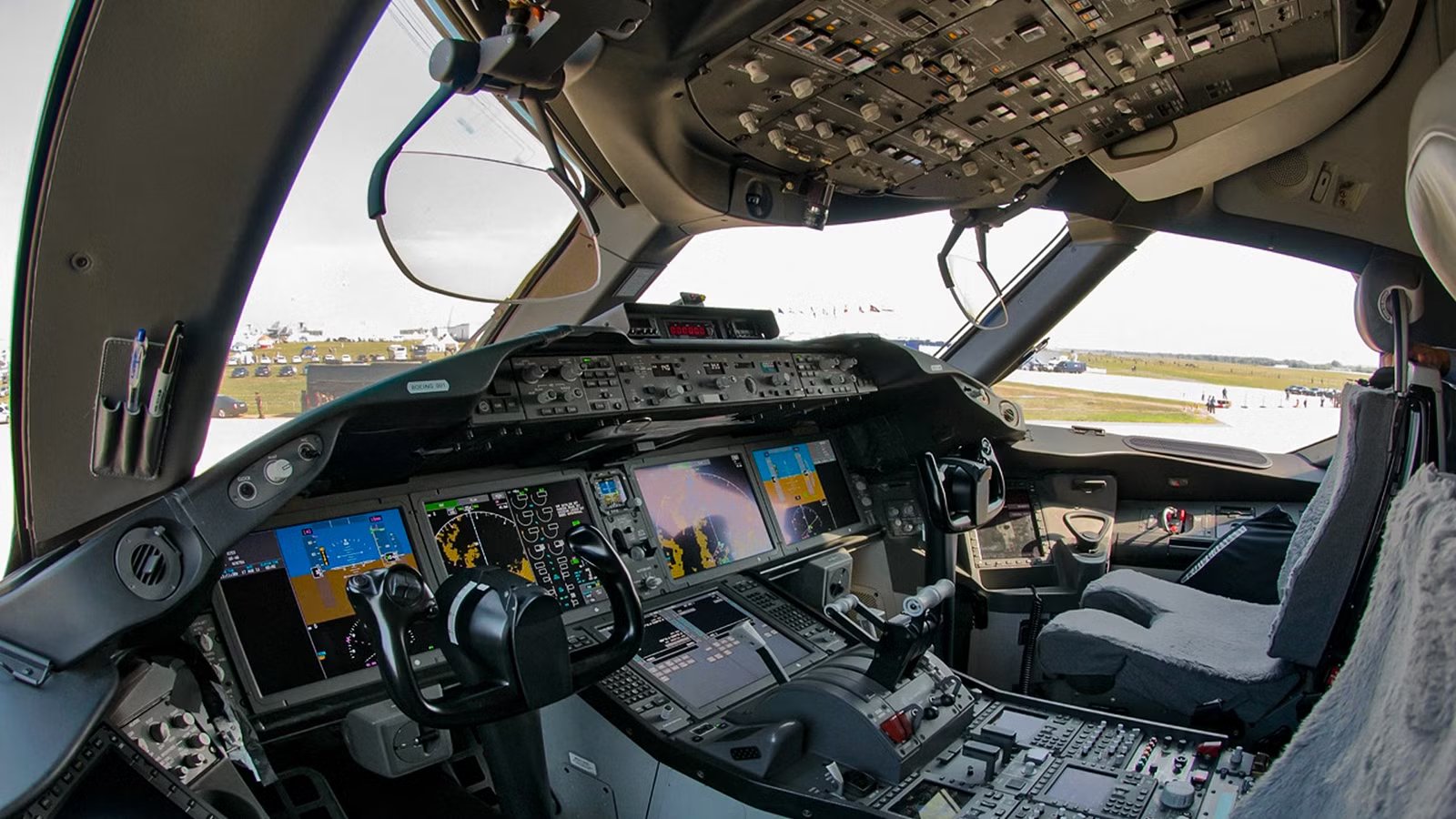
Since its inception, Airbus has long held a different design philosophy than  Boeing in a wide variety of areas. This includes the design of its flight decks, where Airbus and Boeing aim to provide pilots with the tools to safely operate flights through vastly different means. At the end of the day, neither design is safer than the other, and just as many pilots prefer one over the other. While this has always been true, the Boeing 787 and Airbus A350 are the two manufacturers’ most modern aircraft and, having debuted just four years apart, are each other’s contemporaries (although the A350 is larger).
The Boeing 787 Dreamliner entered service in 2011 with the 787-8 variant, most similar in size to the Airbus A330-200, and it was followed by the 787-9. This is the longest-ranged variant and is similar in size to the Airbus A330-300. The Boeing 787-10 is the largest variant, and is similar in length to the Airbus A340-500. The Airbus A350 XWB entered service in 2015 with the smaller A350-900 variant, which is slightly shorter than the 787-10 with a much larger wing. The A350-1000, meanwhile, is virtually the same size as the Boeing 777-300ER, while the A350F is a cargo version of the A350-1000 with a shorter fuselage.
The Lack Of A Control Column In The A350

Up until the A320, even Airbus aircraft were designed with conventional control columns, or ‘yokes’, as you see in Boeing aircraft. With the A320, however, the manufacturer introduced a digital fly-by-wire system (a first on a commercial airliner), and this meant that a control column wasn’t technically necessary. Instead, Airbus installed a sidestick, which allowed the manufacturer to clean up the cockpit. Pilots have a full view of the displays, and underneath the screens lies a retractable tray table along with two retractable footrests. This is true on the A350 as well.
With the 777, Boeing introduced its own digital fly-by-wire system, but it kept the yoke due to customer requests. This maintains a degree of commonality with prior Boeing models (which otherwise have very few similarities with the 777) and aligns with Boeing’s fly-by-wire philosophy. At its core, Boeing’s fly-by-wire software aims to replicate the feel of flying an aircraft with mechanical flight controls, which is not the case for Airbus planes. This was carried over to the Boeing 787.
The Boeing cockpit provides a more traditional flying experience that pilots find engaging, but the yoke itself is large and intrusive. Pilots can have more difficulty finding comfortable seating positions than in the A350, and the Airbus tray table provides a large, fixed surface for eating as well as working. In addition, the A350’s tray table features a keyboard to control the avionics. On the 787, not only do you lack this large, fixed surface, but the center of the yoke, which features a clip to hold papers, moves with the yoke.
Flight Controls Move On Their Own In The 787

When the autopilot and autothrottles are engaged in an aircraft with mechanical flight controls, the control column as well as the throttles move as these systems physically manipulate cables and pulleys. The Boeing 787 (as well as the 777) generally does not have physical connections between the engines and throttles, or the flight controls and the yoke, but the controls still mimic the inputs that pilots would make if the automation were disabled.
In a modern Airbus cockpit, neither the sidestick nor the thrust levers move when the autopilot/autothrust systems are engaged. In addition, whereas the yokes in a Boeing cockpit are linked, no fly-by-wire Airbus plane features linked sidesticks. In reality, this is because such a system was not economically feasible in the 1980s, when the A320 was being designed, and Airbus has excluded it from subsequent planes leading up to the A350 to maintain commonality. Many newer planes, however, including the Airbus A220 and many business jets, include linked sidesticks.
|
Airbus Fly-By-Wire Commercial Airliners |
Variants |
|---|---|
|
Airbus A320 |
A318-100, A319-100/A319neo, A320-100/200/A320neo, A321-100/200/A321neo/A321XLR |
|
Airbus A330 |
A330-200, A330-200F, A330-300, A330-800neo, A330-900neo |
|
Airbus A340 |
A340-200, A340-300, A340-500, A340-600 |
|
Airbus A350 XWB |
A350-900, A350F, A350-1000 |
|
Airbus A380 |
A380-800 |
Boeing’s control philosophy prioritizes flight crew awareness, as both pilots can view control inputs in real time. The Airbus philosophy mandates that pilots should keep their eyes on the instruments to maintain situational awareness. With this philosophy, a backdriven throttle serves no purpose, and the same is true for linked sidesticks, even if technology exists today. In addition, if two pilots make different inputs on the sidestick, an aural alert plays along with a graphic on the screen, and the plane averages out the input. Pilots can also temporarily deactivate the other sidestick.

The Striking Differences Between The Airbus A320 & Boeing 737 Cockpits
Explore the striking Airbus A320 vs. Boeing 737 cockpit differences, from sidesticks to noise, and learn how pilots see these iconic flight decks.
Fly-By-Wire Control: Boeing Versus Airbus

The Airbus A350 and Boeing 787 both use fly-by-wire systems originally implemented in other aircraft. The 787 uses essentially the same logic as the 777, while the A350 uses the same logic as every Airbus plane since the A320. Fundamentally, the Airbus system has pilots commanding a G-load and pitch rate with the sidestick, rather than directly manipulating control surfaces. Inputs are constant throughout the flight, and the aircraft autotrims, with pilots only having to manually set stabilizer trim for takeoff.
In contrast, the Boeing law adds an airspeed element. The plane aims to maintain a particular speed, and pilots trim the plane themselves during manual flight. Pilots also need to adjust inputs in different flight phases, requiring larger inputs at lower speeds and altitudes to achieve the same result. In actuality, inputs on the yoke still send signals to a computer that manipulate the control surfaces, but the airspeed element makes the experience of flying a 787 or 777 much more similar to a plane with mechanical controls.
|
Boeing Fly-By-Wire Commercial Airliners |
Variants |
|---|---|
|
Boeing 777 |
777-200, 777-200ER, 777-300, 777-200LR, 777F, 777-300ER, 777-8, 777-8F, 777-9 |
|
Boeing 787 Dreamliner |
787-8, 787-9, 787-10 |
Airbus’s fly-by-wire software includes hard limitations on pitch and roll authority, and also includes envelope protections to prevent hazardous conditions like stalls. These systems can only be deactivated if the flight computer enters a backup law, typically due to a data issue. Boeing’s flight control law also features envelope protection (through increasing the weight of the yoke), but a pilot can override it. In addition, the computers on Airbus and Boeing fly-by-wire aircraft include multiple flight control modes depending on phase of flight and available data.
More Differences In Physical And Software Design

The Airbus ‘Dark Cockpit’ philosophy essentially dictates that buttons and switches only illuminate when an abnormal condition is present. This can then be resolved, typically by pushing the illuminated button. The pilot only sees what they need to see in a given moment, and the flight deck is dark otherwise. While many other modern airliners also follow this concept to an extent, the Boeing 787 and other newer Boeing aircraft will illuminate switches or systems even if no immediate action is necessary, although certain parts of the flight deck are still kept dark, in contrast to older aircraft.
The Boeing 787 features an EICAS (Engine Indicating and Crew Alerting System), which provides various aircraft systems information (primarily relating to the engines), as well as alerts on any faults. If a fault occurs, 787 pilots can perform electronic checklist items or use the backup paper checklist. The Airbus A350 features the standard Airbus ECAM (Electronic Centralised Aircraft Monitoring) system, which adds to EICAS by immediately providing corrective actions, rather than deferring pilots to the checklist, and confirms when actions have been performed.
As in many other areas, Airbus and Boeing take different approaches to presenting pilots with information. The Airbus philosophy essentially aims to clear the workload for the pilots as much as possible, only giving information needed in the immediate moment and promptly providing pilots with the steps on how to resolve issues, allowing for quicker action with better focus. In contrast, the Boeing system centers around giving pilots as much information as possible and boosting overall awareness.

The Striking Differences Pilots Notice Between Flying The Boeing 767 & 777
Two iconic Boeing aircraft that have a lot in common, but also, plenty of interesting differences. What really makes these aircraft unique?
Differences In Equipment On The Two Planes

While the design philosophies that created the flight decks of the Airbus A350 and Boeing 787 are extremely different, they’re both equally effective in allowing pilots to safely manage flights. There are, however, numerous quirks that differentiate the two airliners. While the Airbus A350 is frequently thought of as being a high-tech aircraft, the dual head-up displays (HUDs) present in promotional photos are, in fact, optional, and many airlines do not include them. The Boeing 787, in contrast, is the only airliner to include dual HUDs as standard.
The outer two displays on the A350 are dedicated to the OIS (Onboard Information System). First introduced with the A380, the A350’s iteration of OIS essentially displays information available to pilots via their Electronic Flight Bag (EFB) systems that are normally displayed on company-provided iPads.
The Boeing 787 offers a similar system, with displays mounted directly to the side of the pilots, but this system also includes aircraft-specific software. This is a feature also present on the Boeing 777, and while some 777 operators chose to leave it out, this has yet to happen on the 787.