dailynewsnblog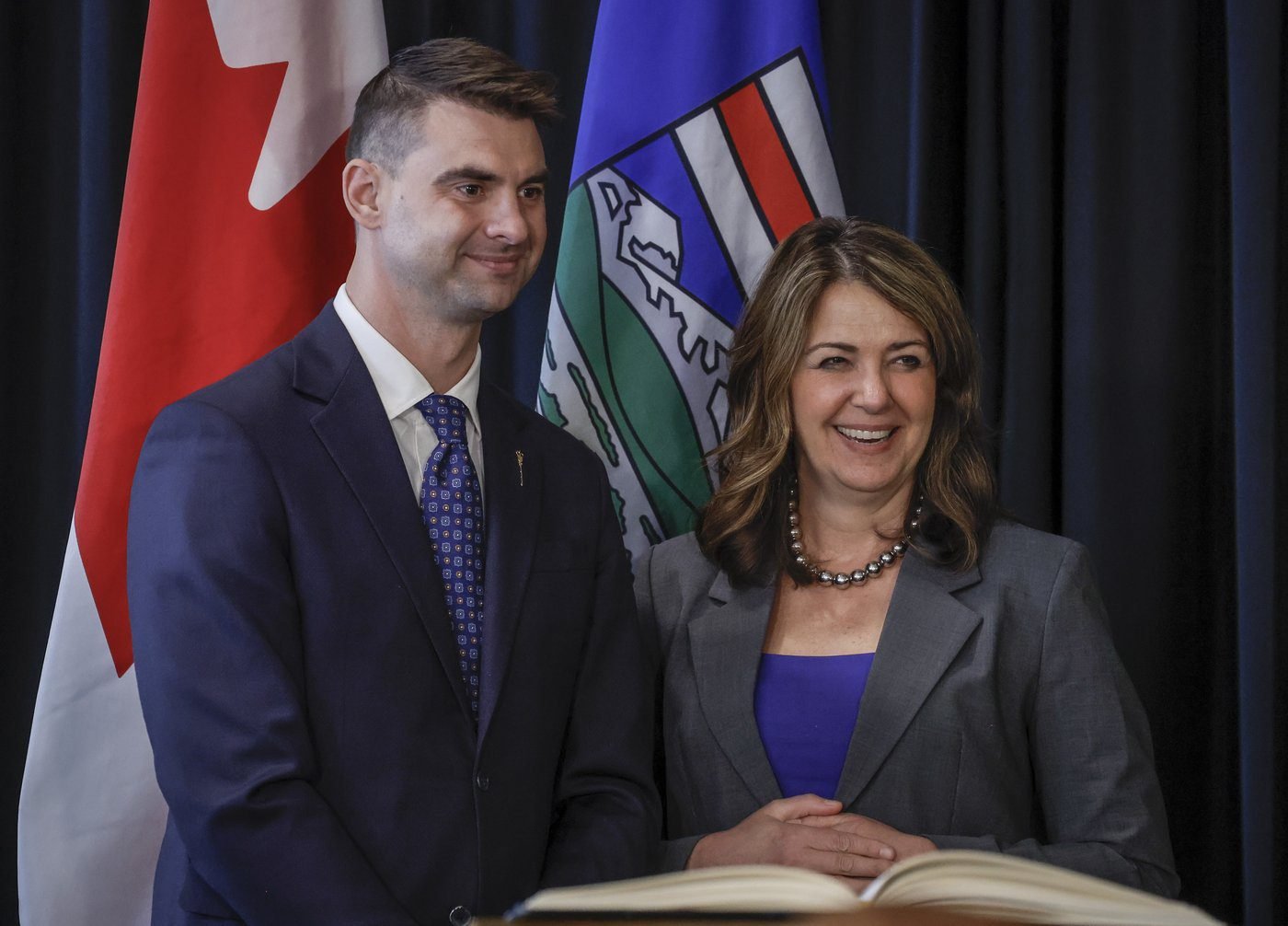
EDMONTON — Critics of Alberta’s proposed rule changes to public libraries say the true danger lies in the fact they give the province power to dictate access and potentially snoop on Albertans to see exactly which books they are checking out.
And James Turk, director of the Centre for Free Expression at Toronto Metropolitan University, said the government’s stated reason for the bill – to keep kids from accessing graphic sexual material – is a red herring.
“Nobody’s advocating that children should have access to inappropriate materials, least of all libraries,” Turk said in an interview. “This is a non-existent problem that the province is using as a ploy to bring radical overreach in terms of controlling libraries.”
Municipal Affairs Minister Dan Williams proposed the legislation last week. He promises to ensure children ages 15 and under won’t be able to access visual depictions of sex. Regulations expected later this spring could include having such material controlled by library staff or put in separate areas.
“We will require that they are put behind a counter in a place that children cannot find them while wandering these libraries,” Williams said after tabling the bill, holding up copies of graphic sex images to prove his point.
“When a family walks into a public library, they should feel confident that appropriate safeguards are in place.”
Turk, however, said the bill doesn’t specify anything about explicit material — sexual or otherwise — and instead gives the municipal affairs minister authority to restrict any topic or subject.
The wording of the bill proposes giving an inspector appointed by the ministry the broad power to look at “any matter relating to the management, administration or operation of a public library,” and have access to records they deem relevant. It then would give the minister the authority to make “any order that the minister considers appropriate.”
Turk calls that an unprecedented intrusion into libraries that are supposed to be governed by local boards to serve diverse communities.
“That’s a real concern in a democratic society,” he said.
The Coalition of Alberta Public Libraries speaks for public libraries, and says the changes would affect 324 public points across the province serving 99 per cent of Albertans.
Speaking on behalf of the organization, Pilar Martinez, CEO of the Edmonton Public Library, and Ron Sheppard, director of the Parkland Regional Library system, questioned in an interview what happens when authorities are ordered to check out what someone is checking out.
Martinez noted that in Edmonton, libraries have self-checkout stations that many patrons prefer, in some instances, because they’d rather keep their borrowing habits private.
Martinez said in small rural libraries, and even in the province’s capital city, branches don’t have spaces behind the counter to squirrel away restricted material the way Williams envisions.
She said the books displayed by Williams are already catalogued and held in the adult section.
Turk questioned whether it would even be legal, under privacy law, for the ministry to demand a patron’s borrowing records.
And then there’s the internet.
Public libraries subscribe to third-party digital platforms that provide access to users for things like e-books, audiobooks, movies and music.
The coalition says it’s not yet clear how those digital platforms would be handled under the new rules. It’s also not clear what internet restrictions might be put in place for those who sit down and log into a public computer.
Jack Alarie, Williams’ press secretary, declined to address questions from The Canadian Press this week about whether the government would or would not restrict its own access to public library user data when it writes the regulations that underpin the bill.
He said in a statement that the government remains committed to working with libraries on developing the regulations.
“However, it remains the policy of the Government of Alberta that children under the age of 16 should not be able to stumble upon explicit, graphic sexual, and pornographic content in any public library.”
Opposition NDP Leader Naheed Nenshi was blunt when assessing the bill last week. “This is fascist behaviour,” he said.
Martinez and Sheppard say they want the government to pause the changes so people who run libraries can help it address a list of serious concerns ranging from practicalities — like finding the space for quarantined materials and age-verification training for staff — to broader privacy issues.
There’s also the awkward factor, with someone who may want to legally access the quarantined materials soon having to walk up to the front counter to ask for them.
The coalition says no extra funding has been offered by the province to deal with the operational requirements of the proposed rules.
Martinez and Sheppard wonder whether the bill opens the door for other topics or other belief systems to be censored by the Alberta government.
“Today it’s sexually graphic images. What could it be tomorrow?” asked Martinez. “There is quite the range of topics that people find offensive.”
Martinez said it’s a slippery slope, because books and material that may offend folks on one side of the political spectrum remain available on the shelves.
Sheppard pointed to a few titles in circulation, including one which purports to debunk reports of unmarked graves and missing children at Indian Residential Schools, and another that purports to help readers “inoculate” their children against the “trans craze.”
“What about people who feel that some of these materials are offensive? Do we have to put them behind a different set of curtains?” asked Sheppard.
The library heads say the bottom line is about who will decide what goes in public libraries.
Sheppard noted that libraries — from their collections to their programming — are governed by local boards specifically to keep politics and politicians at arm’s length.
“With this legislation, the minister would have more authority over a public library service point than the municipality that actually appoints the board and funds the board,” he said.
This report by The Canadian Press was first published April 10, 2026.
Lisa Johnson, The Canadian Press