dailynewsnblog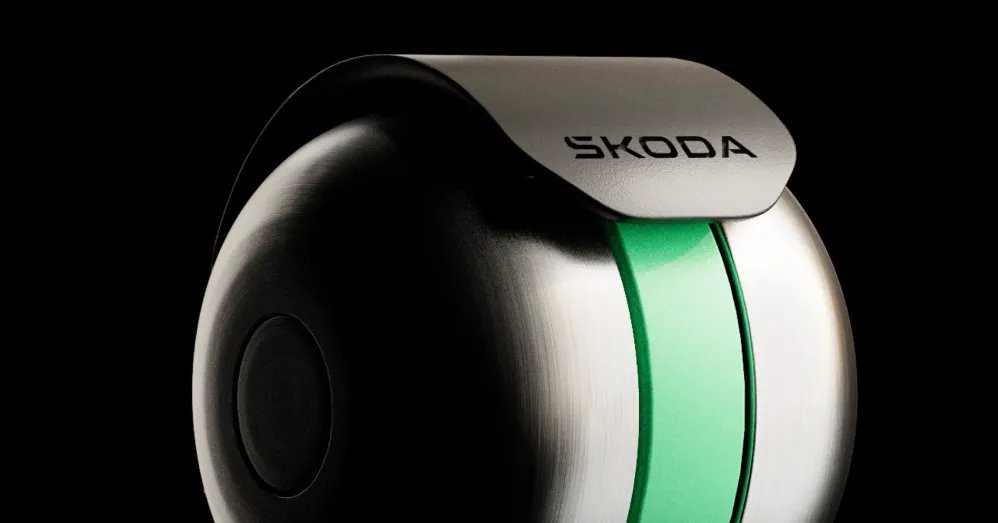
The unique Škoda DuoBell bicycle bell is a classic example of a completely analog solution to a problem caused by digital innovation. Its ringing sound bypasses the noise-canceling capabilities of modern headphones, which often isolate the wearer from outside noises all too well.
People with headphones using active noise cancellation are often left in a perceptive bubble where they fail to react—or simply react too late—to imminent dangers on streets and sidewalks they can’t hear coming. The DuoBell’s mission is precisely to make itself heard even beyond the latest-generation barrier filters.
Ring Bling
To design the DuoBell’s ANC-defeating capabilities, researchers from the Czech brand—which coincidentally enough made its commercial debut in 1895 with a bicycle—worked closely with researchers at the University of Salford in the United Kingdom to verify whether there was a way to overcome active noise cancellation. ANC is now present in the vast majority of headphones and earphones, including low-cost models. It’s also a feature of software programs; it’s the tech that keeps your dog’s incessant barking from showing up in your Zoom calls.
This research led to the discovery of what was immediately dubbed the “safety gap,” located in the frequency range between 750 and 780 Hz. Sounds within this frequency range can reach the ears of people using ANC headphones; the cancellation systems are unable to adequately create counter-phase sound waves to mask the perceived noises.
The structure of the bell is completely mechanical, but it also includes an additional resonator tuned to a higher frequency to improve the bell’s overall efficiency. The hammer mechanism also generates rapid blows. This is ideal for city environments when more than one ding is often necessary to get someone’s attention, but it’s also integral to the design because the rapid, irregular dings are harder for ANC systems to cancel out.

Škoda has successfully tested the bell on the streets of London, confirming experimental tests with pedestrians wearing headphones. Headphone-wearing people were able to detect an approaching cyclist ringing the bell five seconds and 22 meters earlier than cyclists with a conventional bell.
There’s currently no information about pricing and availability, but in the meantime, Škoda has published the full study.
This story was originally published by WIRED Italia. It has been translated from Italian.