dailynewsnblog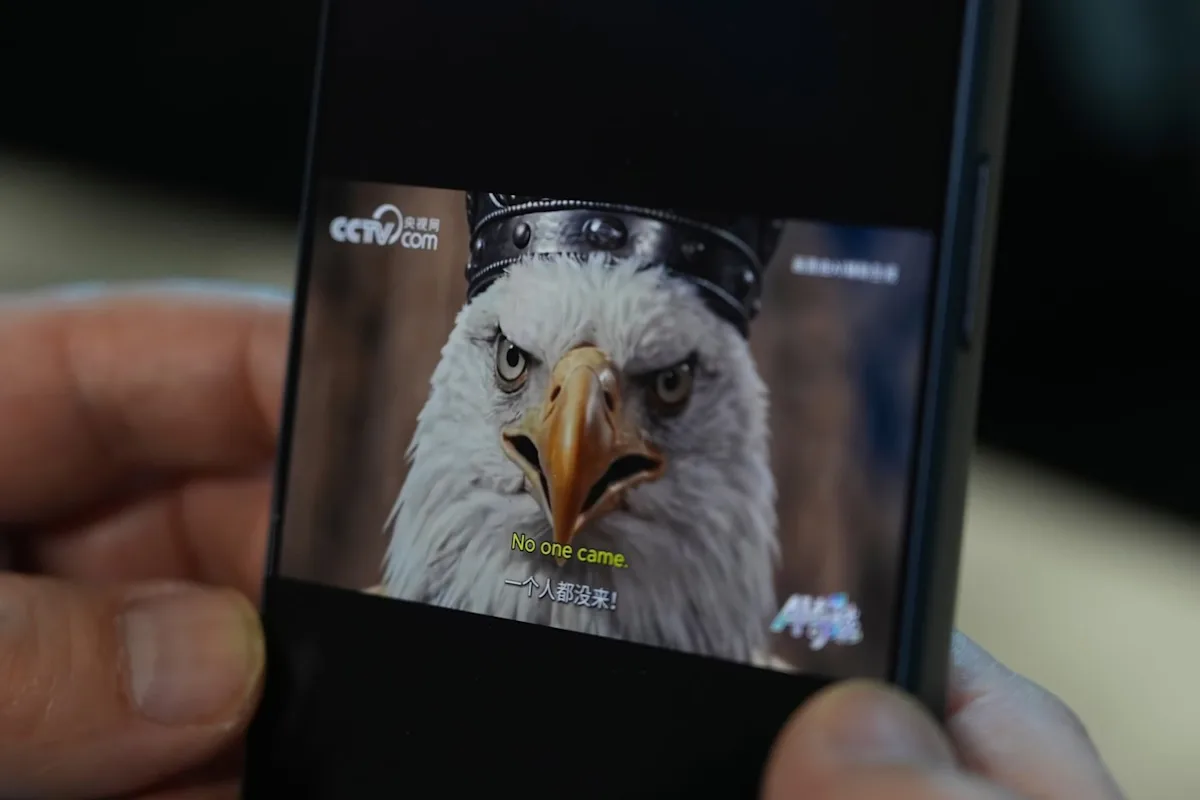
BEIJING (AP) — The messaging from China’s Communist government may once have been dogmatic and rigid — not anymore. Having largely tamed the internet at home with tight censorship, Beijing is now tapping the power of social media and artificial intelligence to tell its story — and often to skewer the U.S. and its president.
In a five-minute AI-generated animation modeled after classic martial arts movies, China’s state media frames out an allegory for the war in Iran. A white eagle in regal attire representing the U.S. unleashes an evil laugh before his army attacks a group of Persian cats draped in black cloaks standing in for Iranians, who vow to fight after losing their leader and close off a crucial trading route.
Touching on injustice, revenge and worldly wisdom, the metaphor-rich short is the latest example of several AI-generated animations created by China’s state media in recent months to mock the U.S. as a global bully, including President Donald Trump’s threat to take over Greenland and his plan to exert U.S. predominance in the Western Hemisphere.
The deft use of AI animation comes after Chinese President Xi Jinping has pushed for years to boost the country’s abilities to spread its messages globally, gain a greater say on world affairs and counter Western narratives that Beijing often sees as biased or even derogatory about China. Pro-Iran groups similarly have used sleek, AI-generated memes to taunt the U.S. and Trump.
It’s part of an intensifying global info war in which the U.S. is vowing to up its game to counter foreign anti-American messaging and push back on worldviews against America’s interests.
Recent cables by the State Department have warned that foreign messaging campaigns, carried on digital platforms by foreign state-controlled media, “pose a direct threat to U.S. national security and fuel hostility toward American interests.”
China finds new ways to spread its worldview
AI-generated “infotainment” spread via social media is likely to be more effective in persuading younger audiences worldwide to accept Chinese viewpoints and is becoming routine in the country’s messaging, said Shi Anbin, professor and director of Israel Epstein Center for Global Media and Communications at Tsinghua University.
“It is a new way for Chinese mainstream media to engage global Gen Z audience and social media users to understand Chinese standpoint and viewpoint of international affairs,” Shi said.
The short on the Iran war probably is one of the sleekest efforts by China’s state media.
Released by the state broadcaster China Central Television on social media, it has gone viral at home and garnered rave reviews from its Chinese audience for translating a complex geopolitical war into an easy-to-understand affair. It made its way to the English-language world after an X user subtitled it and posted the clip online, drawing more than 1 million views in only a few days.