dailynewsnblog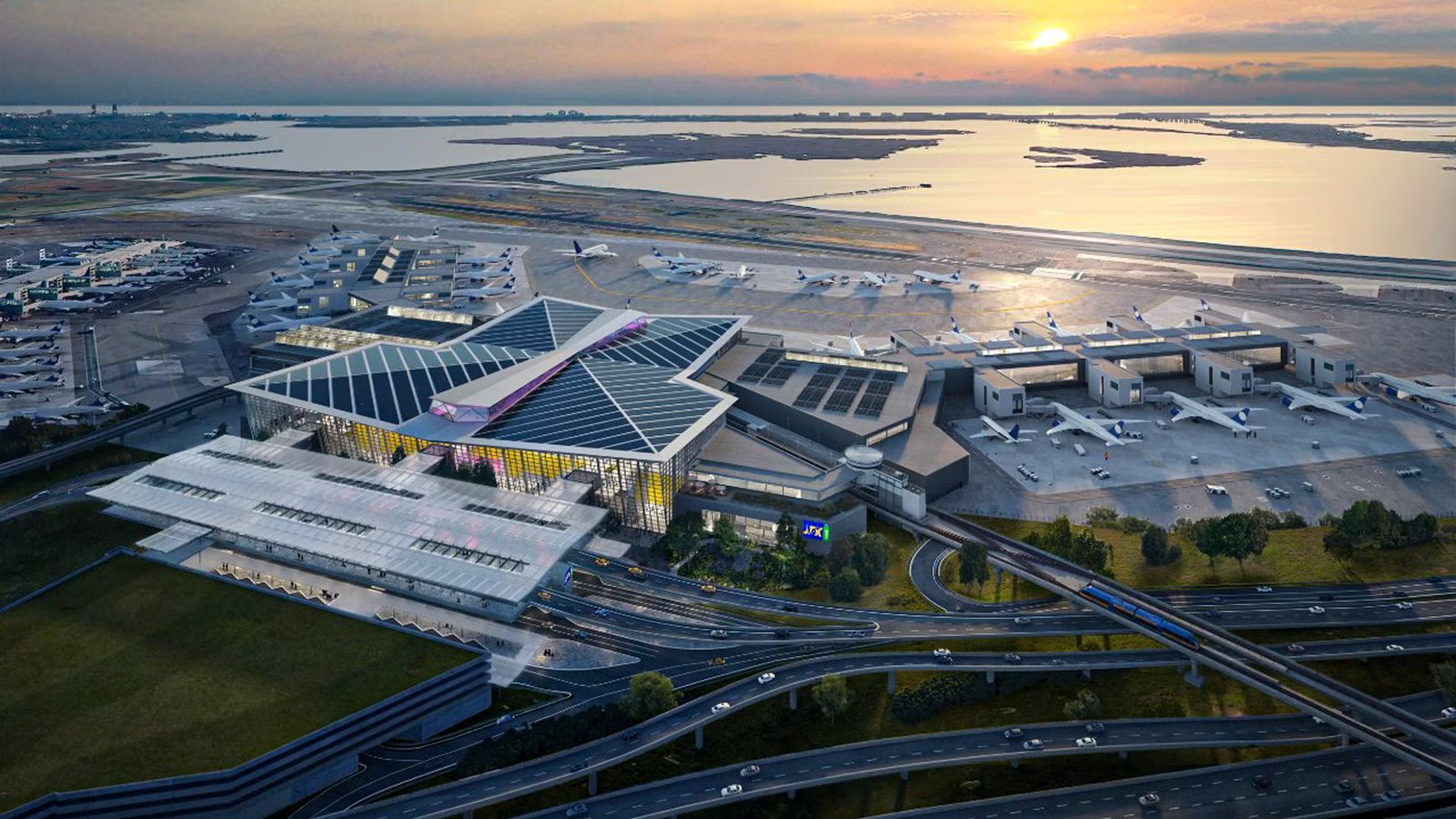
A remarkable number of major airport projects are reaching meaningful milestones in 2026, and they are not all trying to solve the same problem. In New York, JFK’s new Terminals 1 and 6 are part of a sweeping rebuild of one of the United States’ most important international gateways. In Hong Kong, the reopening of Terminal 2 adds new departure capacity tied to the airport’s broader three-runway expansion, while Munich’s new Terminal 1 pier strengthens non-Schengen handling at one of Europe’s busiest hubs.
Elsewhere, entirely new airports are emerging. Vietnam’s Long Thanh International Airport is being built to relieve Ho Chi Minh City’s constrained Tan Son Nhat International Airport and eventually handle far more traffic, while Western Sydney International will give Australia’s largest city a second major airport with round-the-clock operations. Taken together, these projects show that 2026 is not just bringing more terminal space. It is bringing new capacity, different operating models, and a fresh round of infrastructure built around how global air travel is changing.
JFK’s New Terminal 1

The terminal is being built on the site of the current Terminal 1 and the former Terminals 2 and 3, creating a massive new anchor for the airport’s south side. The Port Authority says the project is valued at $9.5 billion and, once complete, will become JFK’s largest terminal, reflecting how central it is to the airport’s long-term rebuild.
What makes the project especially important is its scale and role within the wider airport overhaul. The New Terminal One is scheduled to open in phases beginning in 2026, and the terminal is planned with 22 widebody gates, giving airlines room to expand long-haul operations at one of the country’s most important international gateways. It also sits inside JFK’s broader redevelopment program, which the Port Authority describes as a $19 billion transformation that includes Terminal 6, Terminal 4 upgrades, Terminal 8 work, and major roadway and infrastructure improvements across the airport.
That is why this project matters beyond New York alone. JFK has long been one of the United States’ most important global gateways, but its terminal layout has often felt fragmented and outdated compared with leading hubs abroad. The New Terminal One is intended to change that by consolidating a large share of the airport’s international capacity into a more modern, purpose-built facility sized for today’s widebody-heavy long-haul market. In practical terms, it is not just another terminal opening in 2026. It is one of the most important pieces of airport infrastructure set to reshape transatlantic and global travel from the United States.
JFK’s Terminal 6

JFK’s new Terminal 6 is scheduled to begin opening in phases in 2026, with the first six gates due to enter service before the full terminal is completed in 2028. The project is being built on the sites of the former Terminal 6 and Terminal 7 and will deliver a 1.2 million-square-foot facility as part of JFK’s broader $19 billion redevelopment. Unlike the much larger New Terminal One on the south side, T6 is being positioned as a more compact international terminal that still plays a major role in reshaping how passengers move through the airport.
What stands out most is how the terminal is being designed around convenience and modern processing. Terminal 6 will eventually have 10 gates, nine of which can handle widebody aircraft, along with an automated baggage system, updated TSA screening technology, customs and border control facilities, rooftop solar power, and a curated public art program tied to New York City. JFK Millennium Partners has also emphasized that passengers will be able to reach all gates in under five minutes from the TSA checkpoint exit, a notable contrast with the longer walks that have often defined JFK’s older terminal layout.
The airline mix also shows why T6 matters. JetBlue is central to the project because Terminal 6 will connect with Terminal 5, but a growing list of international carriers has also committed to move in, including Lufthansa, SWISS, Cathay Pacific, Air Canada, ANA, TAP Air Portugal, and others. That combination gives the terminal a clear strategic role: it is not just replacing aging infrastructure, but creating a more efficient home for a mix of transatlantic, transpacific, and partner connectivity at one of the world’s most important international airports.

JFK’s New Terminal One Issues Request For Ground Handling Services Ahead Of 2026 Opening
The New Terminal One project at JFK is calling for prospective providers of ground handling services to submit proposals.
Hong Kong International Airport – Terminal 2

Hong Kong International Airport’s rebuilt Terminal 2 will reopen its passenger departure facilities on May 27, 2026, marking one of the most important terminal expansions in Asia this year. The airport authority says the opening is being phased to match demand, with the new departure area scheduled to open in time for the summer peak. That makes Terminal 2 more than a reopening of an old building. It is a major new capacity addition tied directly to Hong Kong’s broader three-runway expansion.
What changes most for passengers is how much more fully fledged Terminal 2 will now be. Hong Kong International Airport says 15 airlines will relocate their check-in counters there in phases from May 27 to June 10, and the terminal will be directly connected to the Airport Express platform, bus services, and a covered walkway to Car Park 3. The airport has also emphasized a more technology-driven experience, with smart departure facilities designed to support a faster, more efficient flow as traffic continues to recover and grow.
The airline mix also shows what role Terminal 2 is meant to play. Hong Kong International Airport says the relocating carriers are primarily airlines operating regional and short-haul routes, including home-based operators such as HK Express, Hong Kong Airlines, and Greater Bay Airlines. That gives the terminal a clear purpose within the airport’s overall layout: Terminal 2 is not just adding space, but helping redistribute growing regional traffic in a way that should ease pressure on Terminal 1 and support the airport’s next phase of growth.
Long Thanh International Airport – Ho Chi Minh City

Long Thanh International Airport is being built to take pressure off Ho Chi Minh City’s overstretched Tan Son Nhat Airport and create a new aviation gateway for southern Vietnam. The airport is roughly 25 miles east of Ho Chi Minh City, and Phase 1 includes a passenger terminal with an initial capacity of 25 million passengers and 1.2 million tonnes of cargo per year. At full buildout, the airport is planned to handle up to 100 million passengers annually, which shows how much larger the long-term vision is than the first phase alone.
The terminal itself is one of the project’s defining features. Designed by Heerim Architects, the building takes its form from a lotus flower, giving the airport a more symbolic national identity than a purely utilitarian terminal design. The design matters here because Long Thanh is not just being built as overflow capacity. It is being built as a flagship airport intended to anchor the country’s next phase of aviation growth.
The most important question now is timing. While earlier expectations pointed to commercial operations beginning in the first or second half of 2026, fresh local reporting from April 2026 says the government is now targeting late 2026 for Phase 1 commercial operations. That makes Long Thanh one of the most significant airport openings to watch this year, but also one where the exact timing still appears to be moving. Even with that uncertainty, the strategic role is clear: Vietnam is building an airport meant to absorb future demand that Tan Son Nhat can no longer handle within the limits of its urban site.

New York JFK’s New Terminal One Aspires To Be Among The Best Globally
Simple Flying had a chance to speak with the terminal’s CEO Jennifer Aument at the IATA AGM 2025 in New Delhi.
Western Sydney International Airport

Western Sydney International is scheduled to open in the second half of 2026, giving Greater Sydney a second major airport and, just as importantly, one that will operate 24/7. That alone sets it apart from Sydney Kingsford Smith, which is constrained by curfews and movement restrictions. On opening, the airport will be able to handle up to 10 million passengers per year.
The project is also significant because it is not just a terminal opening, but an entirely new airport built to support future growth in one of Australia’s fastest-growing regions. Western Sydney International is located in Badgerys Creek, around 27 miles from central Sydney, and has been positioned as the city’s first major international gateway in decades. The airport is designed to expand far beyond its initial scale, with official material pointing to long-term growth to more than 80 million passengers per year.
Its role within Sydney’s aviation system is already becoming clear. Qantas, Jetstar,  Singapore Airlines, and Air New Zealand have all committed to the airport, showing that carriers see value not only in a new terminal but in a curfew-free alternative that can support different schedules and growth opportunities.
Munich Airport Terminal 1 Pier

Munich Airport’s new Terminal 1 pier is one of Europe’s more concrete terminal additions in 2026 because it has already moved from construction into opening. The airport said in January that the grand opening would take place on April 13, 2026, following a trial phase, with the pier built specifically to expand Terminal 1’s non-Schengen capacity. Munich says the project represents a €665 million investment and will add room for up to six million passengers per year.
The scale of the facility helps explain why it matters. Munich says the new pier extends roughly 1,180 feet into the west apron and can handle either 12 short- and medium-haul aircraft or six widebody aircraft at the same time. That gives the airport a meaningful capacity increase without building an entirely separate terminal, while keeping the focus on international traffic outside the Schengen area.
What stands out most is that Munich is pairing extra capacity with a more upgraded passenger environment. The airport has highlighted new dining concepts and premium facilities as part of the pier’s positioning, showing that this is not just about adding gates, but about improving the quality of the Terminal 1 experience for long-haul and other non-Schengen travelers. In practical terms, the new pier gives Munich more room to grow internationally while also bringing one of its older terminal areas closer to the standard expected at major European hubs.