dailynewsnblog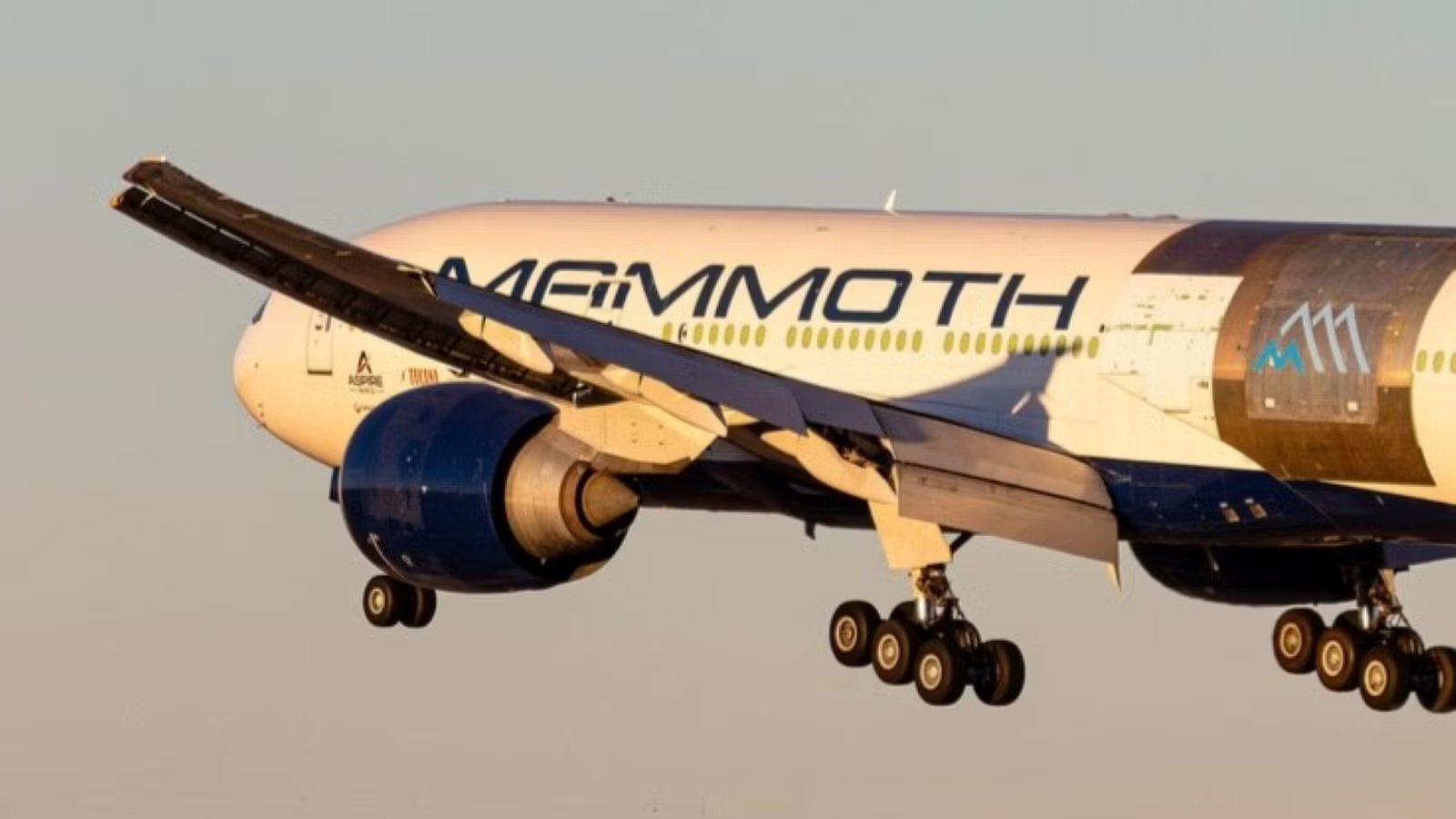
The Boeing 777-200LR was a relatively rare variant of the popular ‘Triple-Seven’ family of widebody twinjet airliners, which carved out a niche on ultra-long-haul routes with a select handful of airlines around the world. However, these jets aren’t getting younger, so thoughts are now turning to their post-passenger career. This is an area where Mammoth Freighters has just achieved a major milestone, with the certification of the 777-200LR(MF).
Indeed, the company’s conversion program for the Boeing 777-200LR has just been approved by the Federal Aviation Administration in the United States of America. This, Mammonth Freighters says, will help it to take the next steps forward in the “expansion of [its] next-generation widebody freighter solutions.” Let’s take a closer look at the finer details of this major certification milestone, and what it means for the cargo sector.
A Major Milestone

The importance of Mammoth Freighters receiving certification from the FAA is that its converted  Boeing 777-200LR(MF) cargo aircraft can now be cleared for commercial service. The rigorous process saw its “design, engineering, and performance” all put to the test, and, having passed with flying colors, the first of these aircraft can now make its way to its customer. According to Aerospace Global News, this will be US lessor, Jetran.
As was the case in its passenger heyday, the long range of the Boeing 777-200LR(MF) is set to serve as an important selling point for Mammoth Freighters. On this front, the company explains that “the platform delivers a compelling combination of long-range capability, payload efficiency, and operational reliability, positioning it as a highly versatile solution for global cargo networks.” Mammoth CEO Bill Tarpley hailed his team, adding that:
“This certification reflects years of disciplined engineering, close collaboration with the FAA, and the dedication of our entire team and partners. Approval of the 777-200LRMF underscores the strength of our technical approach.”
The Aircraft Has Undertaken An Extensive Test Flight Program

Mammoth Freighters’ first example of the Boeing 777-200LR(MF) currently bears the registration N705DN, which it has held since it entered service with Delta Air Lines as a passenger jet. Data from Planespotters.net shows that this occurred back in March of 2009, with the aircraft featuring 28 business class, 48 premium economy, and 220 economy class seats. Delta withdrew it from use 11 years later, just as COVID-19 hit aviation.
It was subsequently placed into storage in Victorville, California (VCV), from March 2020 until April 2021. During this time, in December 2020, it was acquired by its current owner, Jetran. From April 2021 to February 2022, it was stored in Moses Lake, Washington (MWH), and, since then, it has been based at Perot Field Fort Worth Alliance Airport (AFW) in Texas. This is where Mammoth Freighters has been carrying out the conversion work.
However, that isn’t to say that it has remained dormant on the ground for this entire period. Indeed, data from Flightradar24 shows that, after a one-off flight in May 2025, it began an intensive testing program last September. This ran until the middle of January, and involved a series of circular flights that were up to eight hours in duration. More recently, February saw it fly to Grissom Aeroplex (GUS) in Indiana, returning to Texas the next month.

Here’s How Much More Range The Boeing 777-200LR Has Compared To The 777-300ER
The Boeing 777-200LR has over 1,000 nautical miles longer range than the 777-300ER enabling it to serve a limited number of extra destinations.
Who Will Fly The Boeing 777-200LR(MF)?

Originally built to operate ultra-long-haul passenger flights, the Boeing 777-200LR currently serves a small handful of airlines and military/government operators around the world. The biggest of these is Emirates, with ch-aviation listing ten examples in its fleet, followed by Qatar Airways (seven), Air Canada, Ethiopian Airlines (six each), and Turkmenistan Airlines (four). As it happens, several of these carriers are set to fly the 777-200LR(MF).
Indeed, Jordan Jaffe, the CEO of Jetran, explained that “the Mammoth conversion will be a competitive and compelling option in the long-haul freighter market and will deliver solid value for Jetran’s customers, including DHL, Qatar Airways, and Ethiopian Airlines.” As far as N705DN is concerned, current fleet data made available by Planespotters.net suggests that it is destined for the cargo division of Doha’s Qatar Airways.