dailynewsnblog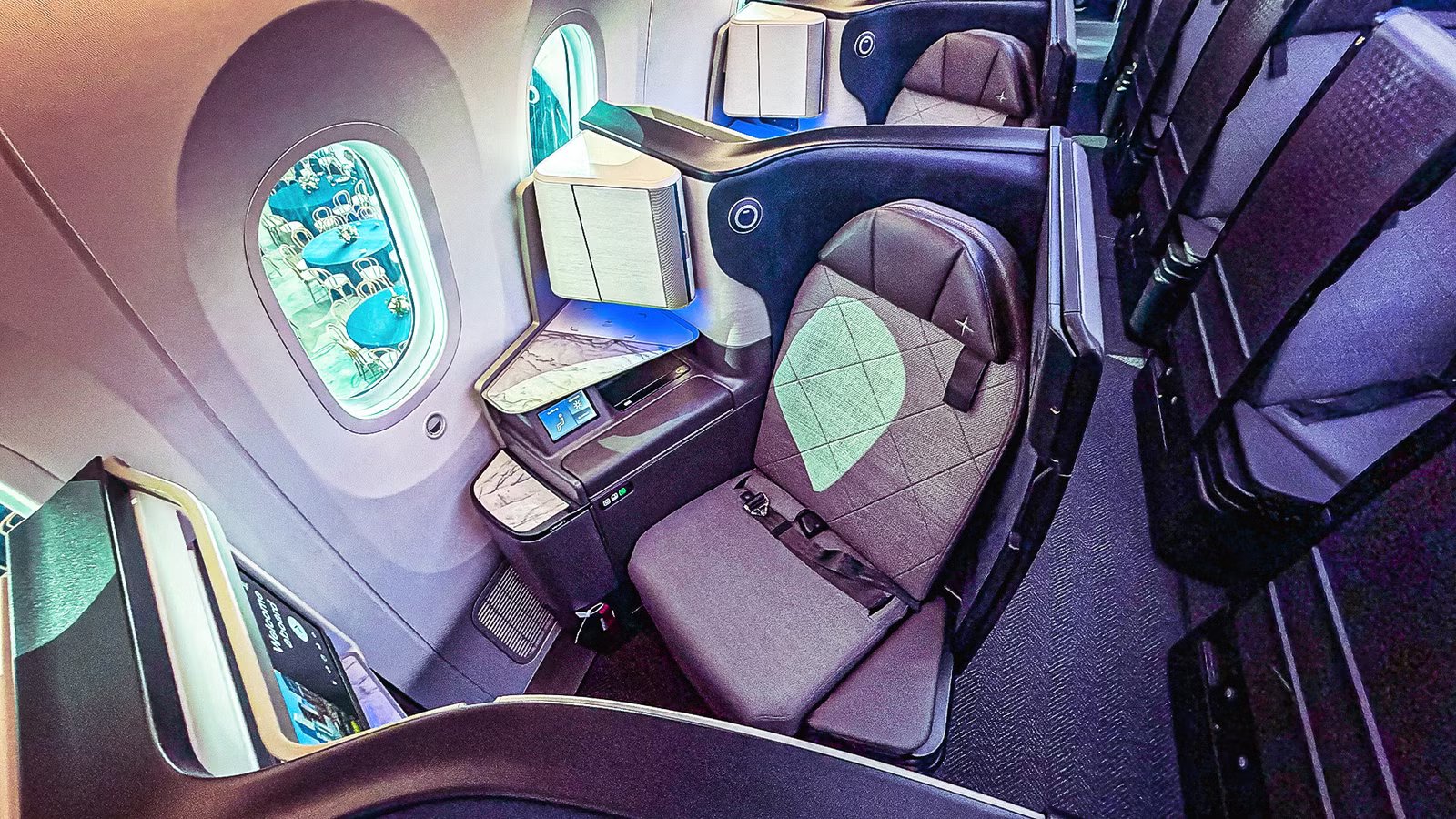
Every tweak an airline makes to its premium cabin tends to generate headlines, but  United Airlines has managed to spark something closer to a philosophical debate with its new Polaris fare structure. The introduction of a three-tier system – Base, Standard, and Flexible – has been framed as giving travelers more choice, yet the loudest reactions so far have focused on what is missing rather than what remains. The lie-flat seat is still there, the multi-course meals are still served, and the Polaris branding still carries weight, but the experience around the seat has been quietly hollowed out in the Base tier.
That raises the question: what are those removed perks actually worth in dollar terms? Premium travelers are not just buying a seat; they are buying time, flexibility, comfort on the ground, and predictability. When those elements are stripped away, the value shifts in ways that are not immediately obvious from the fare difference alone – in other words, looking at each removed benefit individually paints a clearer picture of whether Base Polaris is a clever way to save money or a carefully packaged downgrade. Let’s take a closer look…
Lounge Access: From Polaris to United Club

One of the most significant downgrades in the Base Polaris fare is the loss of access to the Polaris Lounge, replaced instead with entry to the standard United Club. On paper, this might sound like a minor distinction, but in practice, the gap between the two experiences is substantial enough to carry a real monetary value.
Polaris Lounges are widely considered among the best business-class lounges in the US, offering sit-down dining, premium cocktails, quieter seating areas, and often shower suites that feel closer to a boutique hotel than an airport waiting area. They are found at the carrier’s major hubs, including  Newark Liberty International Airport (EWR) and
  Los Angeles International Airport (LAX), as well as at
  London Heathrow Airport (LHR). United Club lounges, by contrast, are functional but frequently crowded, with buffet-style food, limited seating during peak times, and far less of a premium atmosphere. The difference is not just aesthetic; it directly affects how rested and prepared a traveler feels before boarding a long-haul flight.
A day pass to a United Club typically costs around $59, while access to a Polaris Lounge is not even sold outright, making it effectively exclusive to long-haul premium passengers, and that exclusivity is part of the value, especially for travelers who deliberately book Polaris to access that elevated ground experience. Even assigning a conservative value, the experiential difference between these two lounges can easily be pegged at $75 to $150 per visit. For a round-trip journey, that puts the lost value in the range of $150 to $300, which already erodes any headline savings attached to the Base fare.
United Airlines’ Polaris product is currently found on the following widebody aircraft, according to the latest data from ch-aviation:
|
Aircraft |
Number In Fleet |
|---|---|
|
Boeing 767-300ER |
37 |
|
Boeing 767-400ER |
16 |
|
Boeing 777-200ER |
53 |
|
Boeing 777-300ER |
22 |
|
Boeing 787-8 |
12 |
|
Boeing 787-9 |
52 |
|
Boeing 787-10 |
21 |

United Airlines To Introduce Base Fare Option To Polaris & Premium Plus
The carrier has big plans for its premium cabins.
Seat Selection: The Hidden Cost of Uncertainty

United Airlines | Simple Flying
Another seemingly small but impactful change made by United Airlines is the removal of advance seat selection. In the Base Polaris fare, passengers are still guaranteed a lie-flat seat, but they may not be able to choose their seat until check-in, or they may need to pay extra to secure a preferred spot earlier in the process.
In a cabin like Polaris, not all seats are created equal, even if they look similar in marketing images. Some offer more privacy, better alignment with windows, or easier aisle access, while others may be positioned closer to galleys or lavatories, which can significantly affect sleep quality on an overnight flight. Frequent business class passengers often have strong preferences, sometimes even specific seat numbers they try to book on every trip.
Losing the ability to lock in a preferred seat early introduces a layer of uncertainty that undermines one of the core reasons people pay for business class in the first place: control over the travel experience. While some passengers may be willing to gamble, others will inevitably pay to secure a better seat if the option is offered.
Across the industry, airlines that unbundle seat selection in premium cabins typically charge anywhere from $50 to $200 for advance assignment, depending on the route and seat type. That range feels realistic here, particularly on long-haul routes where the difference between a good seat and a great one can translate directly into hours of better sleep.
Over a round-trip itinerary, the expected value loss from this perk can reasonably sit between $100 and $300. Even for passengers who choose not to pay, the potential downside of ending up in a less desirable seat effectively carries a soft cost that should not be ignored when evaluating the Base fare.
Checked Baggage: A Smaller Cut That Still Adds Up

The Base Polaris fare also reduces the checked baggage allowance from two bags to one. That might not seem dramatic at first glance, but it becomes more meaningful in real-world travel scenarios, as business class passengers may be more likely to take longer trips, carry work materials, or simply rely on the flexibility that comes with a more generous baggage policy.
Under the traditional Polaris model, two checked bags were included in the baseline, removing the need to think about packing trade-offs. With the Base fare, that margin disappears, and passengers who need a second bag will have to pay for it.
On international routes, the  Star Alliance carrier typically charges between $100 and $200 for an additional checked bag, depending on the destination and fare rules. While elite status holders may still receive waivers, the Base fare is clearly designed to appeal to travelers who may not have that status.
For those who consistently travel with two bags, the added cost is straightforward and can reach $150 each way. For others, the impact is more subtle but still present, as it reduces flexibility and forces more careful packing decisions. Over a round-trip, this change can add $200 to $400 in expenses or lost value. While it may not be the largest component of the Base fare downgrade, it contributes to the overall erosion of what business class traditionally includes.

What You’ll Find On United Airlines’ Luxuriously Retrofitted Boeing 767-300ERs
The widebody features a premium heavy configuration designed to create higher yields for the airline.
Ticket Changes and Refunds: The Biggest Financial Trade-Off

The most consequential change to United Airlines’ Base Polaris fare is the elimination of free ticket changes and refunds, which fundamentally alters the risk profile of the ticket. This is where the shift from bundled to unbundled pricing becomes most tangible. Flexible business class tickets have historically allowed travelers to change plans without penalties, and removing that flexibility means that any change could trigger significant fees or fare differences, and in some cases result in forfeiting part of the ticket’s value.
On long-haul routes where Polaris fares can run into the thousands of dollars, such as  San Francisco International Airport (SFO) to Manila Ninoy Aquino International Airport (MNL), or even on some of United Airlines’ shorter transatlantic routes, change costs can easily climb into the hundreds or more. Even if a passenger never changes their ticket, the option itself has value.
A reasonable estimate places the value of flexibility at $200 to $500 per ticket, and potentially higher for those with unpredictable schedules, while for frequent business travelers, that real-world value can be significantly greater. This is also where the risk becomes uneven, as while passengers may save money upfront with a Base fare, a single change could eliminate those savings entirely, making flexibility arguably the most important factor in the decision.
The Broader Context: A Shift Already Underway

While United Airlines is the first major US carrier to introduce a fully unbundled premium product at this scale, the concept itself is not new. Airlines like  Emirates and Air France have already experimented with tiered business class fares. The difference lies in how these changes are perceived. In many international markets, fare segmentation has been gradual. In the United States, where business class has traditionally been more all-inclusive, the idea of a “basic” version feels like a sharper shift.
There is also a competitive angle, and  Delta Air Lines has already hinted at launching something similar. If more airlines follow suit, the industry could move toward a model where fully bundled business class becomes less common. That matters because it changes how passengers judge value, as what feels like a downgrade today could become standard tomorrow.

Why US Carriers Are Doubling Down On Premium Cabins
Airline luxury is going mainstream.
Adding It All Up: A Different Kind of Price Tag

With everything added together, the numbers become difficult to ignore. Lounge access can represent up to $300 round-trip, seat selection another $100 to $300, baggage up to $400, and flexibility $200 to $500 or more. Even conservative estimates put the total value of lost perks between $600 and $1,200 on a long-haul trip.
That range is important because it gives a benchmark, and if the price difference between Base and Standard Polaris is smaller than that, the Base fare may not actually save money. Instead, it shifts costs and risks in less obvious ways. There is also a psychological element, and premium passengers often pay more upfront to avoid hassle later. The Base fare reintroduces small points of friction, such as uncertainty about seats, baggage limits, and reduced flexibility.
For some passengers, especially those with fixed plans and minimal needs, Base Polaris can still make sense. But for others, particularly those who see business class as a full experience rather than just a seat, the combined loss of these perks represents a meaningful downgrade. In the end, Base Polaris is not simply a cheaper version of business class; it is a different product entirely, and one that keeps the seat but removes many of the elements that made the experience feel premium in the first place.