dailynewsnblog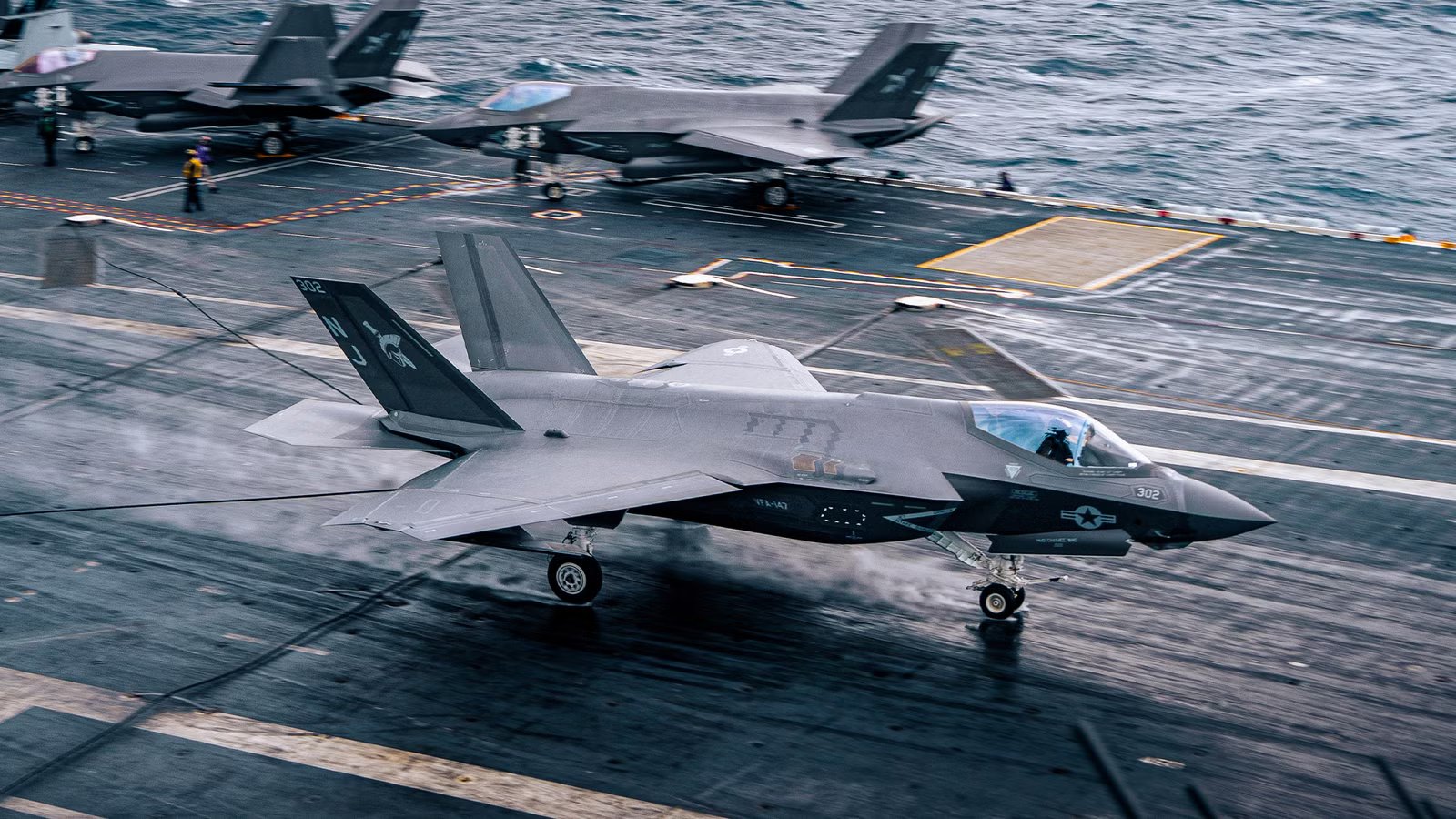
Breaking from a tradition that is decades old, the US Navy has decided to change the way that its student pilots prove worthy of the ‘Wings of Gold’ that designate them as carrier-qualified aviators. There are several underlying factors that have contributed to this major shift in doctrine, but the result is that the first time a new Navy pilot will ‘catch the wire’ on an aircraft carrier will not be until they have already taken the controls of a frontline fighter jet.
In the past, a Naval pilot in training to fly one of the ‘tailhook’ fighter jets or other airframes that land on the ‘boat’ would make their first attempt at an arrested landing in the T-45 Goshawk trainer jet. This aircraft is being phased out, while a more advanced autopilot has been matured to assist pilots in safely ‘trapping’ aboard the carrier.
The advent of more sophisticated automation has pushed the Navy towards eliminating this phase of training because it is essentially redundant. Under the new policy, student pilots will earn their wings of gold after completing simulated carrier landings at a Navy airfield instead. Some have voiced concerns that this could lead to deteriorating skills, which could impact future pilots’ ability to successfully navigate high-pressure situations once they join active squadrons in the fleet.
How To Fly A Strike Fighter: The New School

Student Naval Aviators previously had to perform ten successful arrested landings, aka traps, and four touch-and-goes on a moving carrier deck while still in flight school. As of March 2025, students destined for the F/A-18 Super Hornet, F-35C Lightning II, and EA-18G Growler now receive their wings after completing Field Carrier Landing Practice on land rather than at sea.
The differentiating factor is the advanced autopilot found in modern US Navy fighter jets, dubbed ‘Magic Carpet.’ Notably, that means that trainees destined to fly airframes lacking the advanced software are not exempt from making their first traps before receiving their wings. As of now, future E-2 Hawkeye pilots and international students are still required to qualify at sea in the T-45.
Eliminating at-sea qualifications for students reduces training time, allowing the Navy to get pilots to operational units faster. Modern fleet jets are equipped with Precision Landing Mode, which automates much of the flight path control, making landings significantly safer and easier than the manual ‘ball flying’ required in the older T-45. The new policy also alleviates heavy demand on busy aircraft carrier schedules.
While the Navy argues that PLM makes the traditional training redundant, some veterans and experts express concern that nothing beats hands-on training. Yet, the War Zone reported that early data from trial programs indicate that while there are minor differences in how students handle the carrier environment, their actual landing performance remains high.
Making The First Trap In A Combat Fighter

Now, a pilot’s very first arrested landing at sea happens in a multi-million dollar frontline fighter like the F/A-18 Super Hornet or F-35C. The shift of carrier qualifications from flight school to the Fleet Replacement Squadrons fundamentally changes the student pilot experience by making the FRS a high-stakes gateway to the fleet. Students now face the complexity and stress of carrier ops while managing the complex systems of a supersonic combat aircraft.
One of the largest risks is to the manpower levels of active squadrons. Failing to qualify at the boat now happens much later in a pilot’s career path, after the Navy has already invested millions more in their specific platform training. The FRS syllabus now focuses heavily on mastering Precision Landing Mode. While this makes landing safer, the FRS must ensure pilots can still land the plane if the technology fails. Since the change formally began, the results support the new process.
Carrier qual failure rate at F/A-18 fleet replacement squadrons has plummeted from 18% to 4.5%, as USNI reported. But there are logistical downsides to this approach as well. Using F/A-18s and F-35Cs for basic carrier landings increases the wear and tear on more expensive fleet airframes compared to the cheaper-to-operate T-45 trainers. FRS units must also secure more dedicated time on a nuclear-powered carrier to get their students qualified.

A Look At The Salaries Of US Navy Fighter Jet Pilots In 2026
What it pays to strap into a Navy strike fighter.
The Undergraduate Jet Training System

The transition away from the T-45 Goshawk is part of the logic behind the decision to move carrier quals to the FRS. It wasn’t until this month, March 2026, that the Navy was able to finally solidify requirements for a successor aircraft to replace it. The undergraduate jet training system will eventually be a tailor-made training plane to prepare pilots for the experience of flying fifth-generation fighters.
Unlike the T-45, this aircraft is still not expected to be carrier-capable. It will not come with a tail hook or the heavy-duty landing gear required to land on the boat. That means that future student Naval aviators will continue to receive their wings after performing FCLP training at an airfield on land. PLM will remain a major tenet of training and become more integrated with earlier stages of the pipeline before the FRS.
Simulators have already become more important to the overall training cycle of fighter pilots in the Navy, and will continue to become more and more influential in the development of Navy pilots. The UJTS program is not expected to announce a contract award until 2027, and the first of 216 planned jets will likely not arrive until a few years later. Essentially, this means that the break from tradition has been finalized, and the decades of earning the wings of gold after catching the wire on the boat are over.

Why The US Navy Is Quietly Expanding Its Aircraft Carrier Fleet
America is getting more of the mighty flat tops.
Navy Pilots Still Learning The Old School Way

Student pilots who will fly the E-2D Advanced Hawkeye or the C-2 Greyhound are still put on a pipeline of training that includes carrier qualification before receiving their wings. The reason why these pilots are not exempt is that the airframe they will fly in the fleet is not equipped with PLM. These turboprop airframes use older systems despite being modernized for current operations, and therefore do not have the Magic Carpet software.
The C-2A is being phased out in favor of the CV-22 Osprey; it will be years before the transition is fully completed by the Navy’s Carrier Onboard Delivery Squadrons. COD pilots are currently split between Greyhound and Osprey crews. Meanwhile, pilots destined for the ‘Hummer,’ as the Hawkeyes are known, will be flying a very modernized airborne early warning platform, but the airframe that carries the sophisticated electronics is essentially the same as the first examples that rolled off the line with Northrop Grumman in the 1960s.
Similarly, Navy pilots from partner nations like France or Spain that will receive training from the Naval Aviation Command are on track to fly aircraft that do not have PLM. For that reason, these pilots still need to complete carrier qualification in the earlier training stages. Their home nations also have requirements that they write themselves, which are independent from the US Navy policy changes.

5 Fast Facts On The US Navy’s Airborne Command & Control Squadrons
The carrier air wing embarked on US Navy aircraft carriers uses a highly specialized surveillance plane to dominate battlespace and project power from
The Question Of The Tailhook Legacy

There is a point of professional pride and cultural significance that also surrounds the tradition of awarding a student pilot their wings of gold after trapping on the boat. The symbolism of receiving pilot wings in the Navy was meant to signify that a pilot had proven the necessary skill and character required to successfully put a jet down on the flight deck. By winging pilots before they ever touch a deck, critics argue the Navy is devaluing the wings and the tradition surrounding them.
For over 80 years, the wings symbolized that a pilot had conquered the carrier. In the traditional path, the carrier landing was the final, brutal exam. The T-45 is a light, sensitive jet, and landing it on a pitching deck requires a level of focus and manual coordination that separates Naval aviators from pilots. Earning wings after the boat meant you were officially part of the most exclusive club in aviation.
Pragmatically, critics argue that while PLM is the path of the future and both a necessary and extremely advantageous technology for pilots, cutting down on the amount of airmanship skills trained into pilots is risky. The mission of a naval aviator is to fly into harm’s way; should an aircraft be damaged or electronically crippled by jamming in combat, the concern is that a lack of manual flying skills may mean that they are unable to safely land back on the boat.

The Impending Reboot Of The US Air Force
America’s Air Force has a paradigm change on the horizon.
The Needs Of The Navy: Force Readiness

From a purely operational standpoint, the Navy views tradition as a luxury it can no longer afford in a near-peer competition. Streamlining the pipeline is less about changing the culture and more about math and throughput. Add to that, aircraft carriers are among the most in-demand assets in the US military. Every day a carrier spends ‘qualifying’ students is a day it isn’t deployed to the South China Sea or the Middle East.
The old pipeline was notorious for bottlenecks. Students would often wait months for a spot on an aircraft carrier to finish their T-45 qualifications. By removing the requirement to find a carrier deck for students, the Navy can wing pilots much sooner. Additionally, spending hundreds of hours teaching a pilot to manually fly a ‘ball’ in a cockpit with analog gauges doesn’t translate well to a fifth-generation cockpit.