dailynewsnblog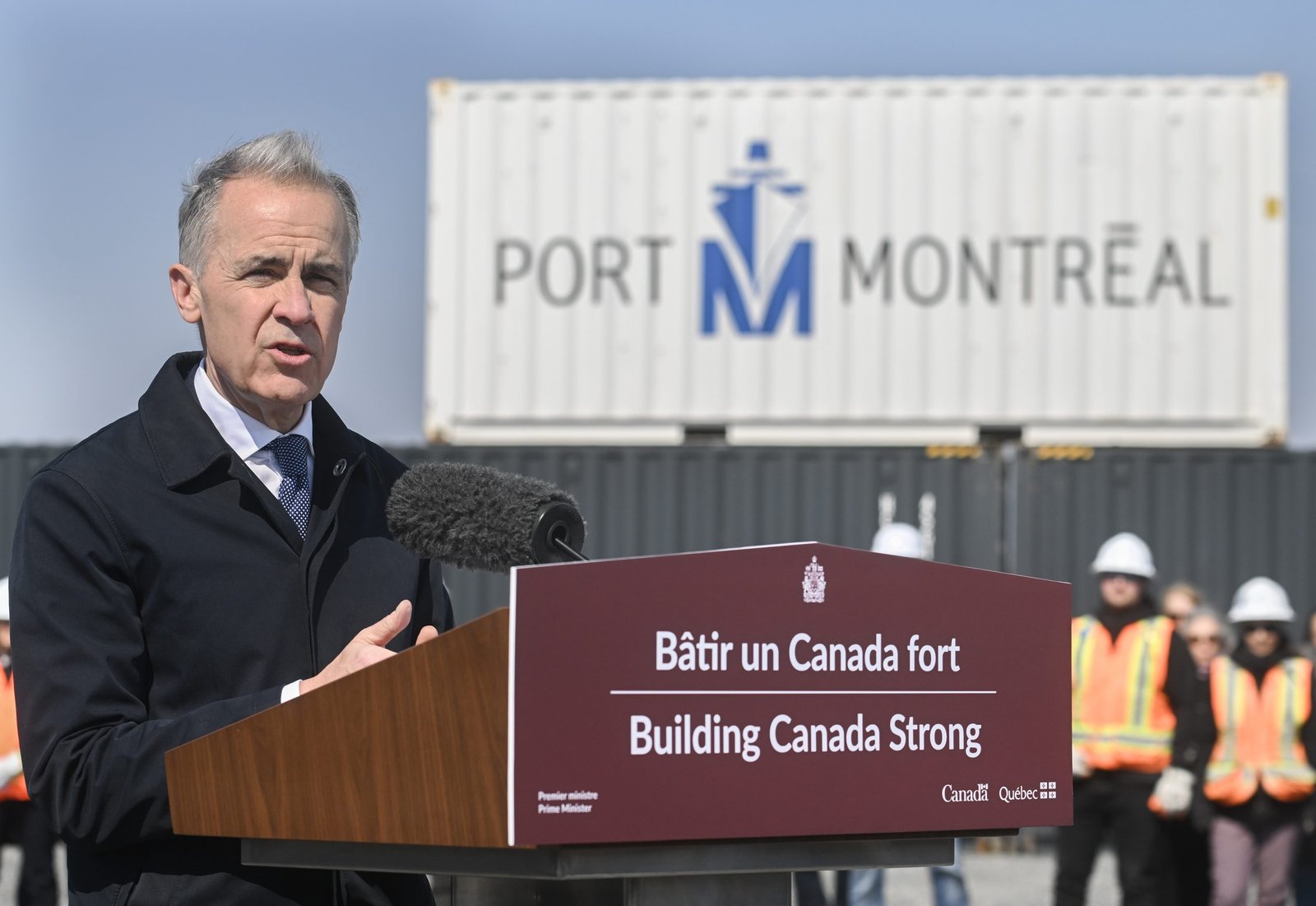
Montreal Port Authority negotiating with global logistics company DP World to operate the future terminal, but it’s unclear how much investment will be coming in from the private sector for this $2.3 billion project.
Several political leaders accompanied Prime Minister Mark Carney to Contrecoeur Thursday to highlight progress in the Port of Montreal expansion project.
Although it was billed as a groundbreaking ceremony, site work actually began last fall, and the finished terminal expansion remains years away. It’s expected to open in 2030.
The Liberals credited their government for the progress made in Contrecoeur, with the Prime Minister’s Office saying the Major Projects Office (MPO) “streamlined approvals, developed an effective financing model, and helped secure permits faster.”
Carney also said his government “committed $1.16 billion in financing through the Canada Infrastructure Bank (CIB).”
While the CIB is an arm’s-length, taxpayer-funded Crown corporation with an independent investment mandate, it frequently faces accusations of Liberal bias from opposition parties.
It was tasked, along with other taxpayer funded investment vehicles like the Canada Growth Fund and the Canadian Indigenous Loan Guarantee Program, to work the MPO in the last federal budget.
The head of the CIB, Ehren Cory, said ports and trade are core priorities for the bank, and described Contrecoeur as a project of national importance.
The $2.3B project was referred to the MPO in September, but did not obtain the national interest designation under the Building Canada Act.
It obtained its two missing approvals from Fisheries and Oceans Canada over the past four months, within normal permitting timelines.
Speaking before a House committee last fall, the head of the MPO, Dawn Farrell, said the challenge for Contrecoeur lies almost entirely on the financing side.
READ MORE: Pieces falling into place for Montreal’s $2.3B Contrecœur port project
The project requires a complex financing package, especially as costs ballooned to $2.3 billion, up from the original $800 million estimate.
Quebec and Ottawa committed $150 million, and the CIB previously loaned $300 million.
Global shipping giant DP World is in exclusive talks with the Montreal Port Authority (MPA) to operate the future terminal expansion. It’s not clear how much money they are willing to put in.
The head of the MPA, Julie Gascon, abruptly left her role last week, with the organization declining to provide any information about the departure.
Gascon recently told iPolitics negotiations with private investors were advanced and even suggested a deal could be reached by fall.
The federal government suggests the CIB loan will help “ensure investors had the certainty they needed to advance this terminal expansion quickly.”
READ MORE: Canada Infrastructure Bank rejects partisan bias claims in Nova Scotia wind farm loan