dailynewsnblog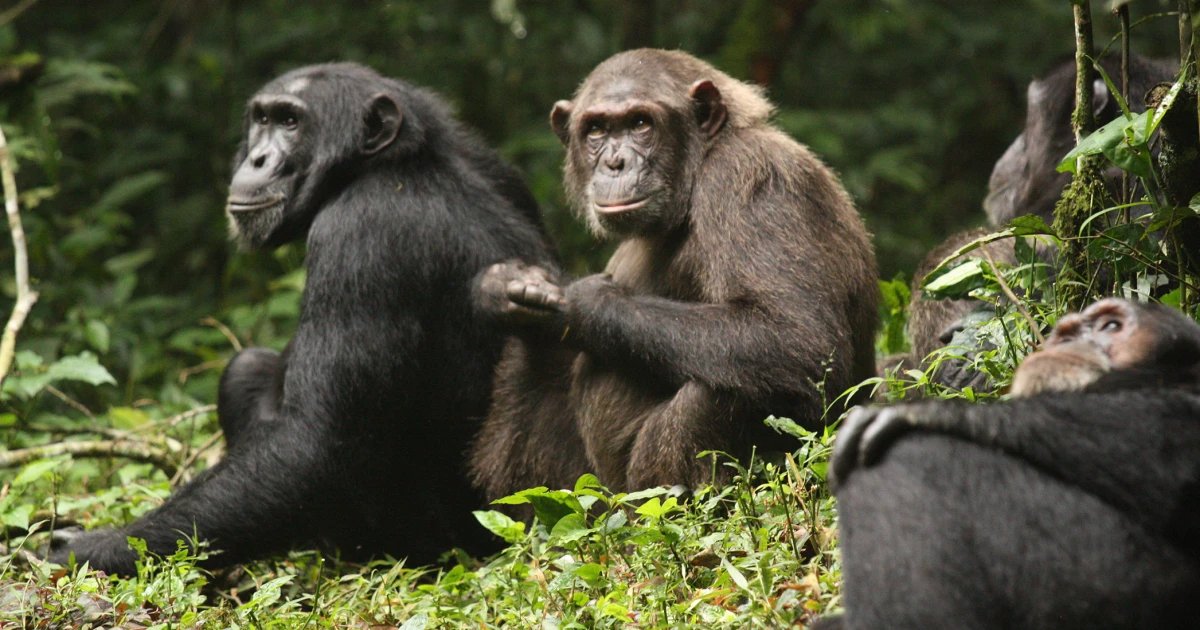
For years, two sets of chimpanzees lived as one in Uganda’s Kibale National Park — grooming, interacting and patrolling their territory in a cohesive community.
Subscribe to read this story ad-free
Get unlimited access to ad-free articles and exclusive content.

Then suddenly, one set charged the other, touching off yearslong bloodshed that researchers are comparing to a human civil war.
“It was just chaos,” said John Mitani, a professor emeritus in anthropology at the University of Michigan who had been following the chimpanzees for two decades when the violence began in 2015. “They started to scream, shout, chase each other.”
For three years after the outbreak, Mitani and his collaborator, Aaron Sandel, an associate professor of anthropology at the University of Texas, documented the collapsing social bonds between the sets of chimps. By 2018, Mitani said, the two subgroups — known as Western and Central Ngogo chimpanzees — had “stopped using the same territory, and they started to behave aggressively and started to kill.”
At least 28 chimpanzees — including 19 infants — have been killed since, according to the first research paper describing the events, which was published Thursday in the journal Science.
“Here are individuals who have helped each other before and cooperated,” Mitani said. Now, “they view each other as the enemy.”

This is the second time researchers have observed a chimp group divide and turn to violence. Because chimpanzees and bonobos are the closest genetic relatives to people, Mitani and Sandel think their findings offer lessons for humanity.
“Civil war is troubling to people. How can you turn on your neighbor? And I think by looking at this study in chimps, it sort of strips away a lot of aspects of human war, and we can see just how group identities can shift and lethal aggression can arise,” Sandel said.
Infants ripped from their mothers and killed
Since the social breakdown, it’s been a one-sided rout: The Western chimps, which started as the minority group, are responsible for all attacks since the groups split permanently in 2018. Their population has risen from 76 to 108, while the Central chimps’ population has seen a stepwise decline.
The attacks are vicious. Western chimps have ripped infants from their Central mothers’ chests and battered them to death.
When attacking adult or adolescent males, Sandel said the chimpanzees use collective violence.
“There’ll be like five or 10 chimps piled on him, holding him down, biting him, slamming their fists on him, kicking him, dragging him,” he said. “They’ll rip off their testicles.”
Mitani said it’s hard to watch.
“The whole thing depresses me,” he said.
The researchers are searching for answers about why the groups’ social fabric collapsed.
Scientists have been following chimpanzees continuously at Ngogo since 1995, taking structured notes on their activities. The new study relies on a decade of GPS-tracking data, 30 years of demographic data and 24 years of detailed field observations.
Researchers assessed the chimps’ social network by following individual males for an hour at a time, systematically documenting who was nearby, how close they got and if they spent time grooming one another. The scientists found two overlapping social circles that would shift from year to year until the rupture.

Mitani and Sandel think the group’s size might have played a role in the acrimonious split. Whereas most chimpanzee groups involve 50 animals, Ngogo featured some 200, which might have stretched its members’ ability to maintain social connections and heightened competition for food and mates.
Additionally, before the split, five adult males died, possibly of sickness, which might have severed key social connections. Then, in 2015, a new alpha male emerged.
“That’s a big deal,” Mitani said, because it happens perhaps once every six to eight years. “This disrupts matters quite a bit, levels of aggression can increase, social relationships can be altered.”
Decades earlier, Jane Goodall observed similar violence
About 50 years ago, the late Jane Goodall and her research team witnessed a series of attacks in Tanzania’s Gombe National Park, in which a group of chimpanzees splintered from the group. The remaining members of the original group then hunted and killed all the males in the splinter group.
Researchers named it the “Four-Year War.”
Anne Pusey, a professor emerita of evolutionary anthropology at Duke University, did field work at Gombe until 1975, during beginning of the fighting. She said the circumstances ahead of the split and “gang attacks” there were “similar and shocking” to what was observed in Ngogo.
In the lead-up to the killings in Gombe, there was a dearth of females ready to mate, some of the friendliest older males died and the group experienced a change in alpha male.
“Those social bonds broke down and changed to become antagonistic,” Pusey said.
Joseph Feldblum, an evolutionary anthropologist who has studied the Gombe fighting, said the new findings validate the earlier ones.
“This sort of behavior, while rare, is part of the natural course of chimpanzee behavior,” he said.
Given what happened at Gombe, Mitani said, he’s concerned that the Central group in Ngogo is “doomed.”
“The writing is on the wall,” he said.
Because so many infants have been killed and so many females are defecting, Mitani added, “I think we’re witnessing an extinction event.”
Implications for humans
What should humans take away from episodes in which their closest genetic relatives turn on their companions?
Researchers often attribute human war to cultural differences, but that’s not the case with chimps, Sandel noted.
“They don’t have ethnicity and religion and political ideology, all these cultural traits that we often identify as a major cause of conflicts in humans, especially internal conflicts like civil wars.”
Instead, the researchers think the violence stemmed from a breakdown of friendships and escalations between cliques and rivals. Sandel said this might indicate those factors play a more important role in human civil war than some would expect. The authors suggest small acts of reconciliation and reunion could be the key to peace.
Mitani said it is also important to remember that humans and chimps split on the evolutionary tree 6 million to 8 million years ago. He doesn’t want people to come away from the study thinking violence toward neighbors is a core trait in humans just because it seems to be in chimps.
“We’ve changed,” Mitani said. “And in the context of this study, the most important way we’ve changed is that we’re this ultra-cooperative and pro-social species. We go out of our way to help others — our neighbors, sometimes total strangers. And we just don’t see that in chimps.”