dailynewsnblog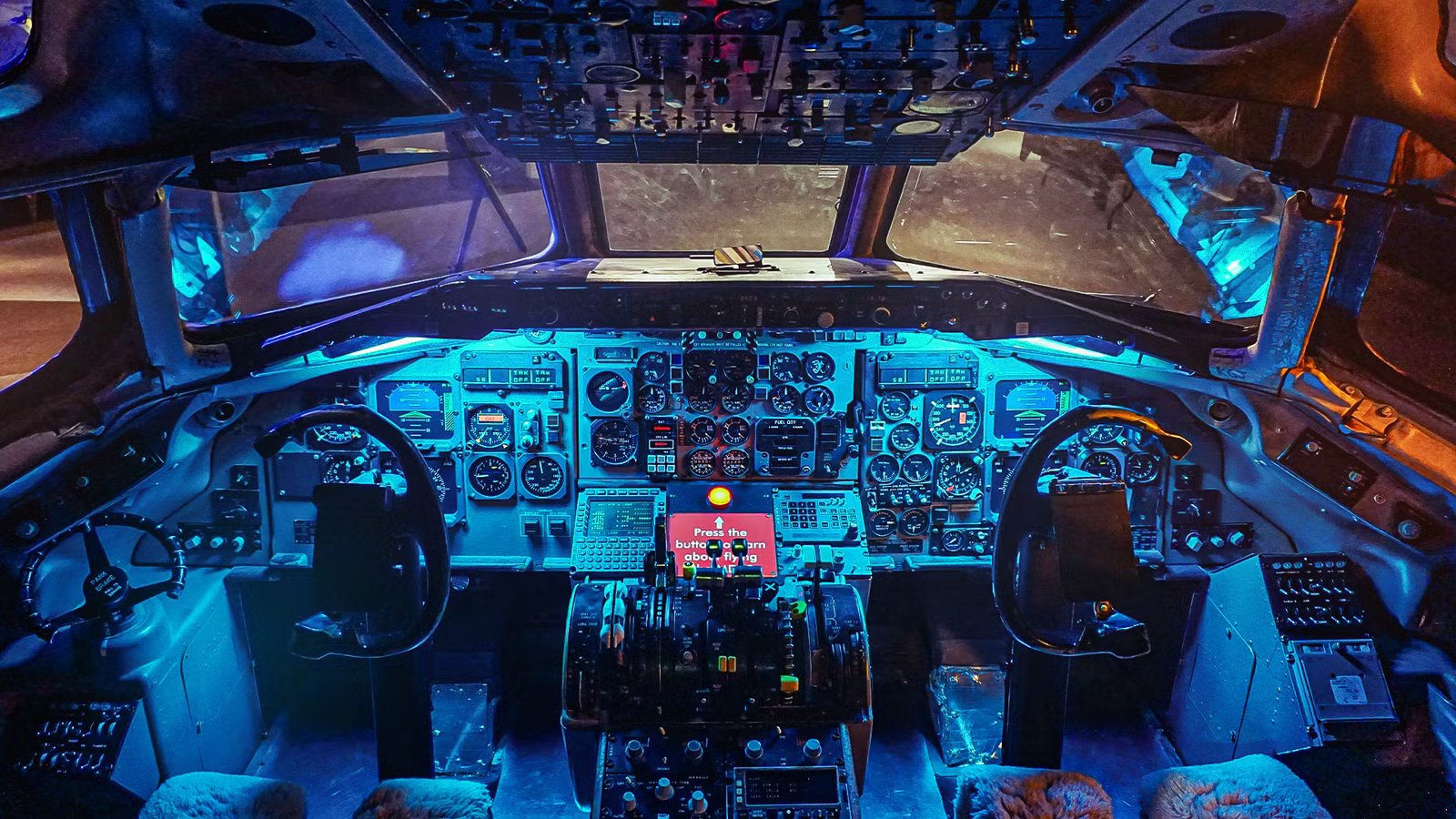
4K displays and fly-by-wire logic manage nearly every aspect of the flight envelope in today’s cockpits, but those starting out or on their way to becoming pilots always end up flying aircraft often much older than themselves. It may seem counterintuitive, but preserving this link to the mechanical past is the industry’s primary defense against a growing crisis of automation dependency that threatens to erode the core skills of the modern aviator.
This article will explore the biological and psychological reasons why training on old gauges and manual flight controls remains the norm for pilot development in 2026. We will clarify how schools are re-engineering their curricula to prioritize raw airmanship, ensuring that when the screens go dark, the person in the seat still knows how to fly.
Older Aircraft Go Back To Basics

Automation, while highly efficient, creates a layer of insulation between the pilot and the physical reality of the sky. Modern glass cockpits are designed to reduce workload by synthesizing complex data into simplified visual representations, but this synthesis can mask the subtle aerodynamic cues that warn of an impending stall or a loss of control. Older, analog platforms force a student to develop a mental synthesizer, requiring them to look at six separate mechanical dials and build a three-dimensional picture of the aircraft’s state in their mind. No computers, just direct feedback between man and machine.
This manual processing of information builds a neural foundation that remains intact even when the electronic flight information system fails. A pilot might spend hours simply monitoring a screen, a task that leads to a natural degradation of hand-flying skills and a slower reaction time during an emergency. Training on a Cessna 172 or a Piper Archer, aircraft that require constant physical input and trim management, ensures that the pilot maintains the muscle memory needed to hand-fly a large jet during a high-stress reversionary event where the computers are no longer providing assistance.
Advanced pilots only needed to train on advanced systems, or so many thought. The 2013 crash of Asiana Airlines Flight 214, as well as other notable events, have proved otherwise. These events demonstrated that even highly experienced crews can lose track of basic flight parameters like airspeed and altitude when the automation behaves in an unexpected way. Training on older systems strips flight down to its irreducible core. Just physics, energy management, and direct control, providing the ultimate fail-safe for an industry that is increasingly reliant on digital logic.
Too Much Trust In Computers?

It is important to understand that automation creates a psychological barrier known as cognitive tunneling. When a pilot becomes accustomed to the high-reliability of digital flight decks, their brain naturally offloads the task of active monitoring to the aircraft’s computers. Going from an active controller to a passive observer makes the pilot vulnerable to the startle factor, a physiological state of paralysis that occurs when the human brain is suddenly forced to interpret raw data during a high-stress mechanical failure.
Deskilling is a common occurrence and is where the fine motor skills required for precision hand-flying atrophy through years of neglect. The lack of tactile feedback in modern fly-by-wire systems introduces further vulnerabilities because, unlike older aircraft, where the controls physically shake or resist before a stall, many modern jets provide only digital warnings that are easily missed during a crisis. Also, the complexity of modern systems often hides the logical chain of a failure, leaving a pilot to guess which computer has failed rather than observing the mechanical reality of the airframe.
|
Factor |
Description |
Physiological Impact |
|
Cognitive Tunneling |
Fixation on a single faulty indicator while ignoring the big picture |
Loss of situational awareness |
|
The Startle Factor |
The initial 1-15 seconds of confusion when automation fails |
Temporary cognitive paralysis |
|
Tactile Decay |
Loss of the feel for the aircraft’s weight and energy state |
Inappropriate control inputs |
|
Information Overload |
Sorting through multiple digital alarms to find the root cause |
Increased mental workload |
The most compelling evidence for these factors is found in the analysis of loss of control (LOC-I) accidents, which remain the leading cause of fatalities in commercial aviation. In these scenarios, the pilot often fights the automation instead of overriding it, as seen in the 2021 incident where an  Emirates Boeing 777 narrowly avoided a crash after the crew followed incorrect digital cues. Training on older systems removes these digital distractions entirely, forcing the pilot to trust their basic senses and the primary mechanical laws of flight.

How The Boeing 777X’s Automated Wing-Fold Systems Prevent Takeoff Disasters For Pilots
Folding wings are not something that is often associated with commercial aviation, but the 777X breaks this norm. How do these systems work?
What Is A Pilot’s True Role?

The Federal Aviation Administration (FAA) has been increasingly vocal about the vulnerabilities inherent in modern flight decks, specifically highlighting the erosion of manual handling capabilities in its 2026 oversight reports. These regulators argue automation has historically improved safety, but the industry has reached a point of diminishing returns where the pilot’s role has been dangerously marginalized. Major institutions are now mandating that training programs re-emphasize the unprotected flight environment to ensure that the human element remains a viable backup to the digital systems.
The US Army’s recent decision to overhaul its initial entry rotary-wing training exemplifies this. After years of utilizing the sophisticated, twin-engine UH-72 Lakota as a primary trainer, senior leaders identified a disturbing trend. New aviators were experts at systems management but lacked the basic stick-and-rudder instincts required for emergency maneuvers like autorotations. Major General Walter Rugen noted that the talent emerging from these programs was technically proficient yet fundamentally inexperienced in the physics of single-engine aircraft. Consequently, the military has moved back toward simpler platforms to rebuild the feel for the aircraft before introducing the complexities of a glass cockpit.
The implications of these insights are reshaping the recruitment strategies of global carriers. Candidates who simply excel at buttonology and systems management aren’t desired. Instead, individuals who demonstrate a raw, intuitive grasp of aeronautical physics are the preferred candidates. Ensuring analog proficiency during the initial screening phase helps airlines to insulate their future flight decks against the risks of automation dependency. It is a return to the fundamentals, ensuring that the next generation of captains is composed of aviators first and systems operators second, capable of maintaining the safety of the flight when the digital safeguards inevitably reach their limits.
The Why Over What

Of course, there are many who argue for a move in favor of the future, leaving the tradition of flight training for a glass-only curriculum. Proponents of this modern-first approach argue that it is more cost-efficient and faster to train a student in an environment that mirrors their eventual career destination. Why spend dozens of hours mastering a mechanical slide rule or an analog altimeter when the pilot will spend 30 years staring at a screen? Well, the transition to large commercial jets would likely be more streamlined, reducing the cognitive friction that occurs when a pilot moves from a primitive trainer to a complex flight management system.
However, the glass-only methodology still retains that fundamental lack of connection to the aircraft itself and its movement in the air. When training begins with digital automation, the student may never develop the internal gyro required to sense the aircraft’s energy state through the seat and the yoke. Digital displays synthesize data, and if all is green, then the pilot assumes everything is fine. Often it isn’t, and if that connection to the feel of flight isn’t established, then the pilot doesn’t have real control of the aircraft. In contrast, the analog pilot must constantly cross-check multiple independent instruments, a process that builds a more robust mental model of the flight environment. Pilots need to know the why behind the data, rather than just the what.
Digital training is excellent for learning buttonology and procedural flow, but it cannot replace the tactile lessons of a 1970s-era airframe. By contrasting these two paths, it becomes clear that the old-school approach is not a rejection of progress, but a fortification of the human element. For a pilot, the ability to fly without the crutch of an autopilot is the ultimate insurance policy. It provides a level of technical resilience that ensures the safety of the flight is never entirely dependent on a software algorithm or a single circuit board.

The Striking Differences Between The Airbus A320 & Boeing 737 Cockpits
Explore the striking Airbus A320 vs. Boeing 737 cockpit differences, from sidesticks to noise, and learn how pilots see these iconic flight decks.
Sometimes, A Balance Is Needed

The benefits of analog training are substantial, but the process is not without its inherent risks, primarily the phenomenon of negative transfer. This occurs when a pilot applies a habit or physical response learned on a primitive aircraft to a modern system where that same action is either ineffective or dangerous. For instance, the mechanical feedback of a yoke in a 1970s trainer is a direct physical link to the control surfaces. However, in a fly-by-wire cockpit, the side-stick or yoke provides an artificial feel that may not reflect the actual aerodynamic load. If a pilot relies too heavily on the muscle memory of an old airframe, they may struggle to adapt to the highly sensitive, software-augmented control laws of a widebody jet.
In a basic aircraft, a pilot is taught to aggressively push the nose down to reduce the angle of attack, a maneuver that is straightforward and intuitive. In modern aircraft equipped with envelope protection, the computer often prevents the stall from occurring in the first place, but if those protections fail, the recovery logic can be far more nuanced. A pilot who has spent hundreds of hours in a light aircraft might revert to an overly aggressive push that could overstress a heavy airframe or trigger a secondary stall if not managed with precision.
|
Feature |
Analog Trainer |
Fly-by-Wire Jet |
Potential Negative Transfer Risk |
|
Control Feedback |
Direct mechanical resistance |
Artificial haptic feedback |
Pilot misinterprets the feel of the wing |
|
Stall Prevention |
Pilot-managed (Manual) |
Computer-managed (Protections) |
Hesitation or aggressive over-correction |
|
Trim Logic |
Constant manual adjustment |
Auto-trimming systems |
Trim runaway mismanagement |
|
Throttle Response |
Cable-driven (Instant) |
Electronic (FADEC) with lag |
Over-correcting power on final approach |
It is not enough to simply be good at handling a smaller aircraft; the digital environment of modern airliners demands a crossover of knowledge. The goal is to ensure the pilot knows when to trust their primitive instincts and when those instincts must be tempered by the specific logic of a computerized flight deck. Without this bridge, the very skills meant to save a pilot could, in rare cases, become a liability.
Old Trainers Aren’t So Bad

The persistence of older training systems is a testament to the fact that aviation remains, at its heart, a discipline of physics and human psychology. Stripping away the digital layers during the formative years of a pilot’s career is not to anyone’s disadvantage; in fact, having this basis and foundation solidifies the future of any pilot’s career.
The most effective flight crews are those who are as comfortable managing a complex flight management computer as they are hand-flying a visual approach in a crosswind. Dual-competency is the ultimate defense against the deskilling of the global pilot population. The technology is here to train a new generation of pilots for the high-tech world of aviation today, but there is always room for a return to the basics.
The role of the pilot will likely evolve into that of an emergency manager, where their primary value lies not in the 99% of the flight that goes right, but in the 1% that goes wrong. The skills learned on old gauges provide the cognitive resilience needed to handle that 1%. The sky of the future may be digital, but the hands on the controls must remain rooted in the timeless principles of airmanship.