dailynewsnblog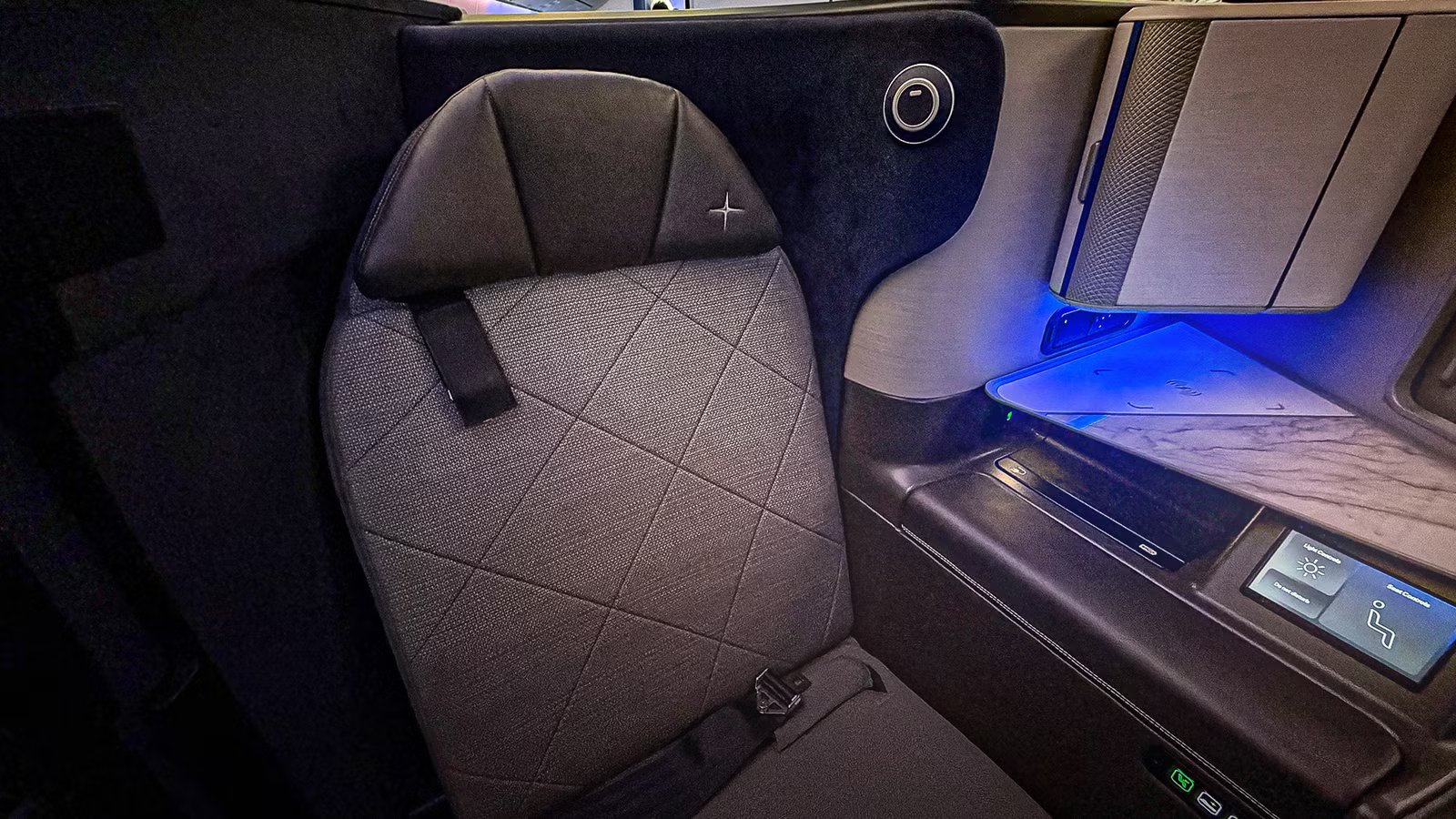
In 2026, United’s Polaris 2.0, Delta One, & Qatar Airways’ QSuites represent three extremely different ideas of what a top-tier business-class cabin needs to be. United Airlines’ new Polaris 2.0 product is a catch-up move in one sense, because it finally brings privacy doors and a more modern suite to the airline’s long-haul flagship, but it is also an aggressive push upmarket through the new Polaris Studio concept and a heavily premium-weighted Boeing 787-9 layout.
Delta Air Lines’ Delta One cabin, by contrast, is less about radical seat innovation today than about refinement. The suite itself remains strong, but the bigger differentiator is the end-to-end premium experience, especially with Delta One check-in and dedicated lounges. Meanwhile, the  Qatar Airways Qsuite still stands apart because it was conceived not just as a private pod, but as a flexible space that can become social, collaborative, or intimate depending on who exactly is traveling.
That is what makes this comparison so interesting. United is trying to become more global-luxury in feel, Delta is building the most polished premium ecosystem among US airlines, and Qatar still offers the most inventive business-class seat architecture in the market. In other words, these cabins are competing on privacy, scale, flexibility, and brand philosophy as much as on comfort alone.
A Deeper Look At United Polaris 2.0

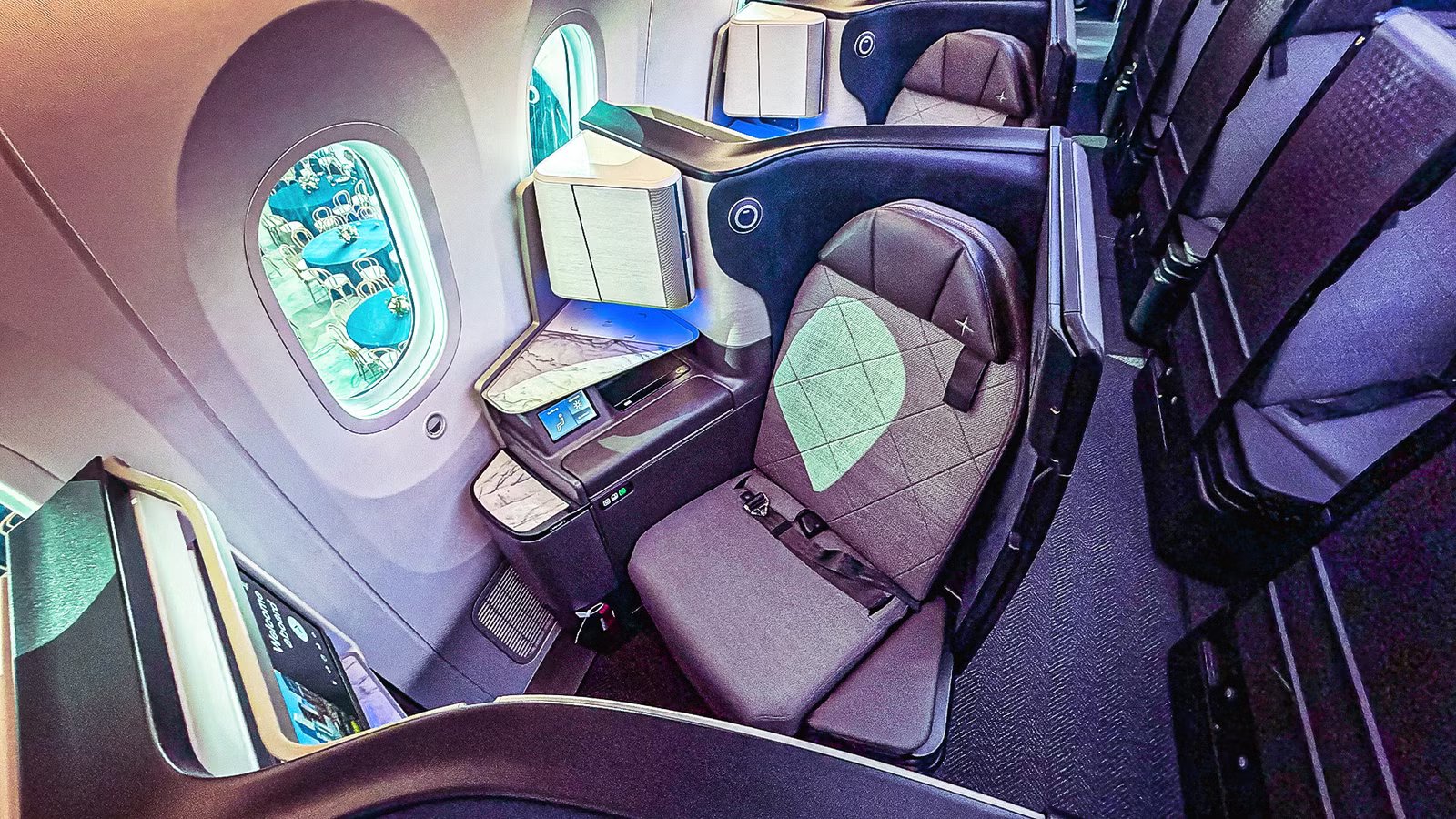
The most transformative change brought to the table recently by United’s passenger experience team is the new Polaris 2.0 product, which marks a real reset for the airline’s long-haul premium identity. The new Elevated  Boeing 787-9 gives United 64 Polaris seats arranged thoughtfully in a 1-2-1 layout, including eight front-row Polaris Studio suites. These are about 25% larger and add features like companion seating, oversized 4K screens, upgraded dining, and more exclusive soft products in and of themselves.
In overall strategy terms, that matters pretty much just as much as the seat itself. United Airlines is not simply refreshing business class, but it is rather trying to create a more segmented premium cabin, with standard Polaris for most travelers. However, the Polaris Studio is available for customers who are willing to pay extra for something much closer to a business-class-plus product. The weakness, at least initially, is that the headline privacy feature is not going to be fully usable at launch.
This is because the sliding doors are still awaiting FAA certification, and they will remain locked at the open position at first. That undercuts some of the product’s ambitious marketing impact. Nonetheless, this is clearly United’s most ambitious premium hard product yet, and the premium-heavy 222-seat layout shows the airline is betting hard that premium demand, especially from hubs like San Francisco, will justify the extra space devoted to these higher-yield cabins.
Diving Into The Delta One Cabin

Delta One fundamentally feels different because it is significantly less about novelty and more about polish. The seat itself remains highly competitive, with full-height doors and privacy dividers on most Airbus A350 and A330-900 flights, but Delta’s bigger edge is that the product begins well before boarding. In 2026, Delta One passengers get access to dedicated Delta One check-in at hubs, premium security flows, and Delta One Lounges located at flagship locations like JFK, LAX, and SEA.
This makes the experience feel more coherent from curb to cabin than the product offered by United or other foreign competitors in the US market. This fundamentally matters because premium travelers not only buy a seat, but they also buy friction reduction, quiet, and consistency. In the air, Delta One remains elegant and comfortable, with lie-flat seating, Missoni bedding and amenity kits, chef-curated meals, and sommelier-selected wines.
These are all features added to help improve this product’s overall look and feel for customers. The airline knows it is competing for the lucrative corporate contracts that are mostly decided by individual travelers, who determine what airline to fly based on a company’s credit card. This makes the experience’s consistency all that much more convenient. However, when compared directly with United’s brand-new studio concept and Qatar’s transformable and dynamic Qsuite architecture, Delta’s cabin is the least adventurous.
It is most certainly a premium suite, and it is that by design. However, what the seat lacks is the character of a boutique product. The seat is designed around the high-frequency corporate traveler, with a smaller group of high-end leisure travelers accounting for only a small amount of demand. Delta One’s strength is undoubtedly in end-to-end execution and product maturity, but its main limitation is that it no longer feels quite as structurally disruptive as it once did.

United Airlines To Debut New Polaris Suites Without Full Passenger Privacy
United’s new Polaris suites debut on 787-9s with locked doors due to certification delays, echoing a similar issue faced by American Airlines.
Qatar Airways’ Qsuite Is The Most Creative Of The Three

Qatar Airways’ Qsuite remains likely the most inventive of the three cabins explored here because it still does something that the others are not capable of fully replicating. This seat turns business class into an extremely modular space, and the core idea behind it is flexibility. Qatar Airways’ movable panels allow passengers to convert the space for working, dining, or socializing. As such, the cabin is built around single, twin, double, and four-seat configurations.
This means that the Qsuite is not just a private seating experience, but it can also be communal in a way that conventional reverse-herringbone suites usually are not. The cabin also still looks impressively complete in 2026, with suites with doors, fully lie-flat beds, ambient lighting, generous storage, and a seat design that mixes rear-facing and forward-facing positions within the exact same cabin. Qatar Airways backs that with strong premium touches such as amenity kits and sleepwear.
The catch here is that Qsuite is not universal across Qatar Airways’ business-class operation, since availability still depends on route and aircraft assignment. Even then, it remains the clearest benchmark for how far a business-class product can push beyond just simple privacy. United’s new Polaris clearly borrows some of that logic, but Qatar Airways still feels like the product designed most intelligently around both solo travelers and pairs or groups.
Where Might Passengers Find These Three Cabins?

Passengers are likely to encounter these premium cabins in various parts of each airline’s network. United’s Polaris 2.0 is the rarest in 2026, as it is tied specifically to the new Boeing 787-9 fleet rather than to United’s broader long-haul operation. Its first international routes will be from San Francisco International Airport (SFO) to Singapore Changi International Airport (SIN) starting April 22, and from San Francisco to London Heathrow Airport (LHR) on April 30, with Sydney expected later in the year.
Therefore, for now, it remains a flagship product concentrated around SFO and a few ultra-long-haul routes. Delta One, meanwhile, is significantly easier to find. Delta sells the product on long-haul international flights and select long-haul domestic routes, where the enclosed Delta One Suite is available on most Airbus A350 and A330-900 flights, ultimately giving Delta a far broader practical footprint for premium travelers.
Qatar Airways’ Qsuite sits in between those two very popular models. The airline says that the Qsuite is available only on select routes and can disappear if the aircraft changes, but it is spread across parts of the airline’s Boeing 777 and Airbus A350 fleets. As such, passengers can find it across the carrier’s global long-haul network, even if it is never guaranteed on every flight.

Sky-High Luxury: Comparing Qatar Airways & Emirates’ Premium Suites
Discover how Qatar Airways and Emirates premium suites stack up in the sky-high world of luxury travel: suite doors, double-beds, showers, and more!
A Strong Investment In A Business’s Growth

From a financial perspective, these cabin upgrades are quite expensive upfront, but the airlines behind them are making the bet because premium travelers generate disproportionate revenue, stronger loyalty, and better margins than adding just a few extra seats in an economy cabin. United Airlines is the clearest example of such behavior. Its new 787-9 interior shifts the aircraft heavily towards premium seating.
United has indicated that premium revenue rose 6% year over year in the third quarter of 2025. The airline also said it plans another $1 billion of customer-experience spending in 2026, showing that Polaris 2.0 is not just a design upgrade, but rather a revenue strategy aimed at higher-yield travelers.
Delta’s logic is also similar but much broader. It reported premium revenue growth of around 7% in 2025, and its premium push now includes Delta One lounges and dedicated check-in facilities, meaning that the investment case is about monetizing the entire journey rather than just the seat itself. That can support a stronger corporate appeal and overall pricing power.
The Bottom Line

At the end of the day, these three business-class products are undoubtedly market-leading offerings, and legacy carriers are certainly leaning towards ever-more luxurious premium products. This is relatively unsurprising in a world where high-yielding passengers are becoming a more and more critical piece of any airline’s financial picture.
However, there are some important differences to observe between these three products. Delta’s is undoubtedly the most standardized, as its experience is strong and consistent across its entire long-haul flight. United offers a much more variable experience, with its newest product not even fully deployed.
Qatar Airways’ Qsuite has long been the airline’s key cabin for attracting high-spending travelers. The carrier operates ultra-long-range services, and it focuses on this product, despite having a first-class cabin that would otherwise generate large amounts of revenue. The premium experience on Qatar Airways is both standardized and boutique in feel, something that really makes it stand out.