dailynewsnblog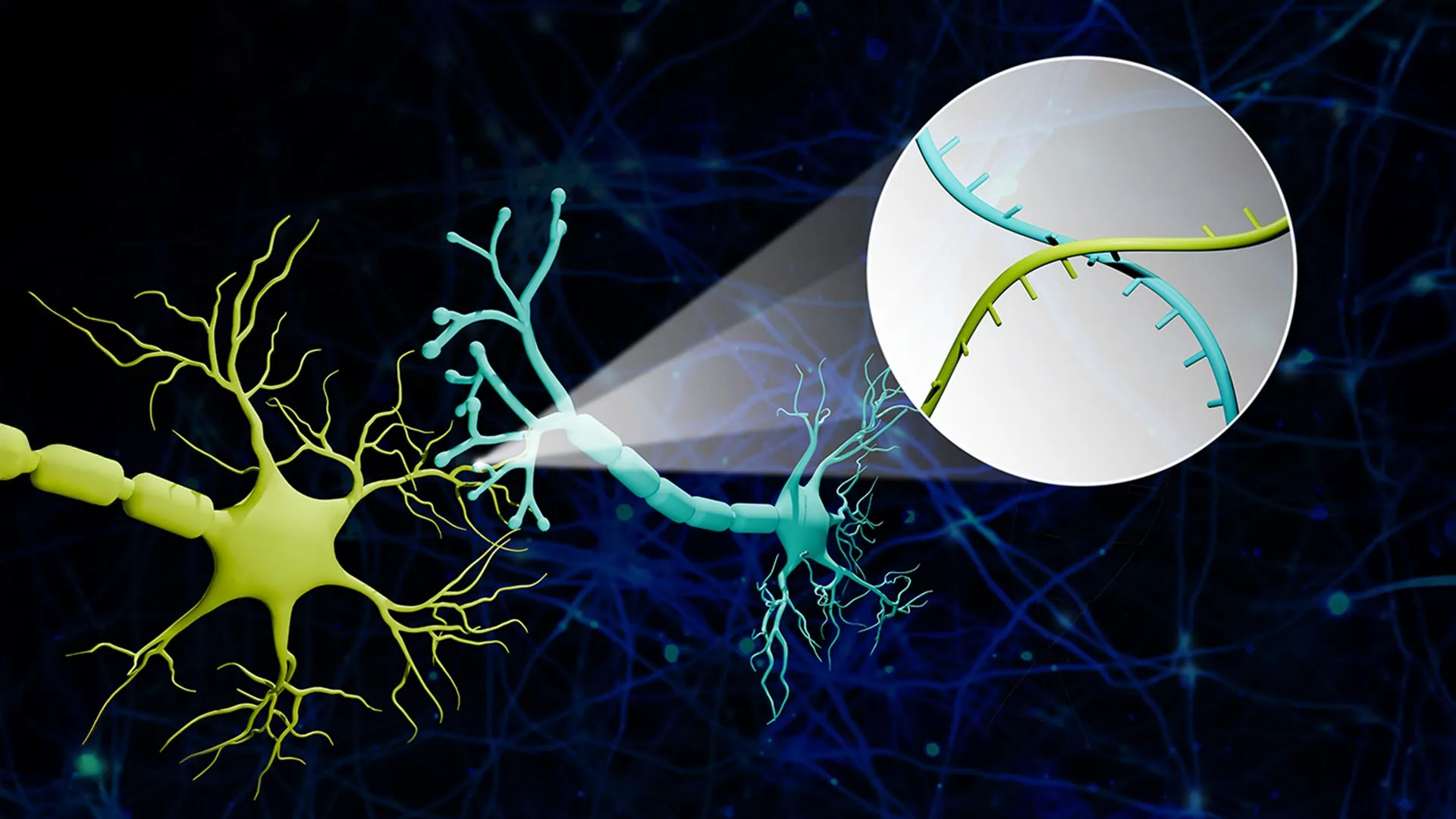
Researchers have developed a powerful new way to map how brain cells connect by tagging neurons with molecular “barcodes.” Using this technique, they were able to chart thousands of neural connections in the mouse brain with remarkable speed and detail.
This method could deepen understanding of how complex brain networks are organized and how they function. It may also shed light on what goes wrong in neurological disorders and how diseases like Alzheimer’s develop over time.
“When engineering a computer, you need to know the circuitry of the central processing unit. If you don’t know how everything is wired together, you can’t understand its function, optimize it or fix it when something breaks. We are approaching the brain the same way,” said study leader Boxuan Zhao, a professor of cell and developmental biology at the University of Illinois Urbana-Champaign.
“Our technology enables simultaneous mapping of thousands of neural connections with single-synapse resolution — a capability that doesn’t exist in any current technology. It is directly applicable to understanding circuit dysfunction in neurodegenerative diseases and could provide a platform for developing circuit-guided therapeutic interventions,” he said.
The findings were published in the journal Nature Methods.
A Faster, More Detailed Way To Map the Brain
Mapping the brain has traditionally been slow and difficult. Scientists often had to slice brain tissue into extremely thin sections, image them with microscopes and piece together the pathways manually. While newer sequencing-based tools can label many neurons at once, they usually show where a neuron extends rather than identifying the exact cells it connects with at the synapse, Zhao said.
To overcome this limitation, Zhao’s team created a new platform called Connectome-seq. It assigns each neuron a unique RNA “barcode.” Specialized proteins carry these barcodes from the neuron’s main body to the synapse, the point where two neurons meet.
Researchers then isolate these synapses and use high-throughput sequencing to read which barcode pairs are found together. This reveals which neurons are directly connected, allowing scientists to map networks on a large scale.
Turning Brain Wiring Into a Sequencing Problem
“We translated the neural connectivity problem into a sequencing problem. Imagine a big bunch of balloons. The main body of each balloon has its unique barcode stickers all over it, and some move down to the end of the string. If two balloons are tied together at the end, the two barcodes meet at the junction,” Zhao said. “Then we snip out the knots and sequence the barcodes in each one. If the same knot has stickers from balloon A and balloon B, we know these two balloons are tied together. We are doing this in the brain, just on the level of thousands of neuron cells. With this information, we can reconstruct a sophisticated map that represents the connections among all these seemingly floaty groups.”
Discovering New Brain Circuit Connections
Using Connectome-seq, the team mapped more than 1,000 neurons in a mouse brain circuit known as the pontocerebellar circuit, which links two brain regions. The analysis revealed previously unknown patterns of connectivity, including direct links between cell types that had not been known to connect in the adult brain.
“With improvements already underway in our lab, we are confident that we can make it even better and eventually reach the goal of mapping the whole mouse brain,” Zhao said.
Potential To Transform Alzheimer’s and Brain Disease Research
Because it is both fast and scalable, Connectome-seq could significantly accelerate research into neurodegenerative diseases, psychiatric conditions and other brain disorders. By comparing brain connections in healthy individuals with those at different stages of disease, scientists may be able to identify early changes in neural circuits.
“With sequencing-based approaches, the time and cost are greatly reduced, which really makes it possible to see differences in different brains. We could see where connections change, where the most vulnerable parts of the brain are, perhaps before symptoms even appear,” Zhao said. “For example, if we can catch where exactly the weak link is that kick starts the whole catastrophic cascade in Alzheimer’s disease, can we specifically strengthen those connections to where the disease slows or does not progress?”
The research was supported by a Neuro-omics Initiative grant from Wu Tsai Neurosciences Institute of Stanford University, as well as funding from the Elsa U. Pardee Foundation and the Edward Mallinckrodt Jr. Foundation.